Lexi Trees: Probabilistic and Deterministic Self-Balancing Binary Search Trees
Massimiliano Tomassoli, 2022
GitHub repository
1. In a nutshell
- I'll introduce a new (to my knowledge) type of trees that I call Lexi Trees.
- They're easy to handle as they're little more than binary trees.
- In particular, they're easy to rebalance and keep balanced.
- There's a clear separation between concepts and implementation details:
- The algorithms are straightforward on a conceptual level.
- There's no "magic" involved in deriving the actual implementations.
- They're very versatile as we can:
- Make them probabilistically balanced by construction.
- Rebalance them deterministically following two different approaches:
- clean after yourself: We do the operation and then rebalance the tree.
- do not litter: We prepare the tree for the operation, and then do the operation, all without breaking any invariants.
- The probabilistic version:
- Has rootleaf paths of length on average.
- It's easy to parallelize.
- The deterministic versions:
- have rootleaf paths of length in the worst case.
- In particular, I present two versions:
- 2-Lexi Trees
- They have rootleaf paths of length at most .
- In practice, the path lengths are very close to the optimum and shorter than the ones of the probabilistic version.
- They're not so easy to parallelize because of the rebalancing (as expected).
- 3-Lexi Trees
- They have rootleaf paths of length at most .
- In practice, they have only slightly longer paths than 2-Lexi Trees.
- The advantage is that these should scale better than 2-Lexi Trees (this is conjectural at the moment).
- 2-Lexi Trees
2. Exposition
- I use lots of nested lists, as you can already see.
- They help me to:
- be concise,
- break down knowledge into small digestible pieces,
- separate important points from minor points,
- optimize the order of exposition,
- refactor what I write,
- see what I wrote at a glance.
- They should help you to:
- acquire knowledge one step at a time,
- pinpoint what you understand and what you find unclear,
- keep track of where you are (thanks to nesting).
- This document includes lots of pictures.
- The images of the Skip Lists were drawn by hand, ...
- ... but all the others were generated from real data.
- The images only show the relevant details.
- See draw_trees.py and test.py for the drawing code:
- The code in those 2 files was not written with readability in mind...
- ... but I did clean it up a little!
- In general, I try to constantly strike a balance between:
- verbose and succinct,
- formal and informal,
- high level and low level,
- general and particular.
3. List Trees
- A List Tree is a binary tree with extra structure.
- Nodes can be at any level as long as:
- the left child is at a lower level than its parent,
- the right child is at an equal or lower level than its parent.
- More formally, for each node :
- Right children at the same level as their parent are called high children.
- A leaf is any node at level 0.
- Paths can have multiple leaves because of high children.
- A maximal list is a sequence such that:
- All nodes in it are at the same level.
- .right for .
- (left‑maximality) There's no in the tree such that
- (right‑maximality) There's no in the tree such that
- From now on, list means maximal list unless otherwise specified.
Take a look at the following randomly-generated List Tree:
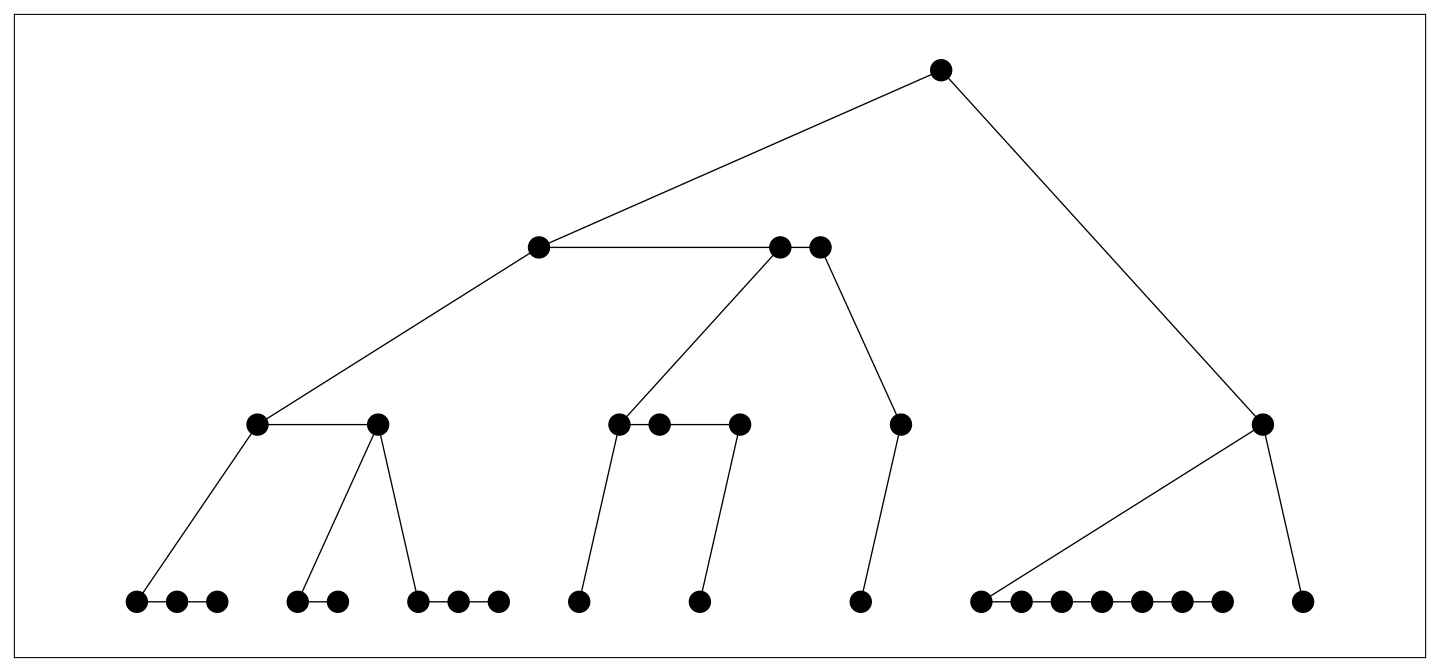
3.1. About the pictures
- For practical reasons, the axis has been replaced with the sorted-position axis.
- More precisely:
- Let be the nodes in the tree sorted in ascending order, according to their keys.
- Then, has coordinate equal to , for .
- This changes nothing at the conceptual level.
4. Lexi Trees
- A Lexi Tree is a List Tree with a lexicographic order.
- Consider the cartesian KL plane where:
- the axis is for the keys,
- the axis is for the levels.
- Nodes are points on the KL plane and can be represented as pairs.
- Let's impose a lexicographic order on the KL plane:
- In words:
- The node at a higher level comes first.
- If two nodes are at the same level, the one with the smaller key comes first.
- Basically, the lexicographic order is:
- first top to bottom,
- then left to right.
- To specify that we're referring to that lexicographic order, we can add the prefix lexi, so, for instance, we can say that a node is lexi‑smaller than a node .
- Analogously, when we want to refer to just the keys, we can say that is key‑smaller than .
- When we work on the KL plane, the arrows become redundant!
4.1. Rules for the arrows
- Imagine that from each node starts a vertical line which goes straight to the bottom:
- No arrow can cross that line.
- This is true for all binary search trees in general.
- More precisely:
- The root owns the whole key‑space.
- Each node , of key , splits its key‑space into 2 subspaces:
- left‑space: the part of with keys .
- right‑space: the part of with keys .
- The left (right) arrow of each node is either
- absent if has no nodes in its left (right) space, or
- pointing to the lexi‑smallest node in the left(right)‑space.
- Intuitively, this means that if a node has a row of nodes, all at the same level, right below in the same subspace, then always points to the leftmost one.
Here are a few examples:
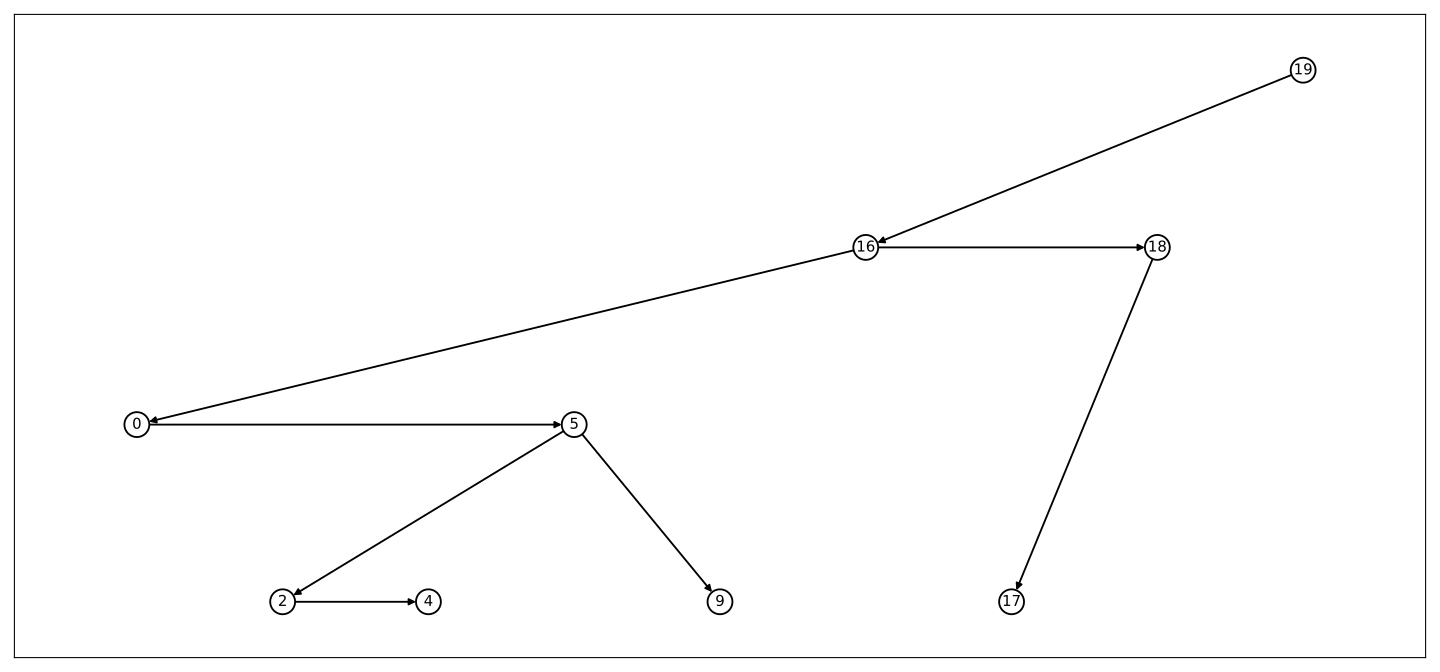
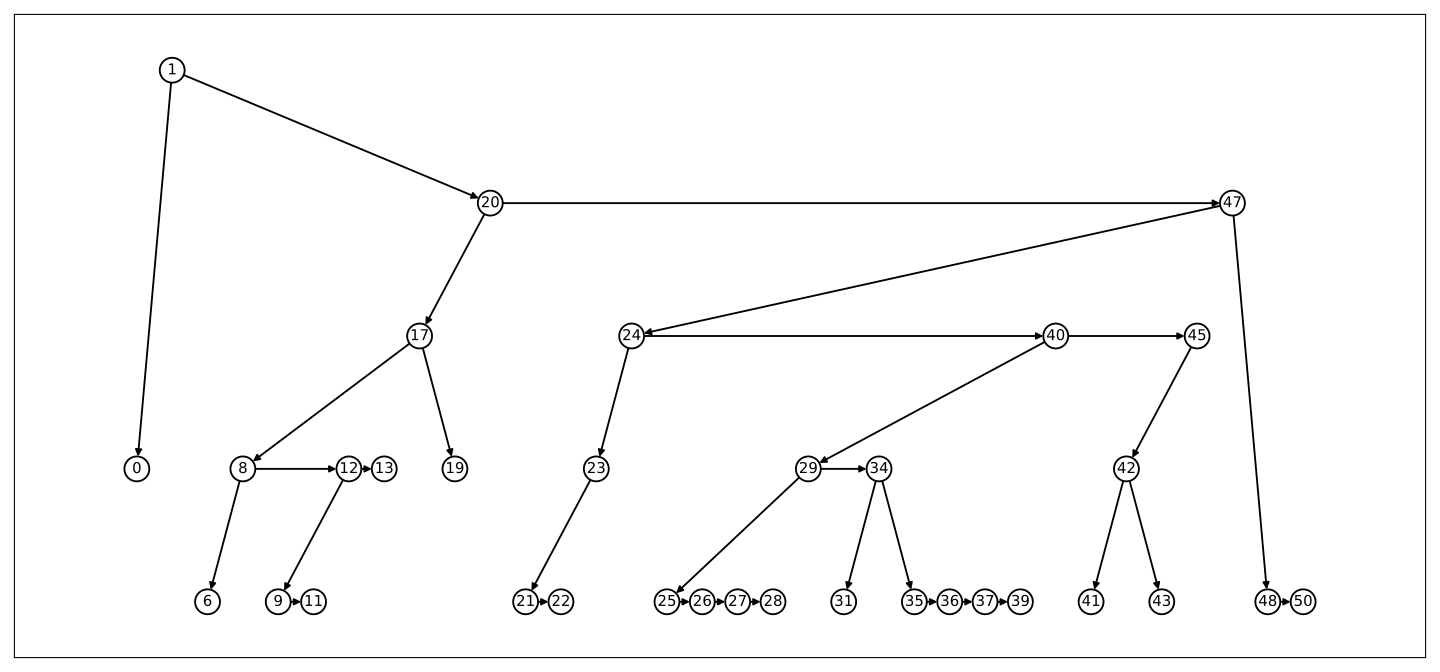
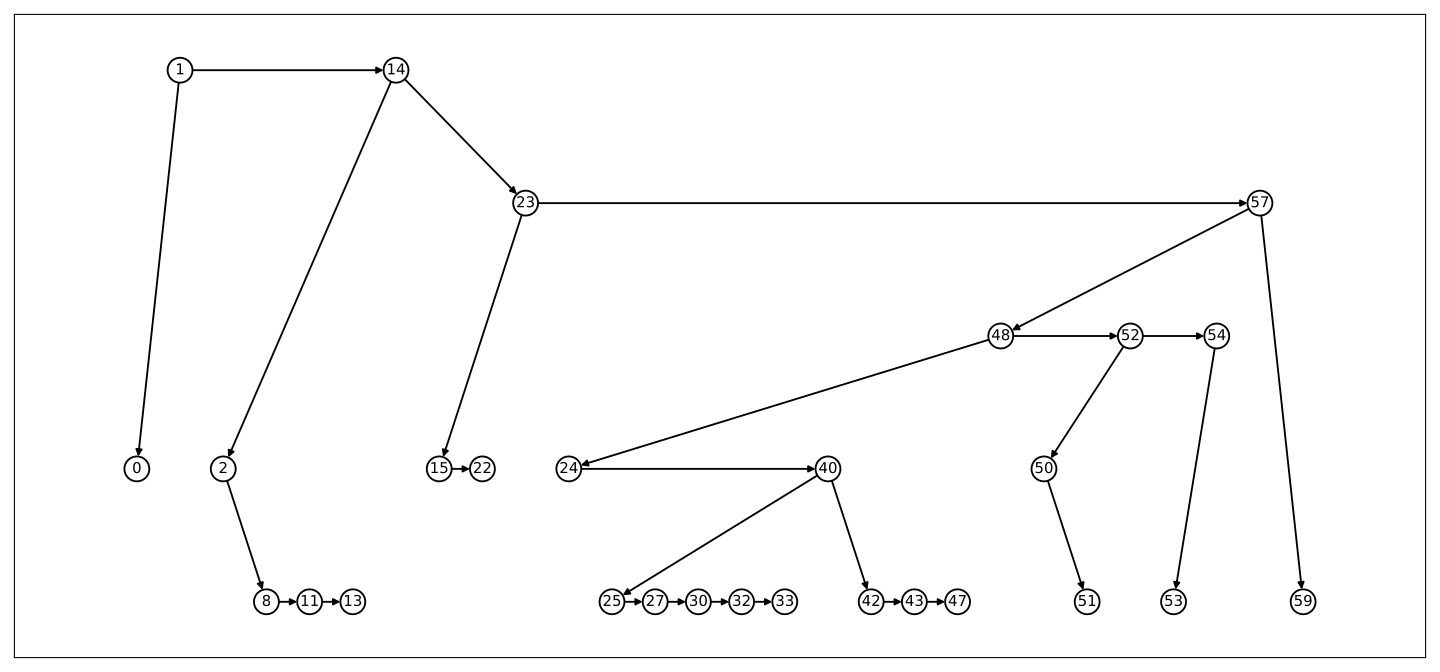
Here's a bigger one, but without labels for lack of space:
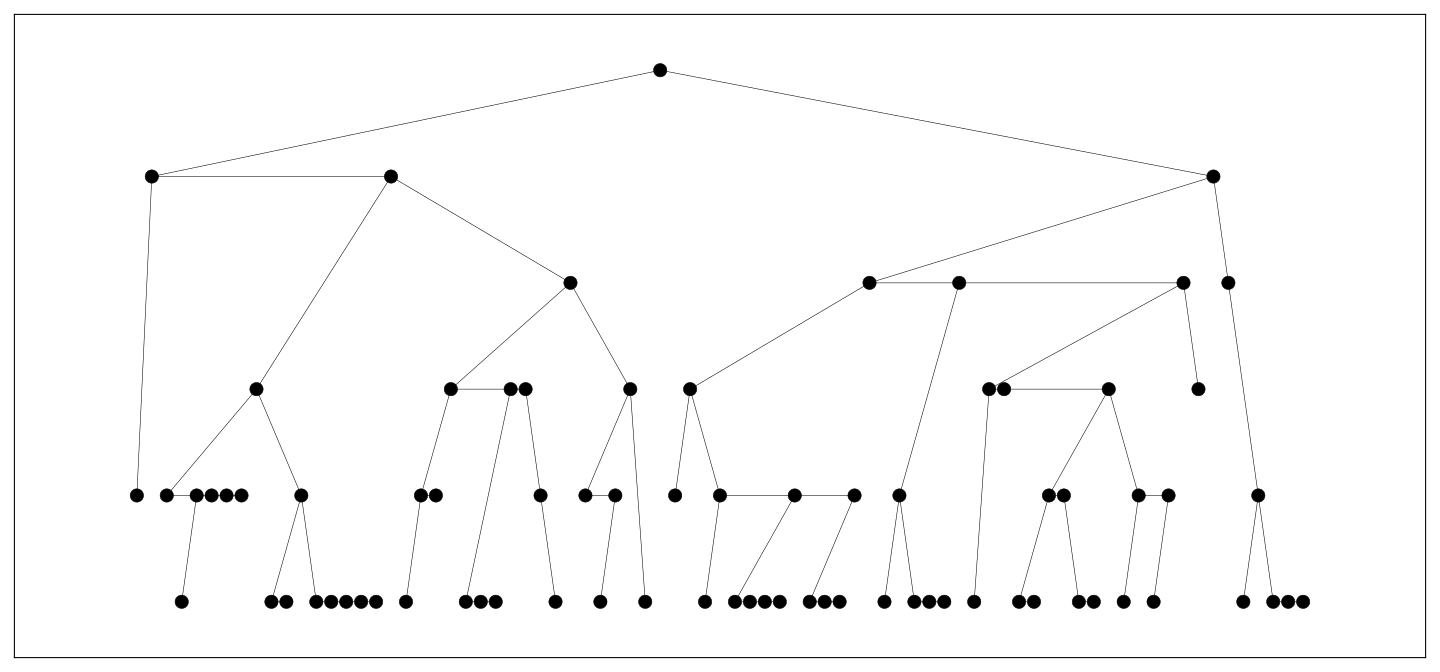
4.2. Operations
- Lexi Trees support two primitive operations:
- lifting: to lift a node, increment its level by 1 and fix the arrows.
- lowering: to lower a node, decrement its level by 1 and fix the arrows.
- In general, we can ‑lift or ‑lower a node, i.e. lift or lower it by levels.
- An insertion at level can be seen, conceptually, as an ‑lifting from level -1.
- A deletion from level can be seen, conceptually, as an ‑lowering to level -1.
- Note:
- The left-to-right order of the keys is fixed and beyond our control.
- We can play with the levels however we want, though.
- Rebalancing a tree is nothing but readjusting the levels without touching the keys.
5. P‑Lexi Trees
- P‑Lexi Tree is short for Probabilistic Lexi Tree.
- All rootleaf paths in P‑Lexi Trees have expected length .
- The expectation is over all the possible P‑Lexi Trees that can be randomly generated given the same sequence of operations.
- Nodes:
- are inserted at random heights,
- can't be moved around once in the tree,
- can be deleted.
- P‑Lexi Trees work as expected (pun intended) if and only if Skip Lists work, because...
5.1. P‑Lexi Trees are isomorphic to Skip Lists
5.1.1. Proof (sketch)
- Let's consider the following Skip List:
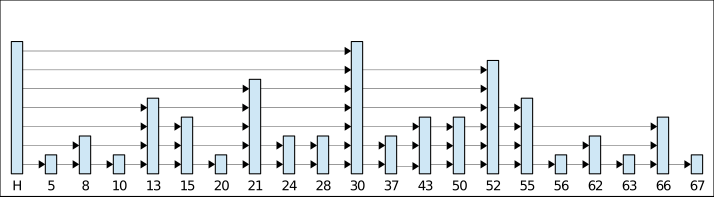
- Let's find, say, key 56:
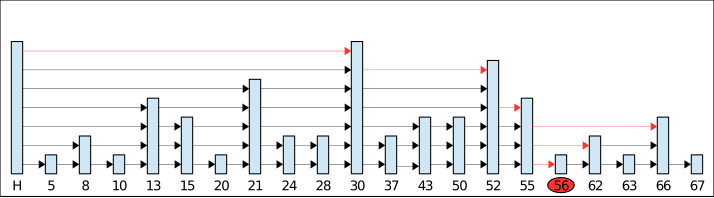
- Note that we only use the highest arrow to a node during searches, so we can remove the others:
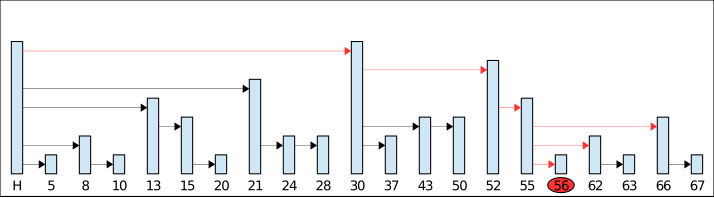
- Now each node has just one parent, but can still have several children.
- We can reduce the number of children by doing the following:
- for each node :
- let be the highest arrow starting from .
- for each arrow that starts from , with :
- let be the arrow right above .
- let be the node pointed to by .
- make start from rather than from .
- for each node :
- For instance:
- Header has 5 forward arrows.
- The highest arrow points to node 30
- The 2nd-highest arrow points to node 21:
- we change its starting point so that it starts from node 30.
- The 3rd-highest arrow points to node 13:
- we change its starting point so that it starts from node 21.
- and so on...
- Here's the result:
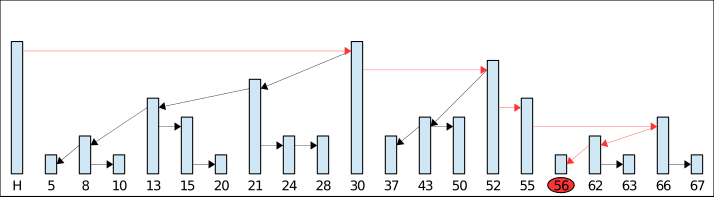
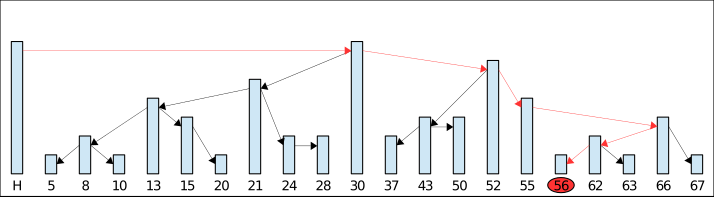
- First cosmetic change: let's make the arrows start from the top of the nodes:
- Second and last cosmetic change: let's shorten the nodes:
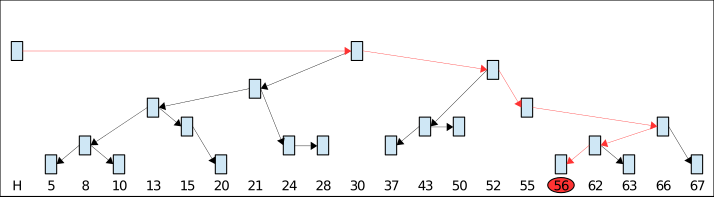
- The transformations are invertible so we can also transform a Lexi Tree into a Skip List.
5.2. Why do Skip Lists work?
Here's my intuition:
- Let SL be the perfectly balanced Skip List in the following figure:
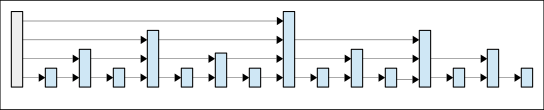
- The height distribution
- Note that SL, ignoring the header (the gray node), has:
- 8 nodes of height 1
- 4 nodes of height 2
- 2 nodes of height 3
- 1 node of height 4
- For , the nodes of height > are 1 fewer than the nodes of height .
- As the number of nodes in SL goes to infinity, though, that difference of 1 node becomes insignificant, so...
- ... the distribution of the heights approaches the geometric distribution.
- We can generate the heights from the geometric distribution, with parameter , simply by repeatedly tossing a fair coin:
height = 1
while coin toss == heads:
    height += 1
- Note that, by convention, height level .
- Since we toss a fair coin to decide whether we stop at the current height or we keep going, the following probabilities are equal:
- the probability of a node being at level ,
- the probability of a node being above level .
- This means that we expect the following values to be equal:
- the number of nodes at level ,
- the number of nodes above level .
- That should make the connection between SL and the geometric distribution clear.
- Note that SL, ignoring the header (the gray node), has:
- Now think of the nodes as pairs.
- Shuffle the levels (i.e. swap them between nodes), but keep the keys fixed.
- If the shuffle is uniform enough, we expect the rootleaf paths (or their equivalent in a Skip List) to be of length on average.
- By starting with an empty Skip List and inserting nodes with heights chosen from the same geometric distribution as SL, we're, basically, directly generating the shuffled version of SL.
5.3. Operations
5.3.1. Nodes
- Since nodes are never moved around once inserted, we can optimize a few things:
- leaves only need the right pointer
- The level in lower nodes can be represented as few bits.
- Since there are, on average, exponentially many more lower nodes than higher nodes, this saves a considerable amount of space.
5.3.2. Search Paths
- Key searches don't need to know the level of the nodes, so:
- key searches are the same as in binary trees.
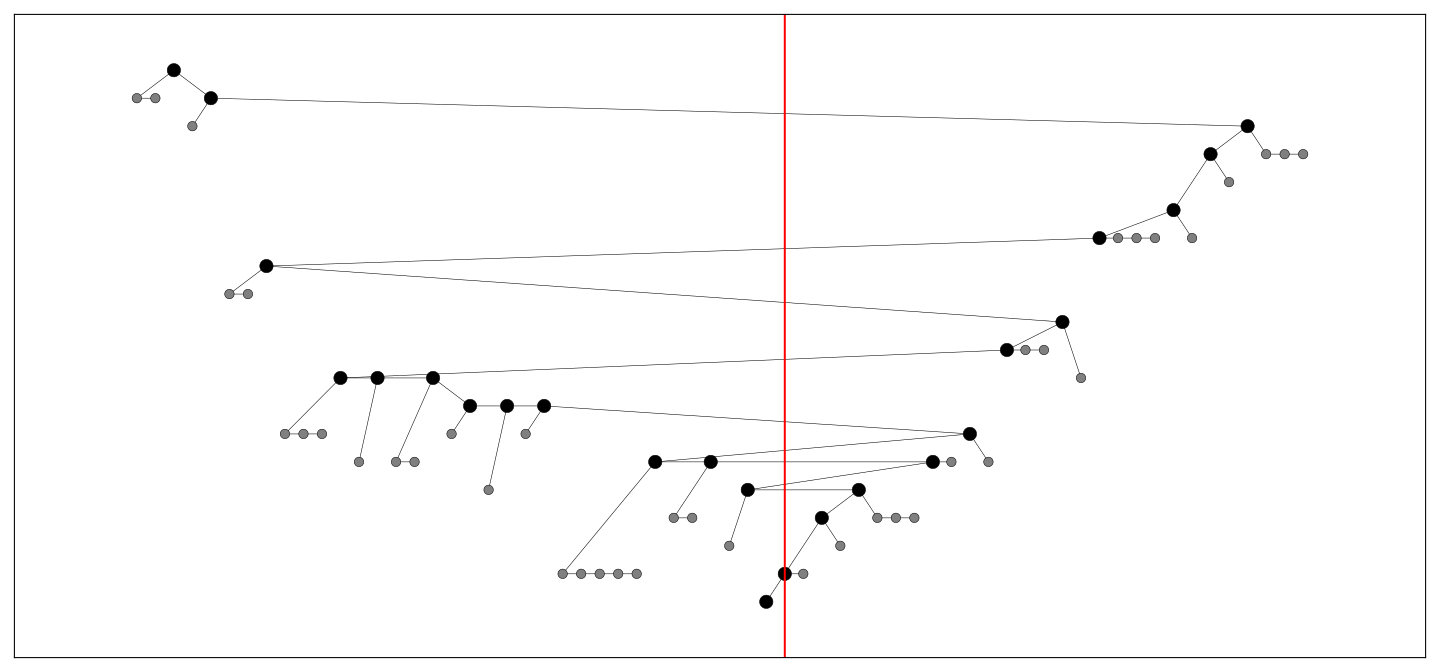
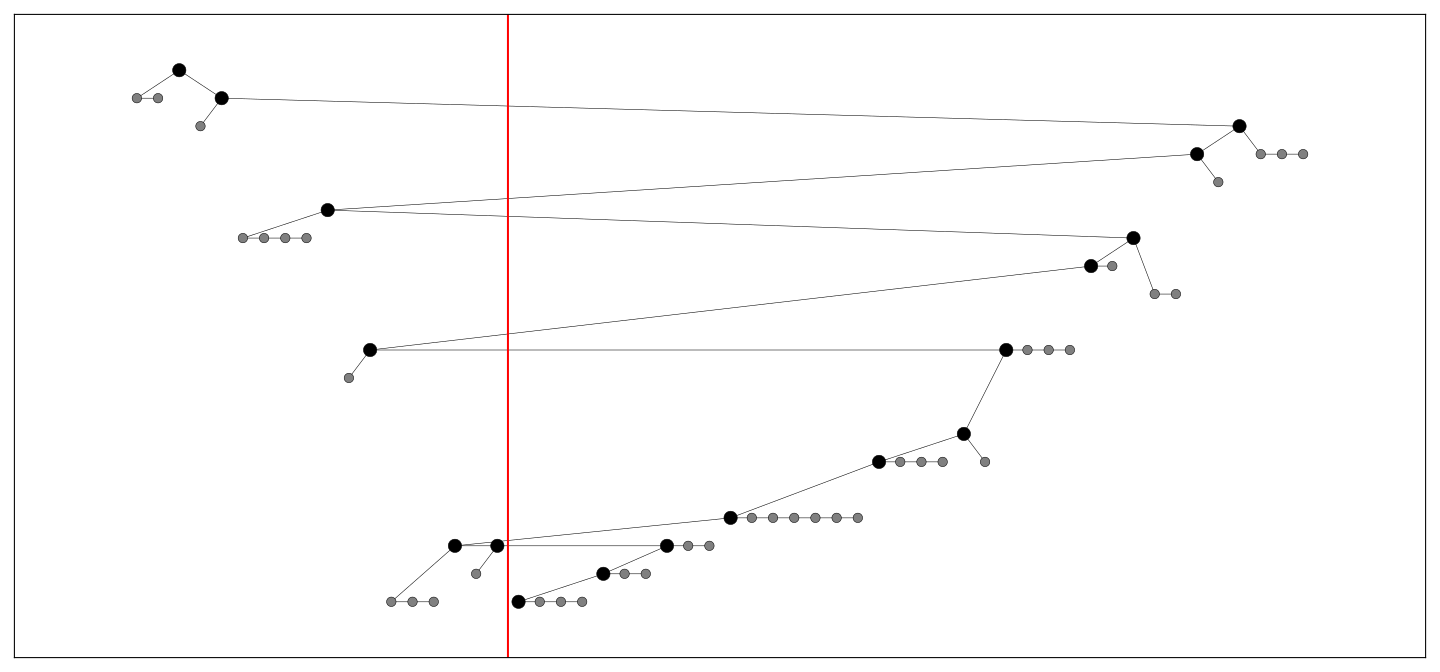
- Here are a few examples of search paths in a P‑Lexi Tree with 1M nodes:
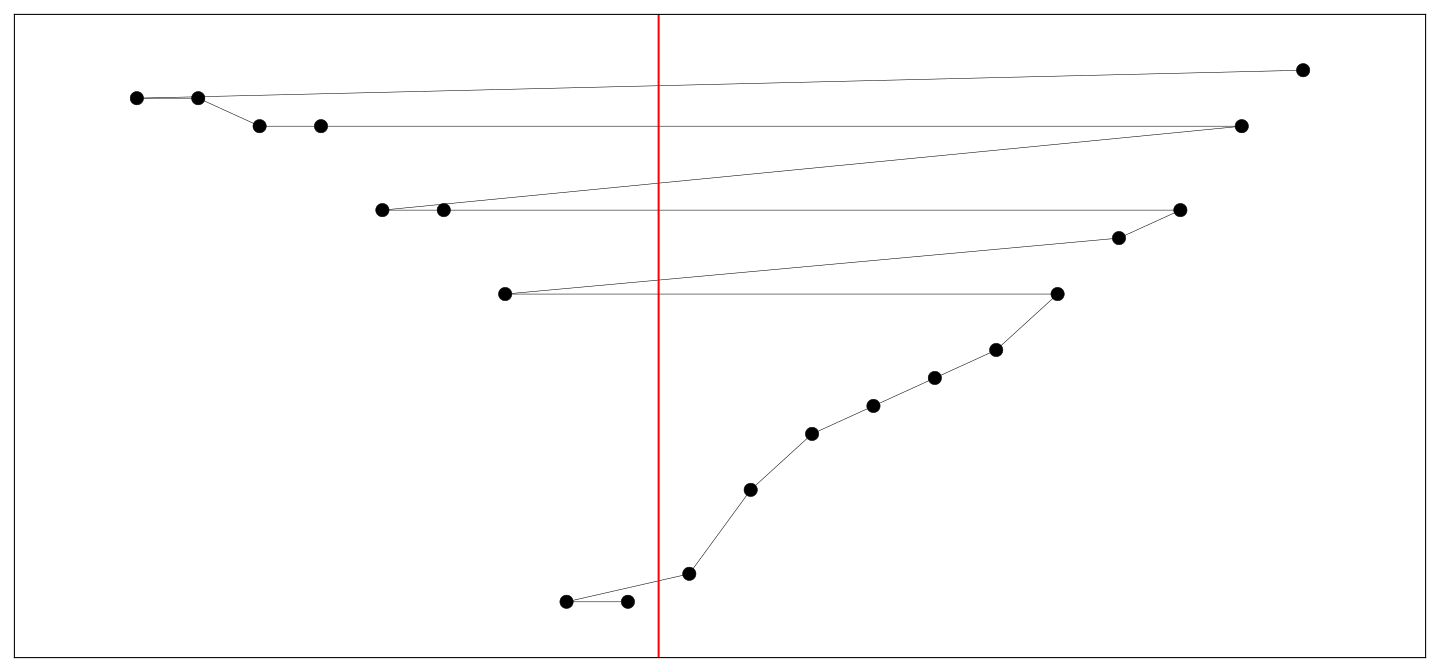
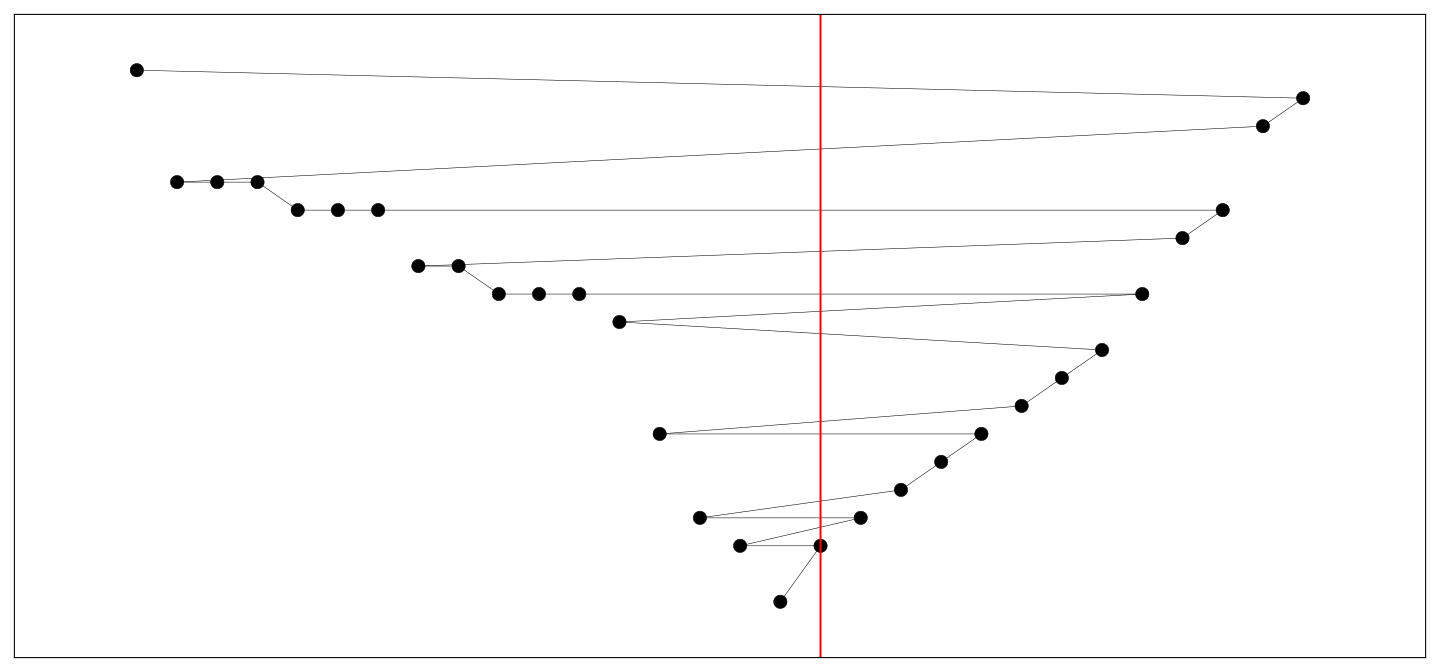
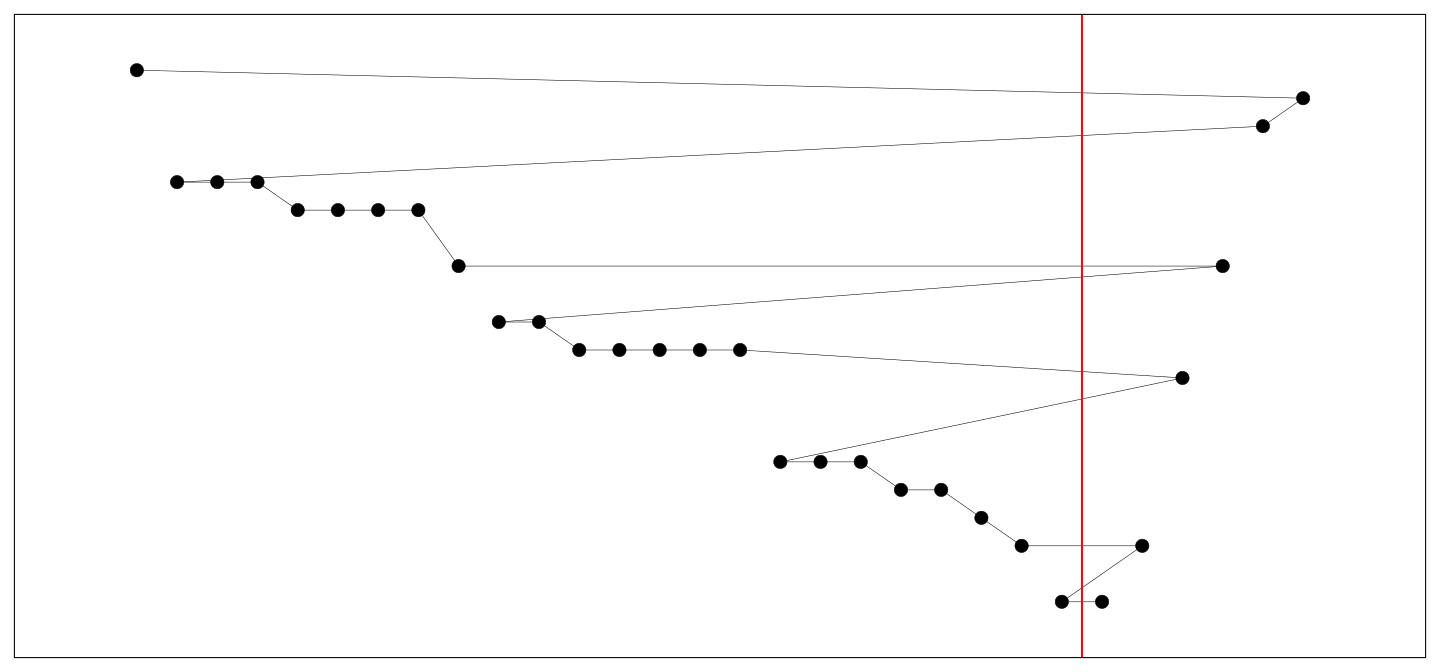
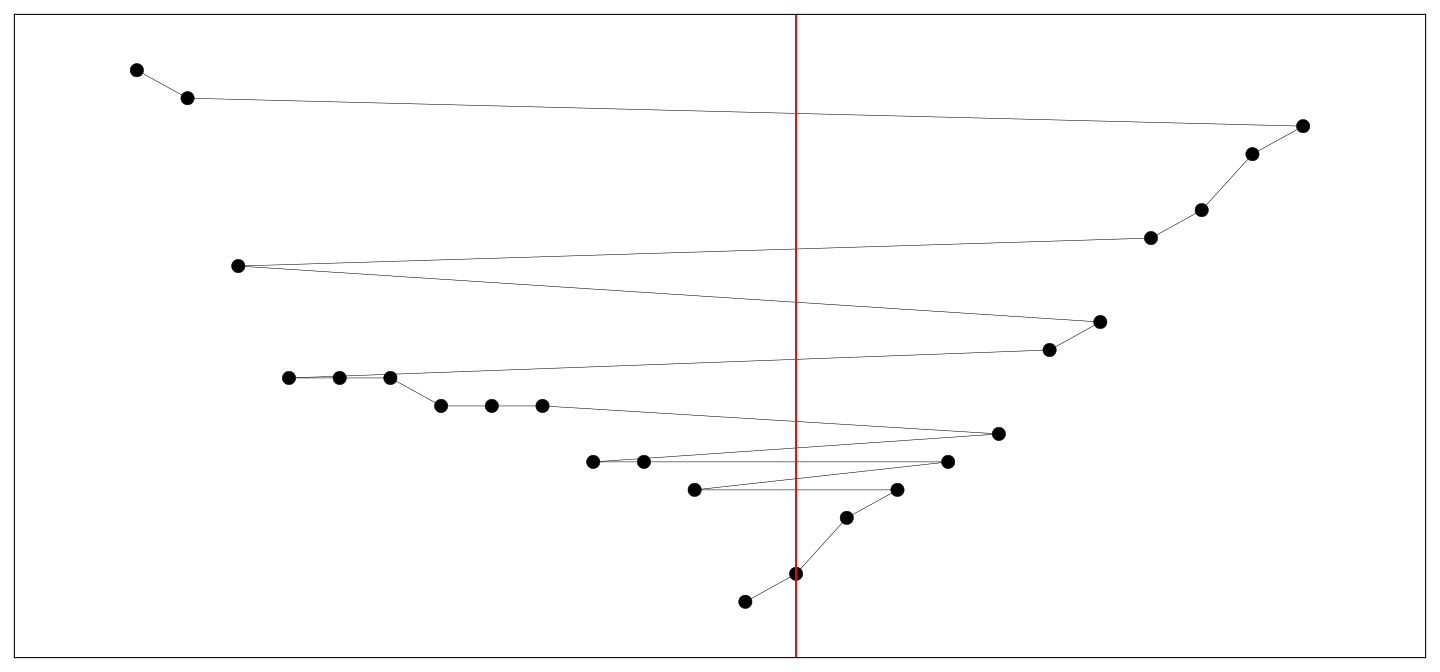
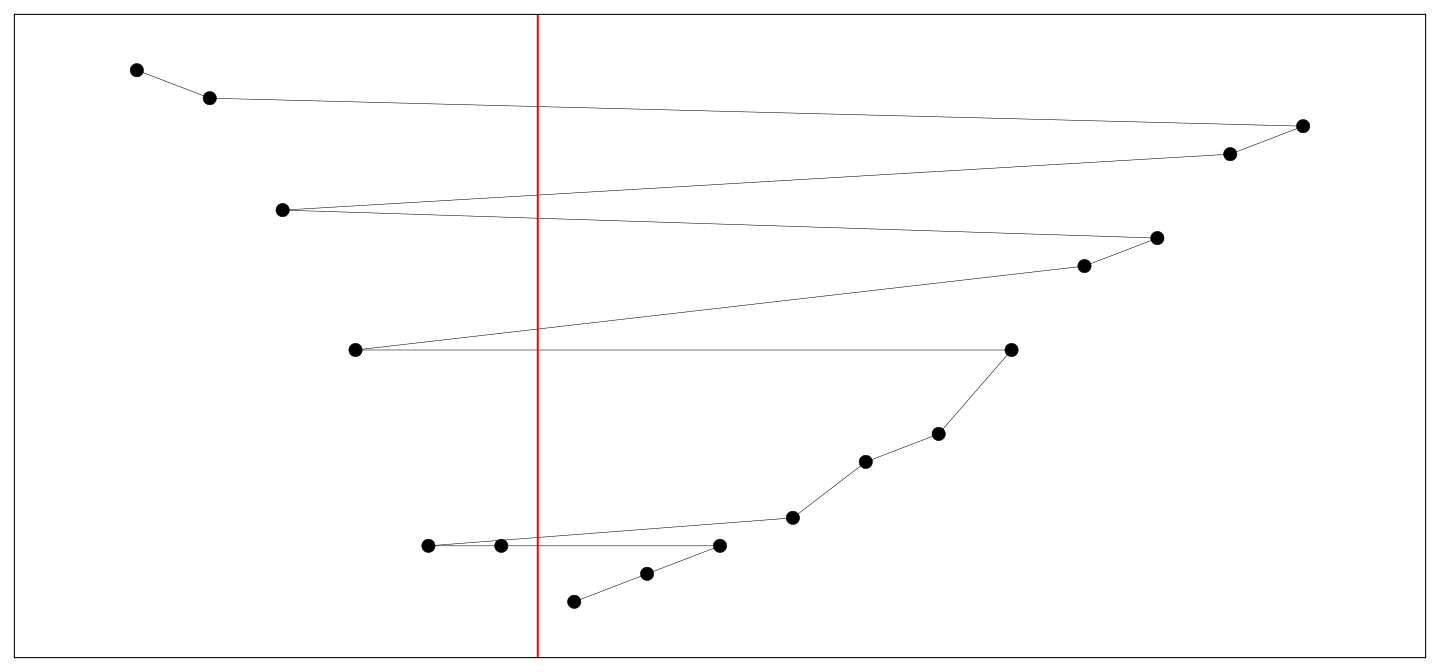
- The red line is the key line, i.e. the position of the key we searched for.
- Notice that we found the key in two cases.
- When the key is not found, the key line indicates its insertion position.
- During key searches:
- We're almost always moving to nodes closer to the key line:
- all other nodes are ignored.
- I said "almost always" because there's a single exception:
- When we find the key node, we usually either:
- stop the search, or
- go left one single step and then:
- go all the way to the right to get to the rightmost leaf key‑before the key node.
- Note:
- if we step left from the key node, then:
- all the nodes we visit from that point onward will have keys smaller than (or equal to, if the keys are not unique) the searched-for key.
- if we step left from the key node, then:
- When we find the key node, we usually either:
- We're almost always moving to nodes closer to the key line:
- Let's add some of the ignored nodes:
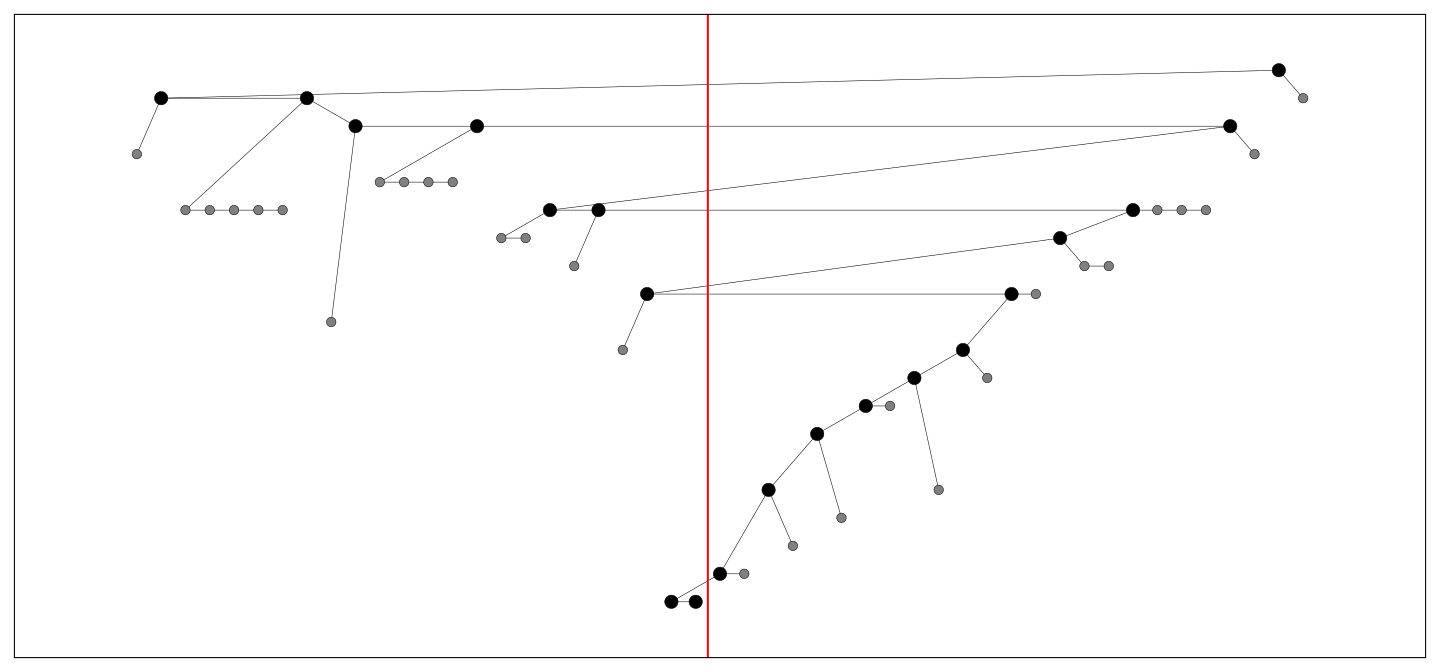
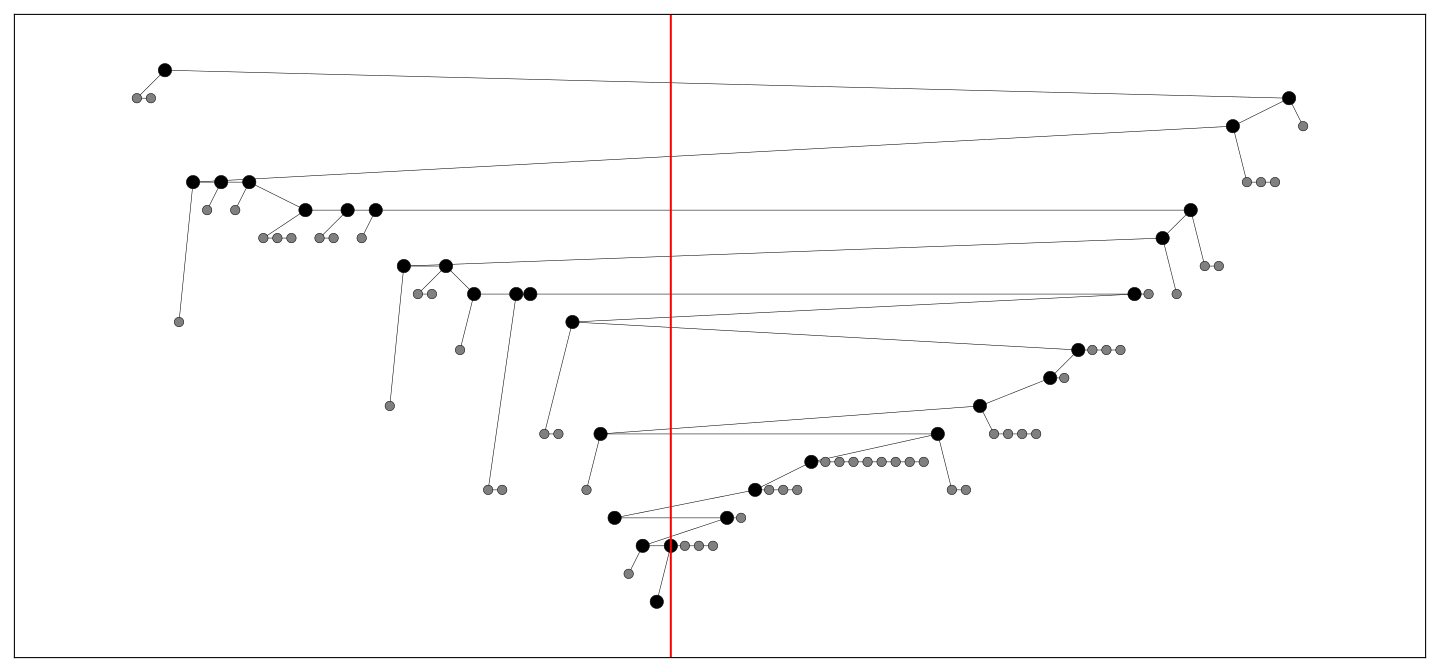
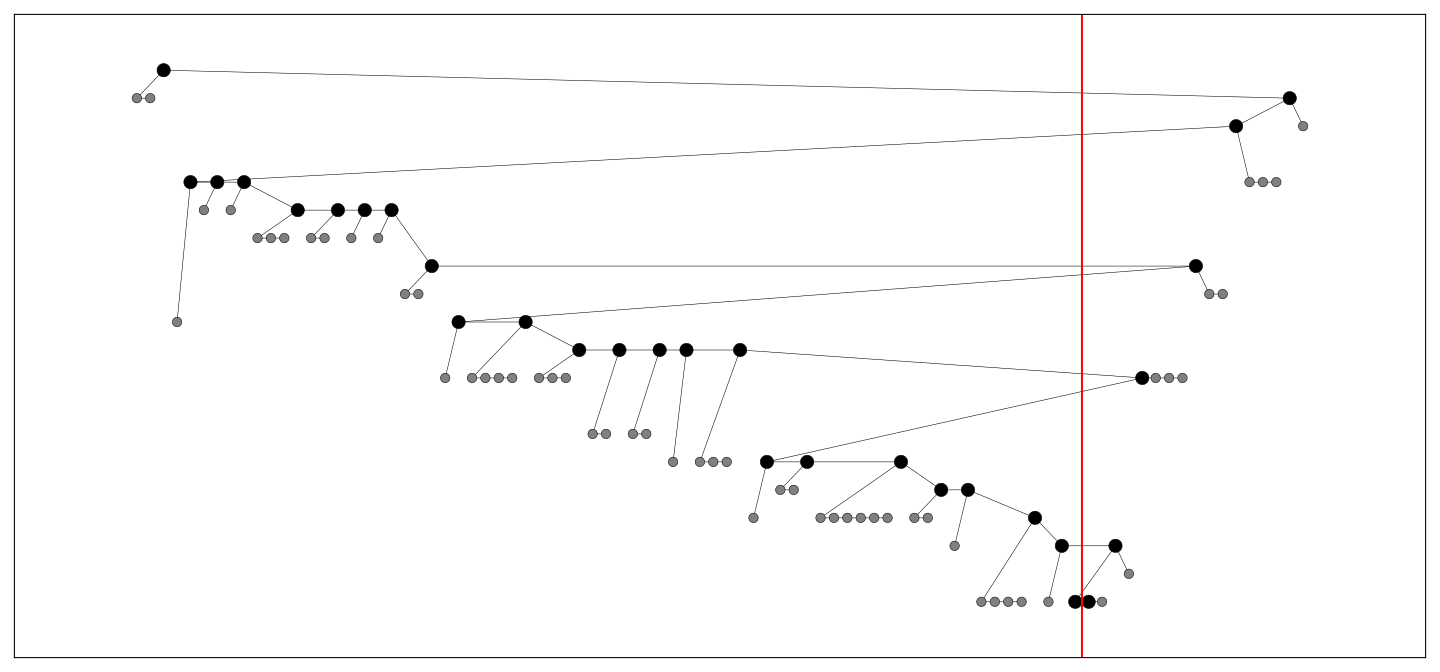
5.3.3. Insertions
- To insert a node of key we first search for .
- If is already present, we stop:
- for a set, we could just return;
- for a map, we could just update the value of the key node and return.
- We must also choose a random insertion level the same way as for Skip Lists.
- While we're searching for , we also remember some important points along the search path.
- These important points:
- are at level ,
- are 4 per level at most, 2 per side,
- come in pairs, where we may have .
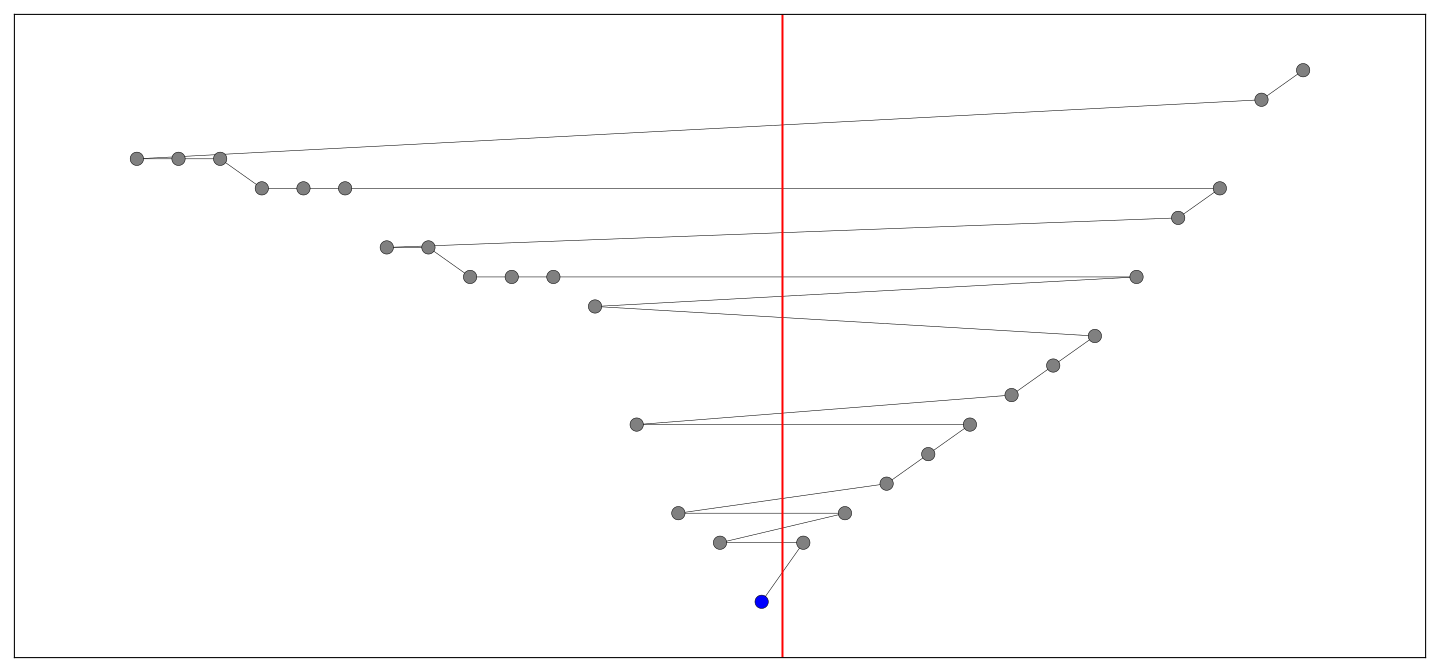
- Let's look at some examples before saying anything more:
- Before insertion at level 0:
- After insertion at level 0:
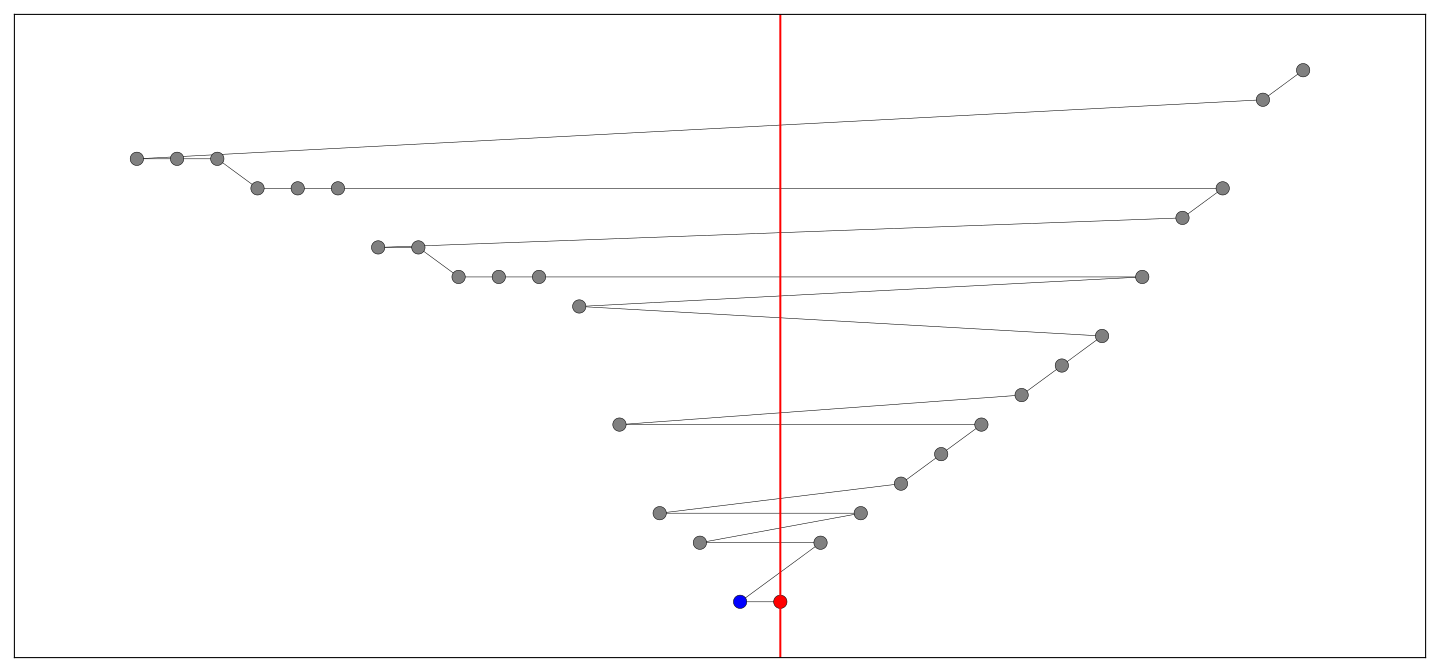
- The blue node is the pair , with , on the left side.
- We need to remember that pair.
- Note that all the nodes above level 0 are grayed out because we don't need to remember them.
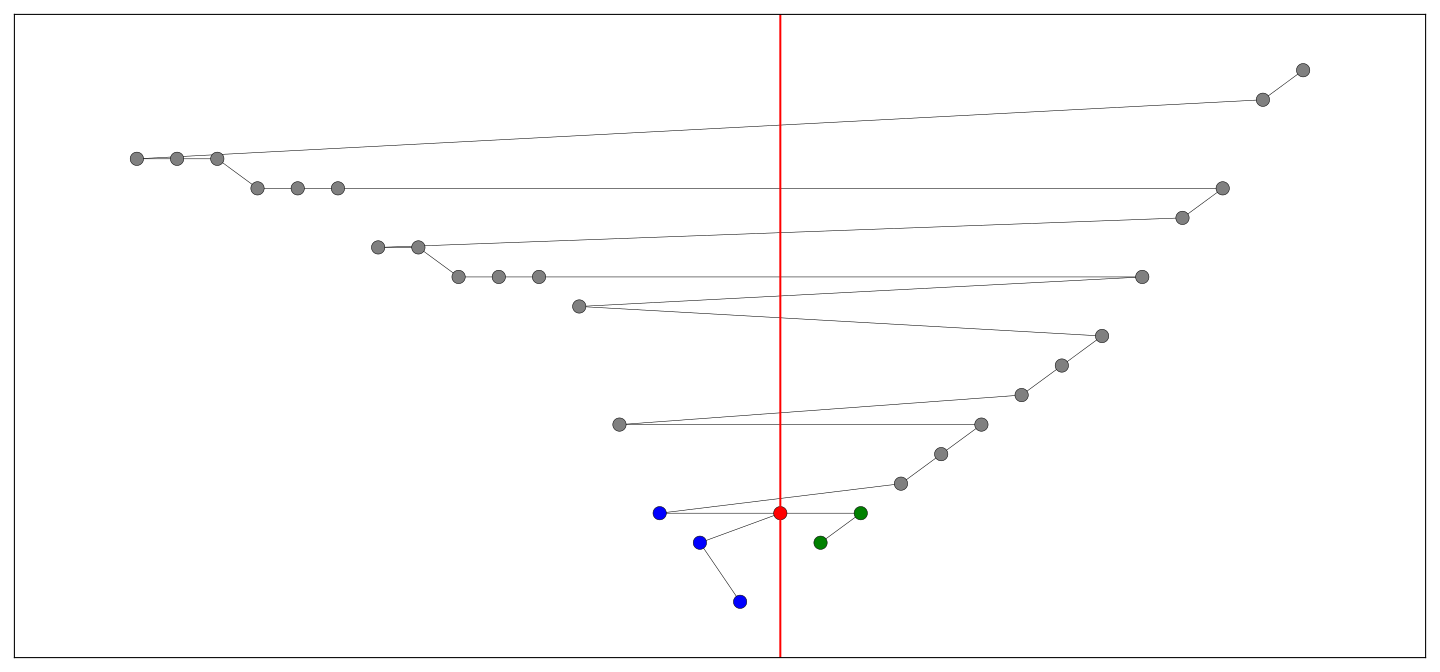
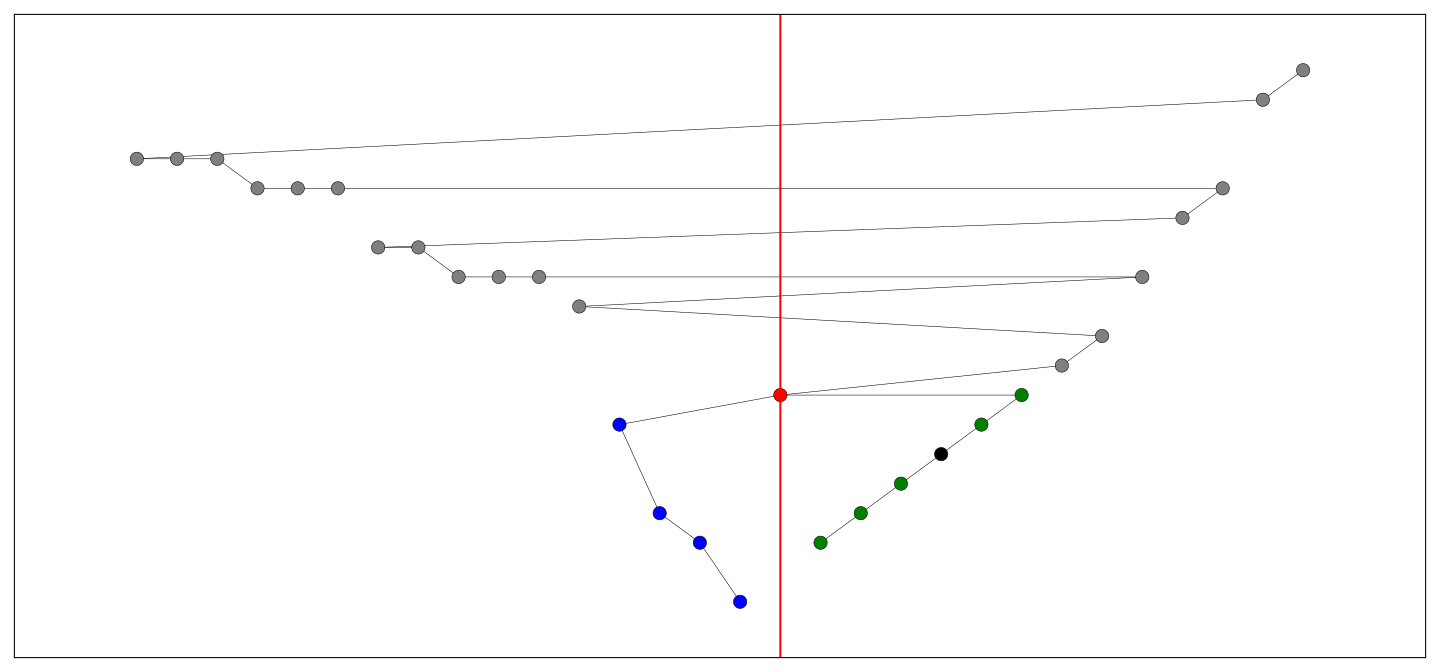
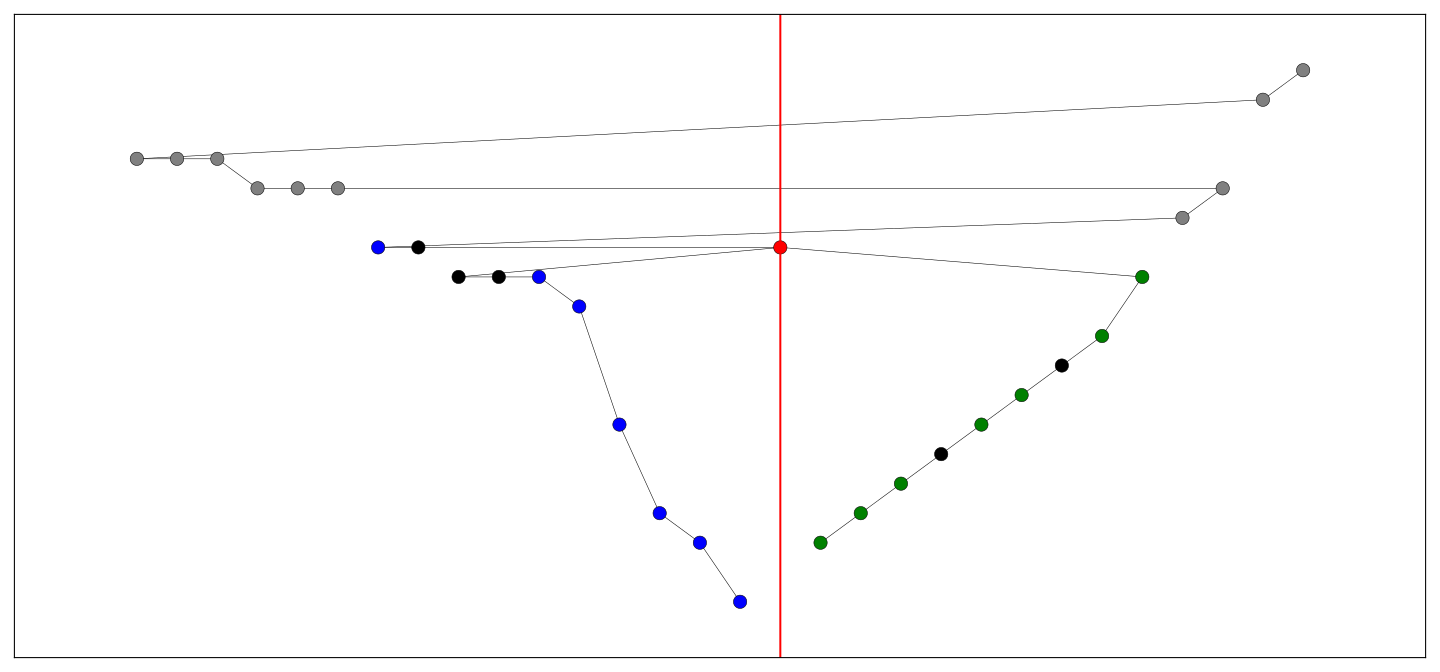
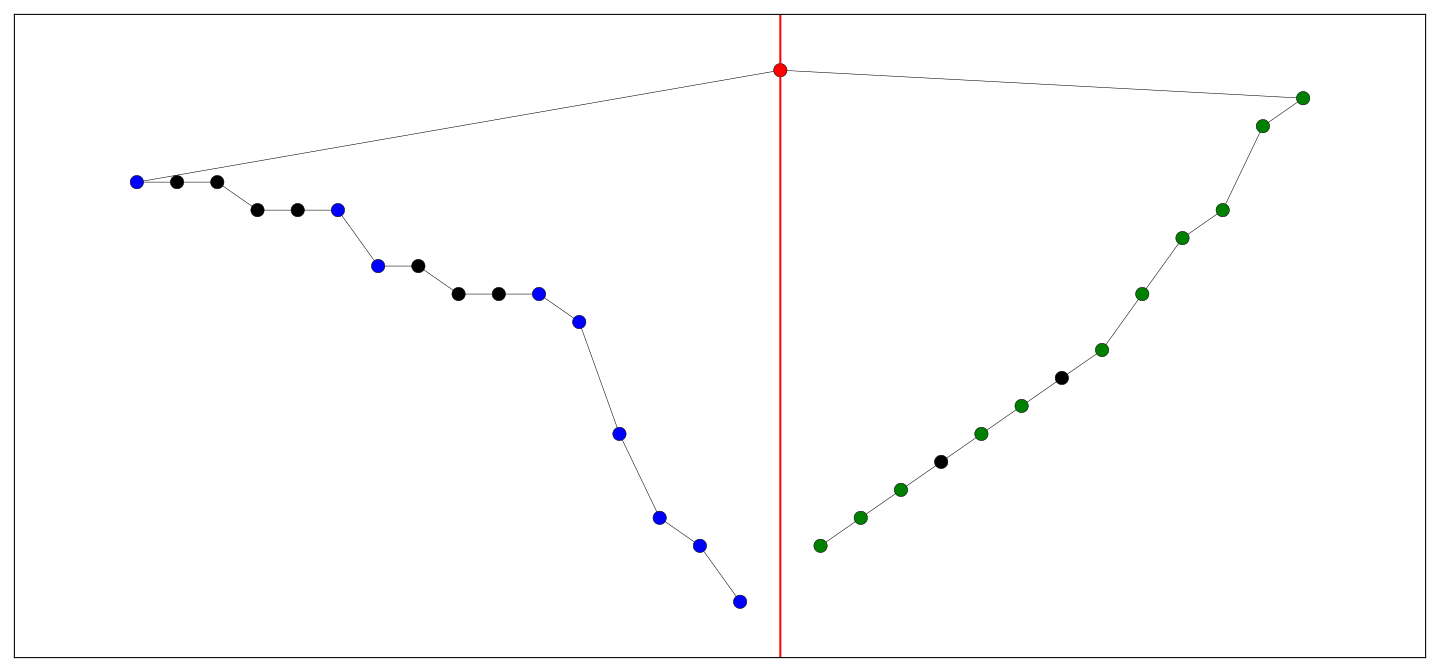
- Now look for a pattern as we change the insertion level .
- :
- :
- :
- :
- Before insertion at level 0:
- Basically, the red node is like a pair of scissors that cut along the red key line, starting from the bottom and going upwards up to level .
- That's why the important nodes we need to remember are at or below the insertion level .
- Here's the case again, before the insertion:
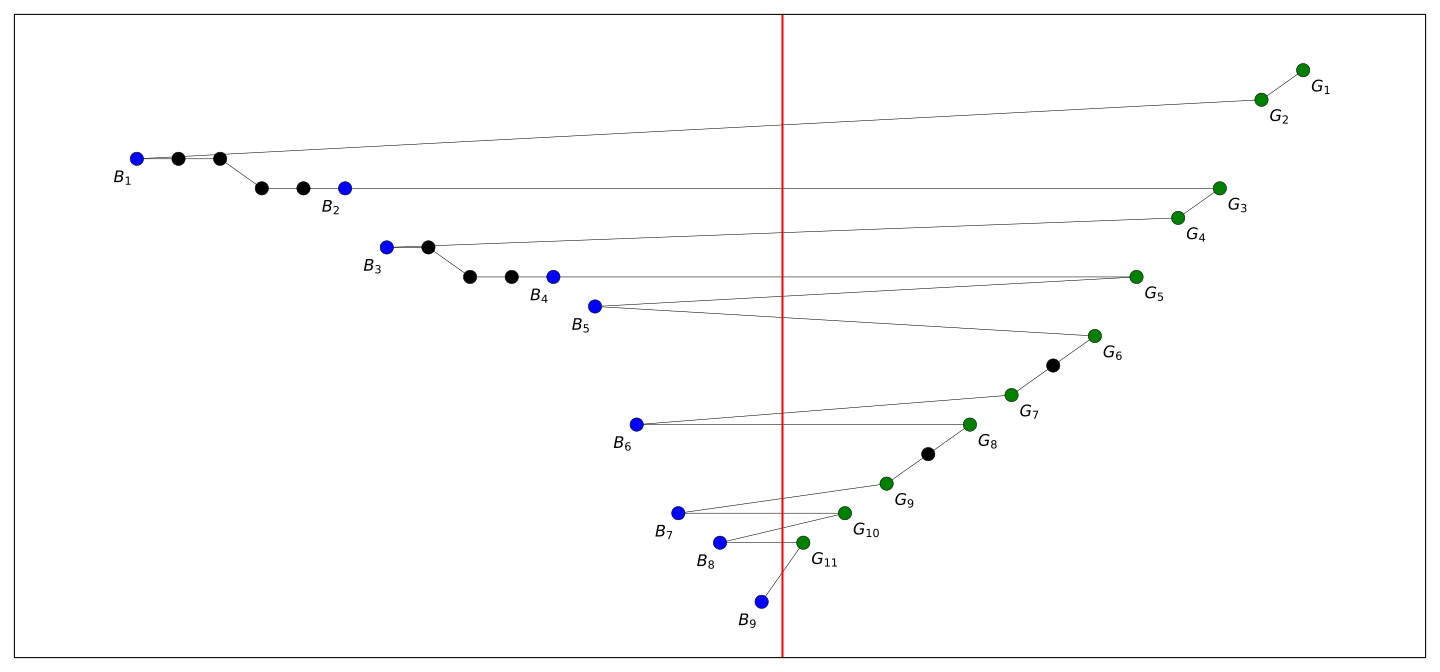
- I'll call "crossing the red key line" simply "the crossing".
- From the picture above we can see that:
- is the last node before the crossing
- is the first node right after the crossing
- is the last node before the crossing
- is the first node right after the crossing
- and so on...
- By convention, we say that is also in the "first node" category.
- The pairs are then:
- and so on...
- We don't need to remember the black nodes.
- Now let's look again at the situation after the insertion:
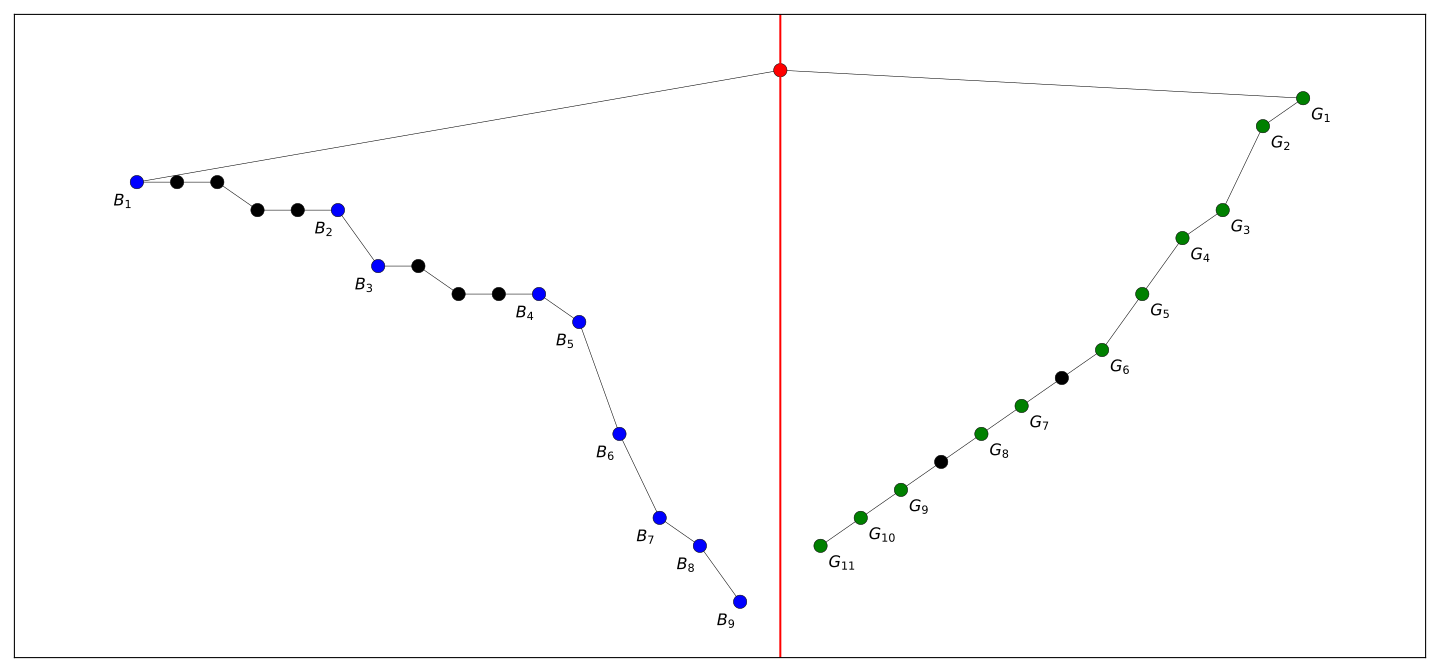
- The inserted red node points to and .
- B1 starts the left chain and the right chain.
- The last node of each pair connects to the first node of the pair right after it, on the same side, i.e. blue with blue and green with green.
- The black nodes are left untouched and that's why we don't need to remember them.
5.3.4. Deletions
- For the deletion, just consider the two pictures above in the opposite order!
- Basically:
- an insertion is a multi-level splitting operation, while
- a deletion is a multi-level merging operation.
- To delete a node:
- Find the node to delete.
- Let's say is the red point in the last picture above.
- The left chain starts with .
- The right chain starts with .
- We follow the left chain by always going right.
- We follow the right chain by always going left.
- Note that both chains are lexicographically ordered.
- This suggests a merge sort step of the two chains!
- We keep two pointers, one per chain, and...
- ... take one step along the chain with the lexi‑smaller node, ...
- ... and repeat until we're done merging the chains.
- Of course, when we cross, we link.
- For example, if nodes are adjacent in the merged sequence and they're on different sides, then we make point to using 's left or right pointer as appropriate.
- For once, the deletion is easier than the insertion!
5.4. Parallelization
- P‑Lexi Trees are easy to parallelize because all operations go down, from root to leaf.
- The higher-in-the-tree operation just need to wait for the lower-in-the-tree operation to finish.
- No operation needs to give up to avoid a deadlock.
6. -Lexi Trees
- A -Lexi Tree is a Lexi Tree where:
- each list has length at most
- all rootleaf paths are complete
- A path is complete
- for each level from 0 to the level of the root,
- there's a node in at level .
- for each level from 0 to the level of the root,
- Intuitively, a path is complete it has no holes.
- A -Lexi Tree is -balanced, i.e. each rootleaf path has length at most .
- Every node at level 0 is considered a leaf.
- Leaves can only have high right children.
- Of course, we just need a single bit to indicate a high right node.
- Practical consideration: In the source code, a -Lexi Tree is called a DLTree, where "D" stands for deterministic.
7. 2‑Lexi Trees
- Recall:
- for each list :
- no holes along any rootleaf path
- for each list :
- Example
- Here's a 2‑Lexi Tree with 100 nodes:
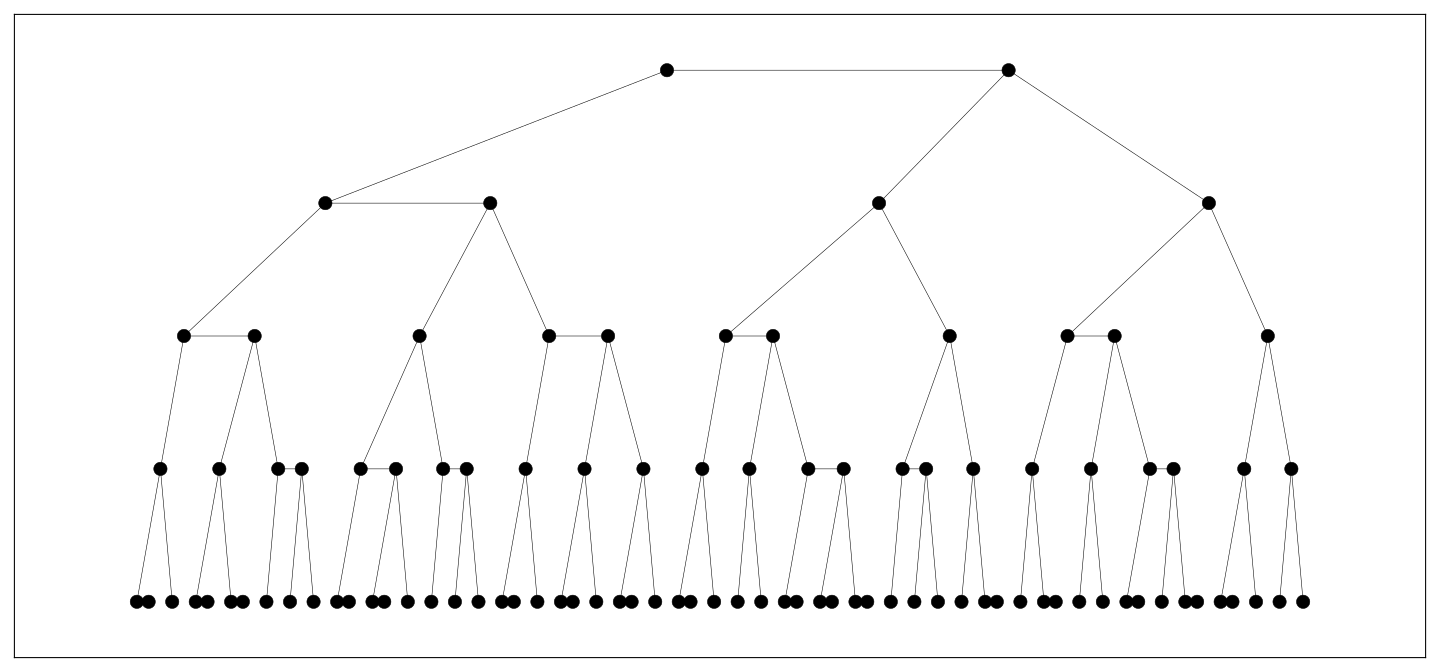
- This was created by inserting 100 random uniformly distributed nodes one after the other.
- Here's a 2‑Lexi Tree with 100 nodes:
7.1. Insertion
- We insert the new node into the correct position at level 0, as a leaf.
- is now in a list of length at most 3.
- If has 3 nodes, we lift the middle one, go a level higher along the search path, and keep lifting middle nodes until needed, going up.
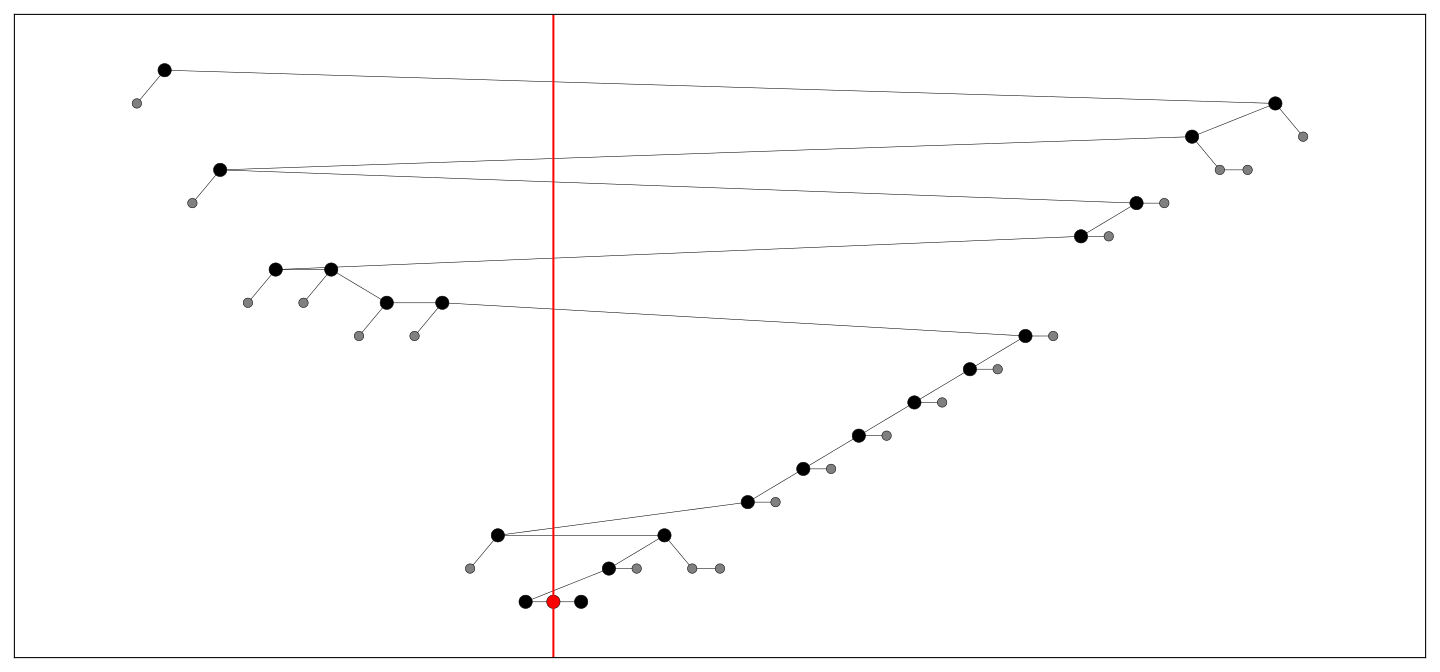
- Example:
- Here are the pictures before and after the insertion without rebalancing:
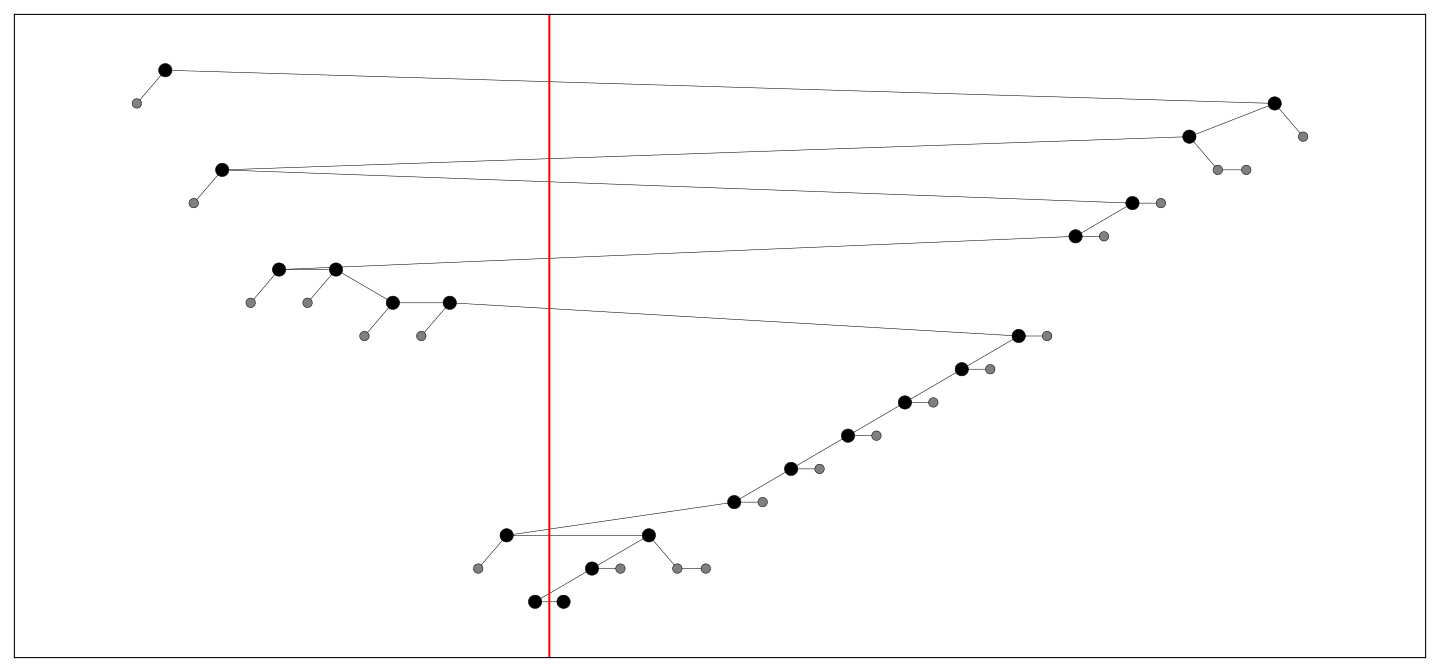
- Here's the picture after the rebalancing:
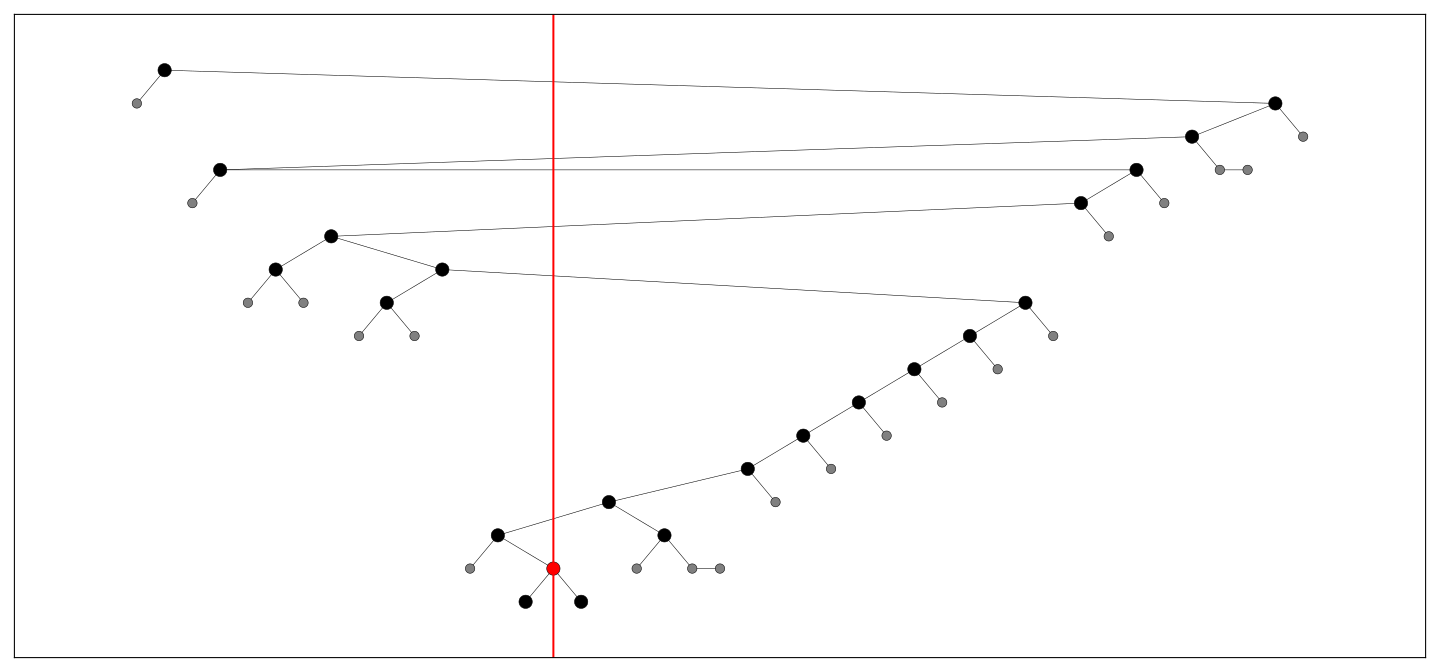
- Here's the full animation:
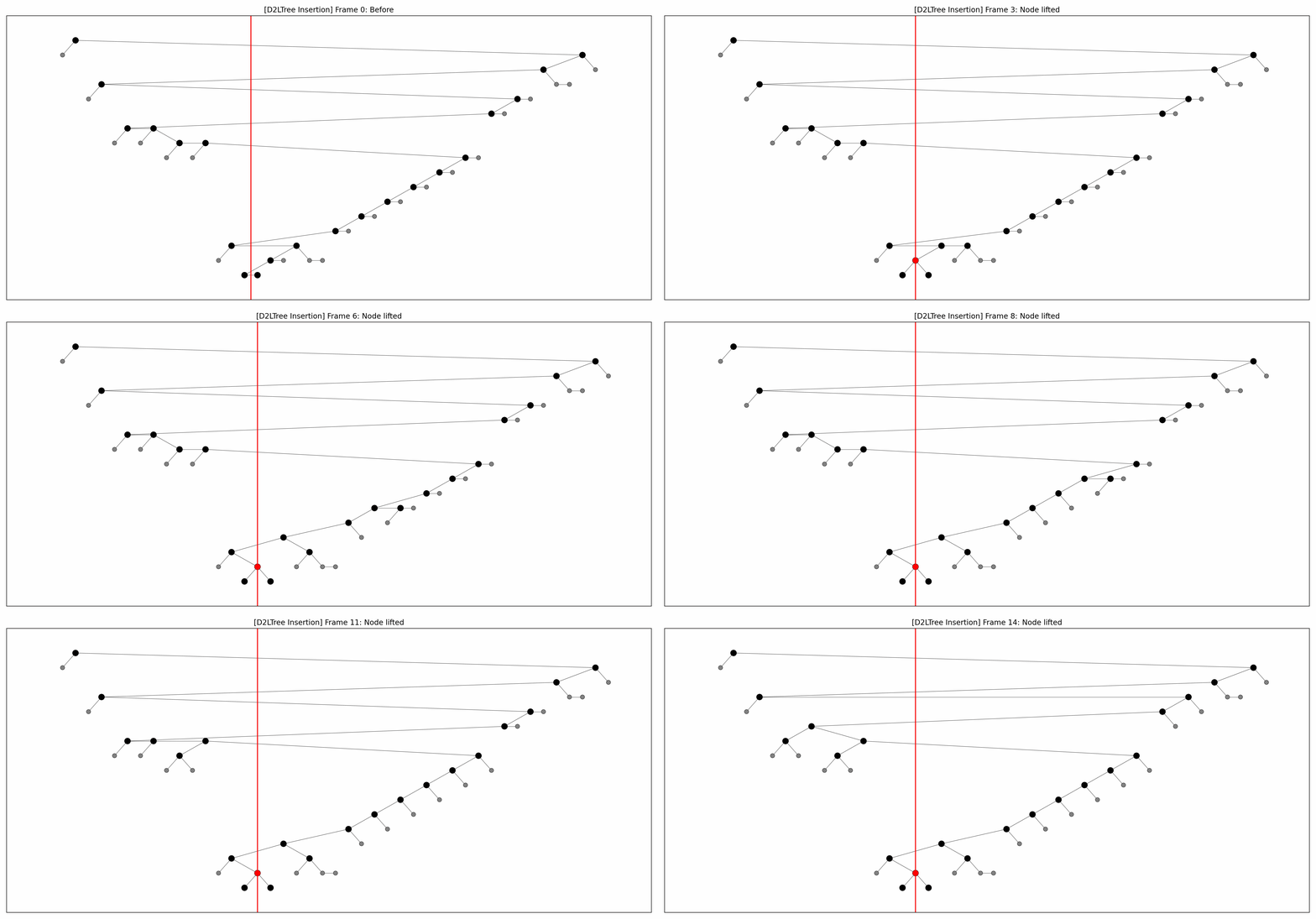
- Here are the pictures before and after the insertion without rebalancing:
7.2. Deletion
- We delete a leaf by, well, removing it.
- If that removal leaves a hole:
- we go up one level to the (ex-)parent , along the search path,
- we lower to close the hole below,
- and repeat the process as many times as needed...
- To delete an internal node , we replace it with the rightmost leaf on its left, i.e. the leaf immediately key‑before it. This is a classic trick.
- If the leaf leaves a hole at level 0, we proceed as before.
- Example
- Here are the pictures before and after the deletion of the node without rebalancing:
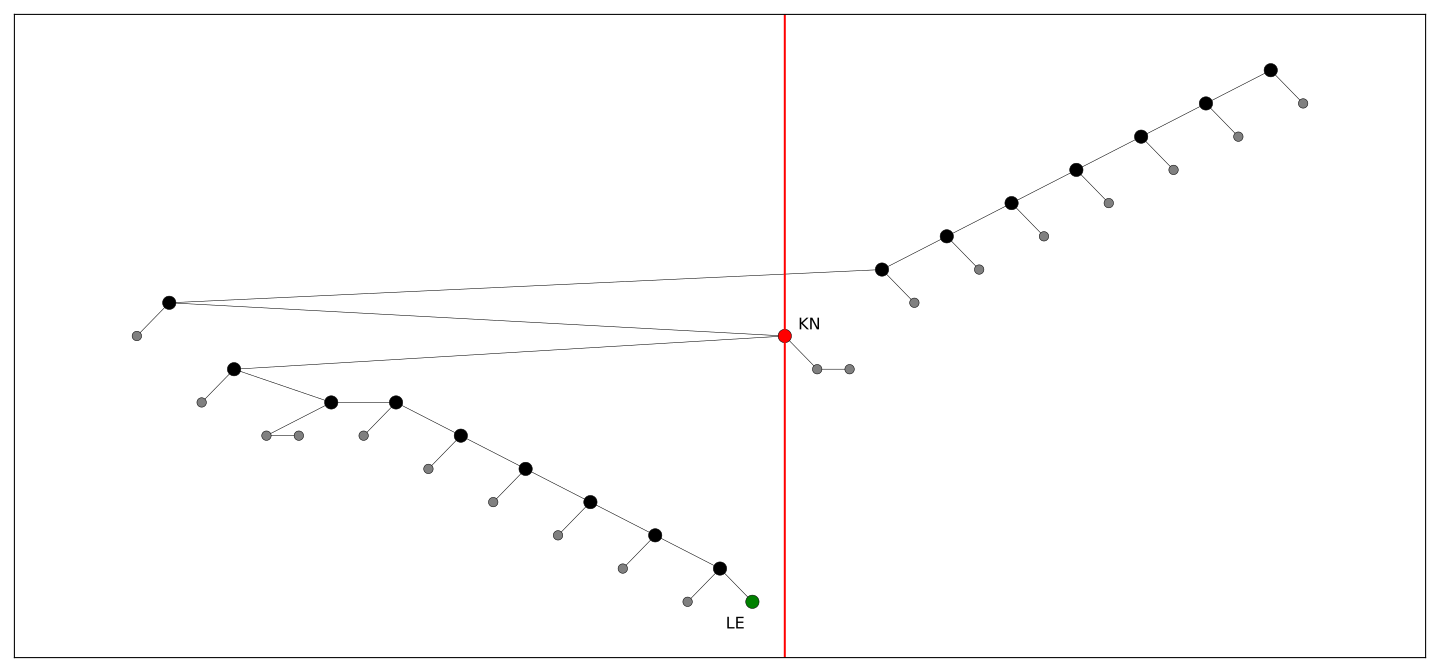
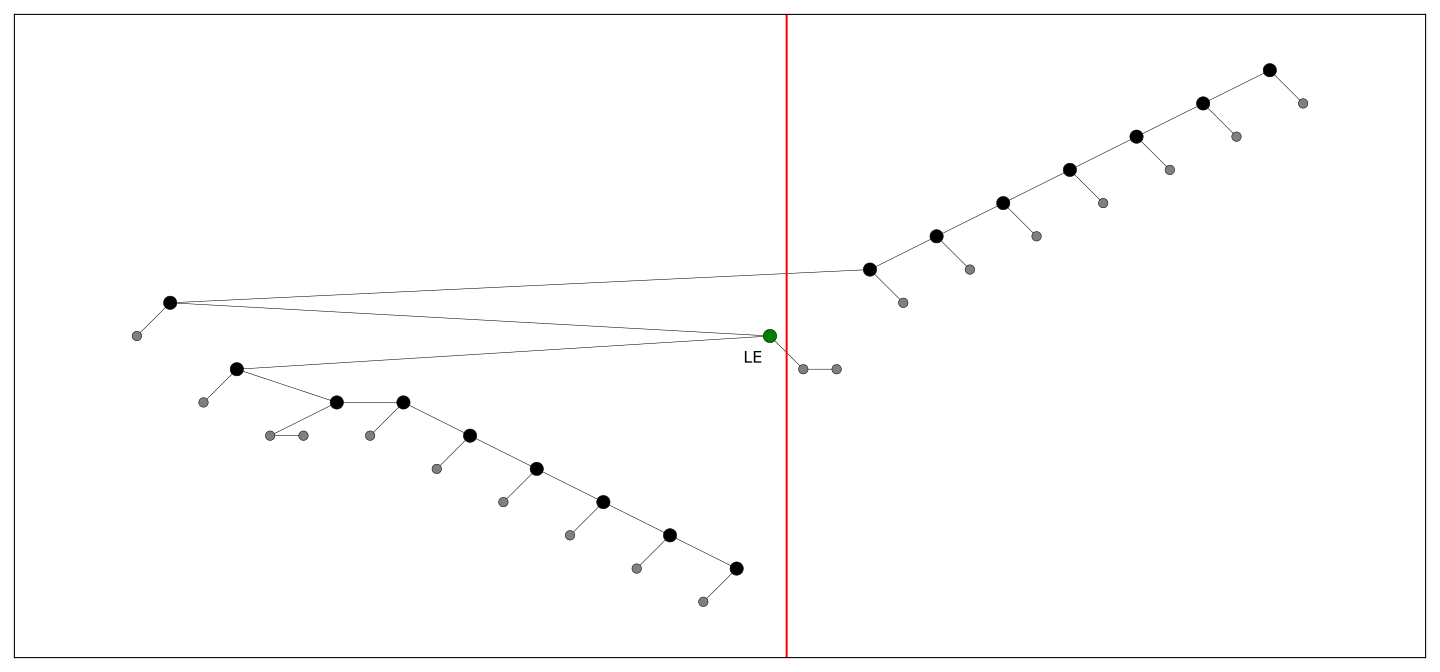
- Here's the picture after the rebalancing:
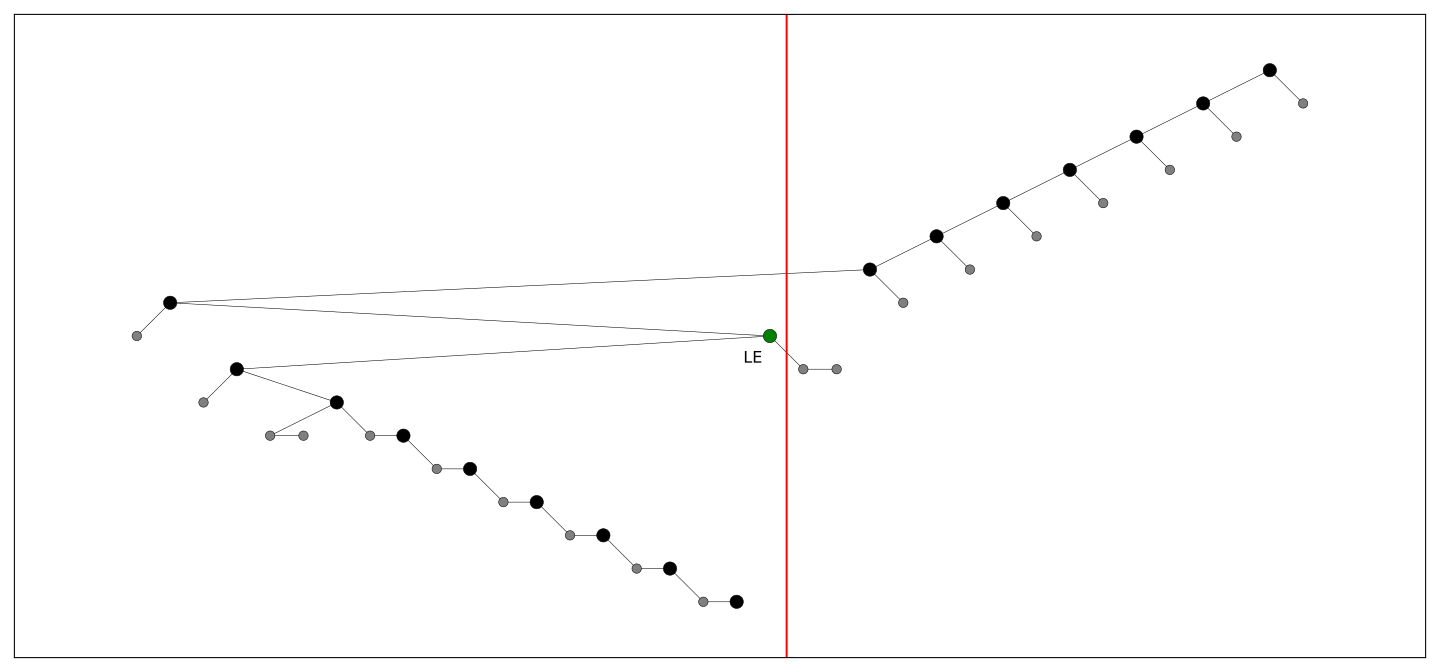
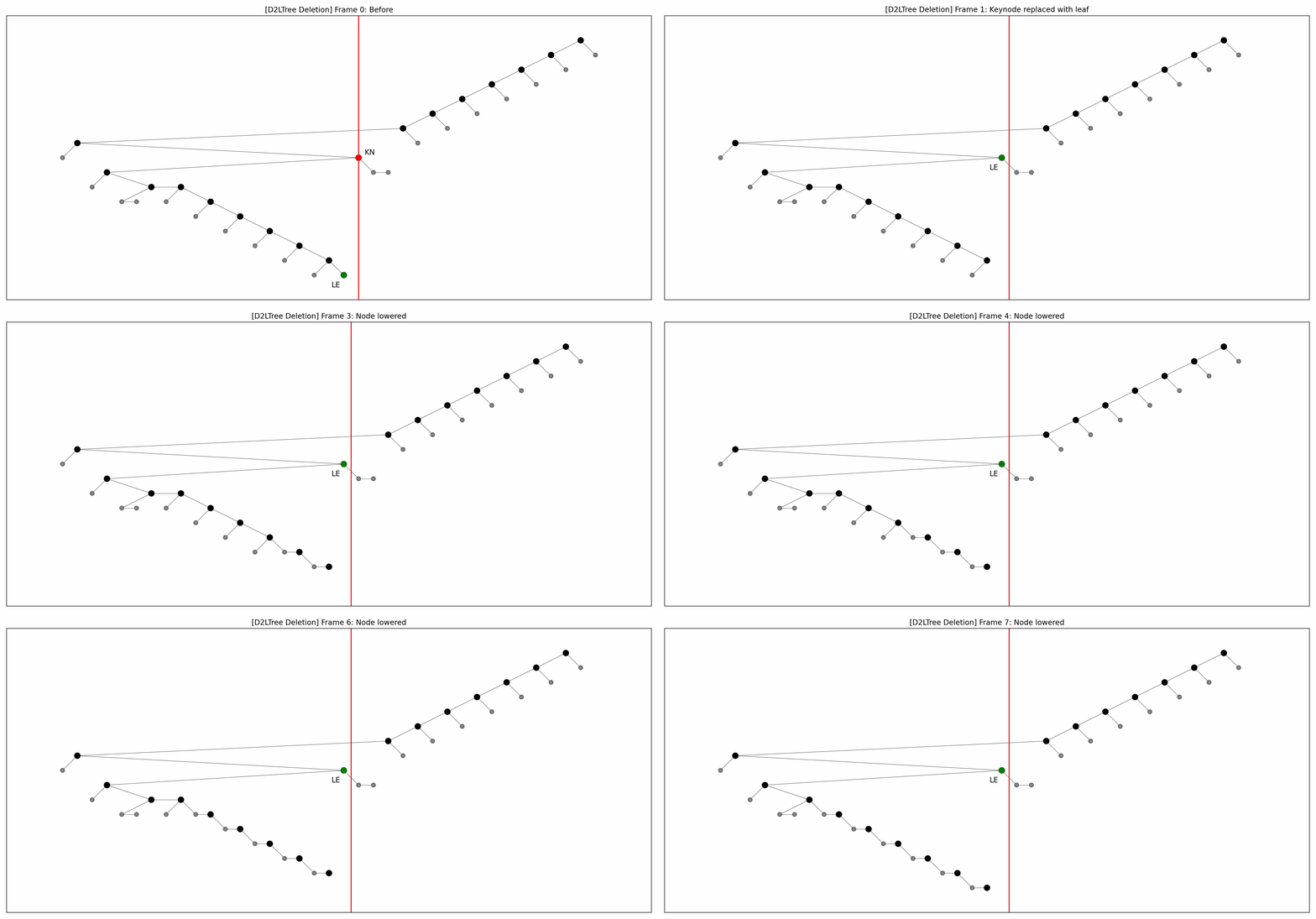
- Here's the full animation:
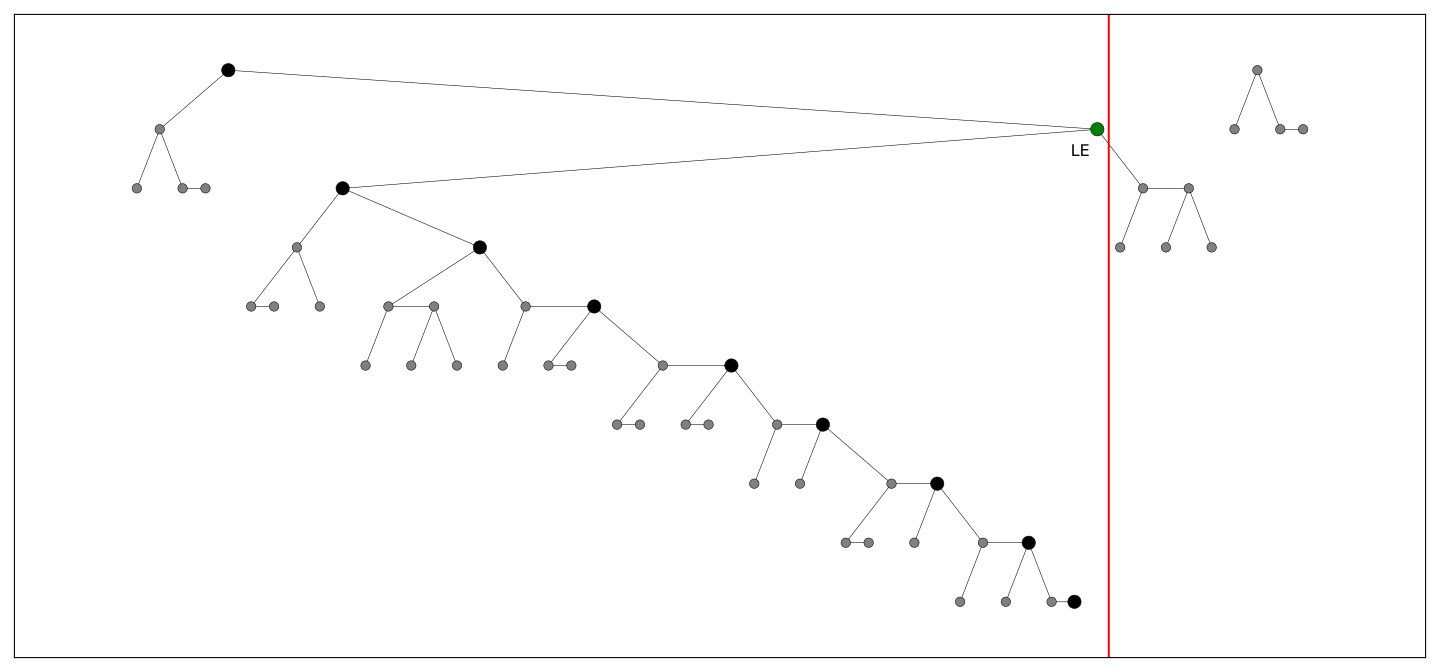
- Let's focus on the lower levels and add another level of gray nodes:
(before)
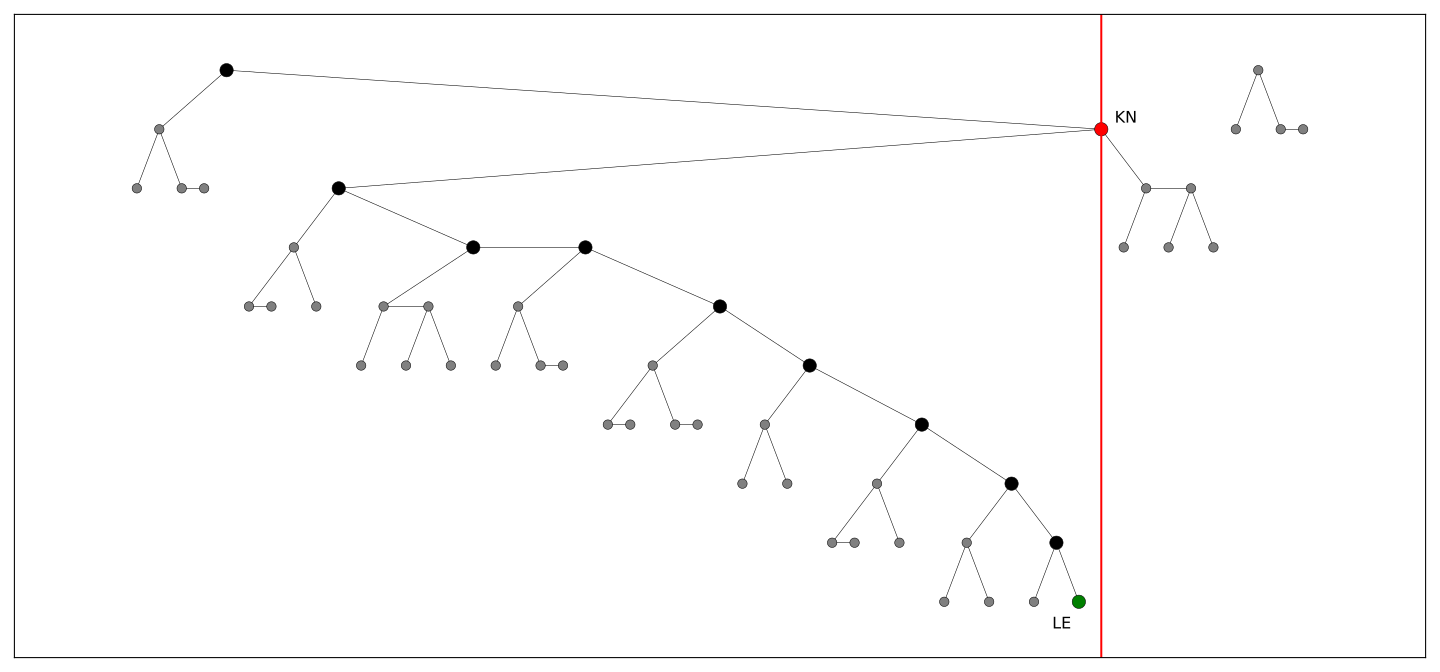
(after, without rebalancing)
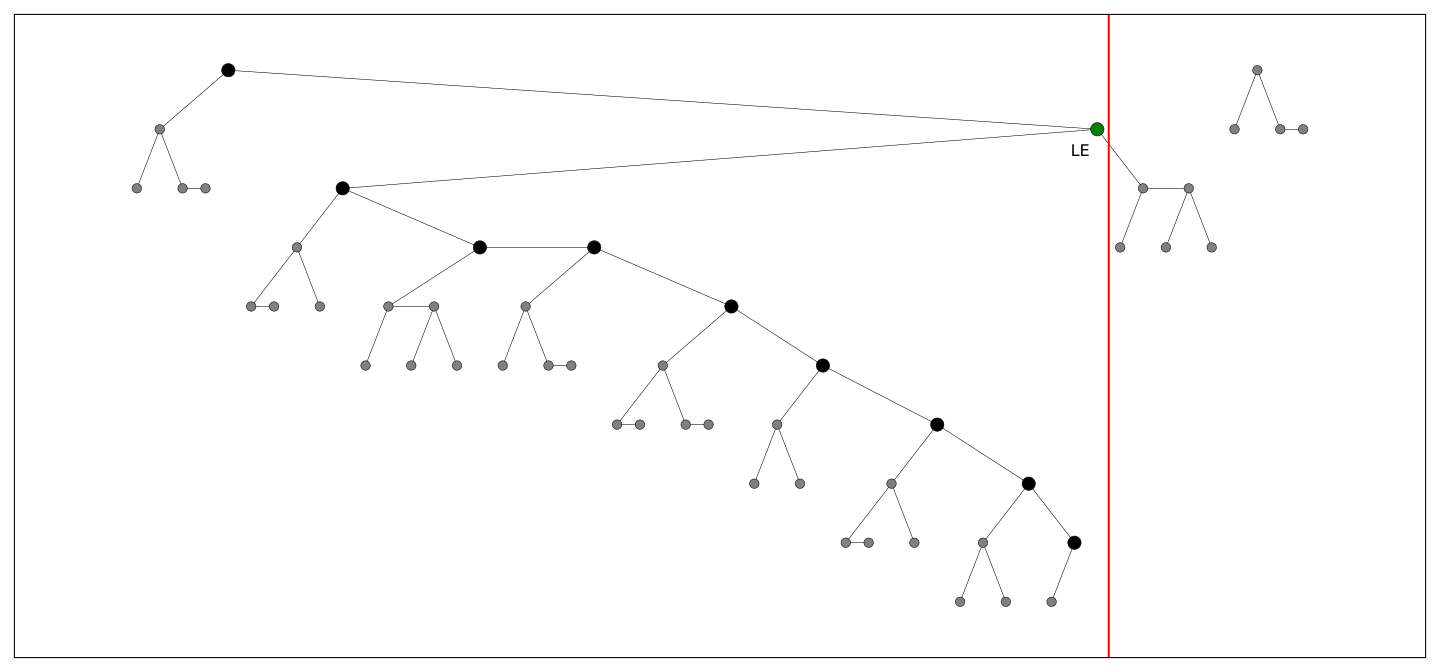
(after, with rebalancing)
(animation)
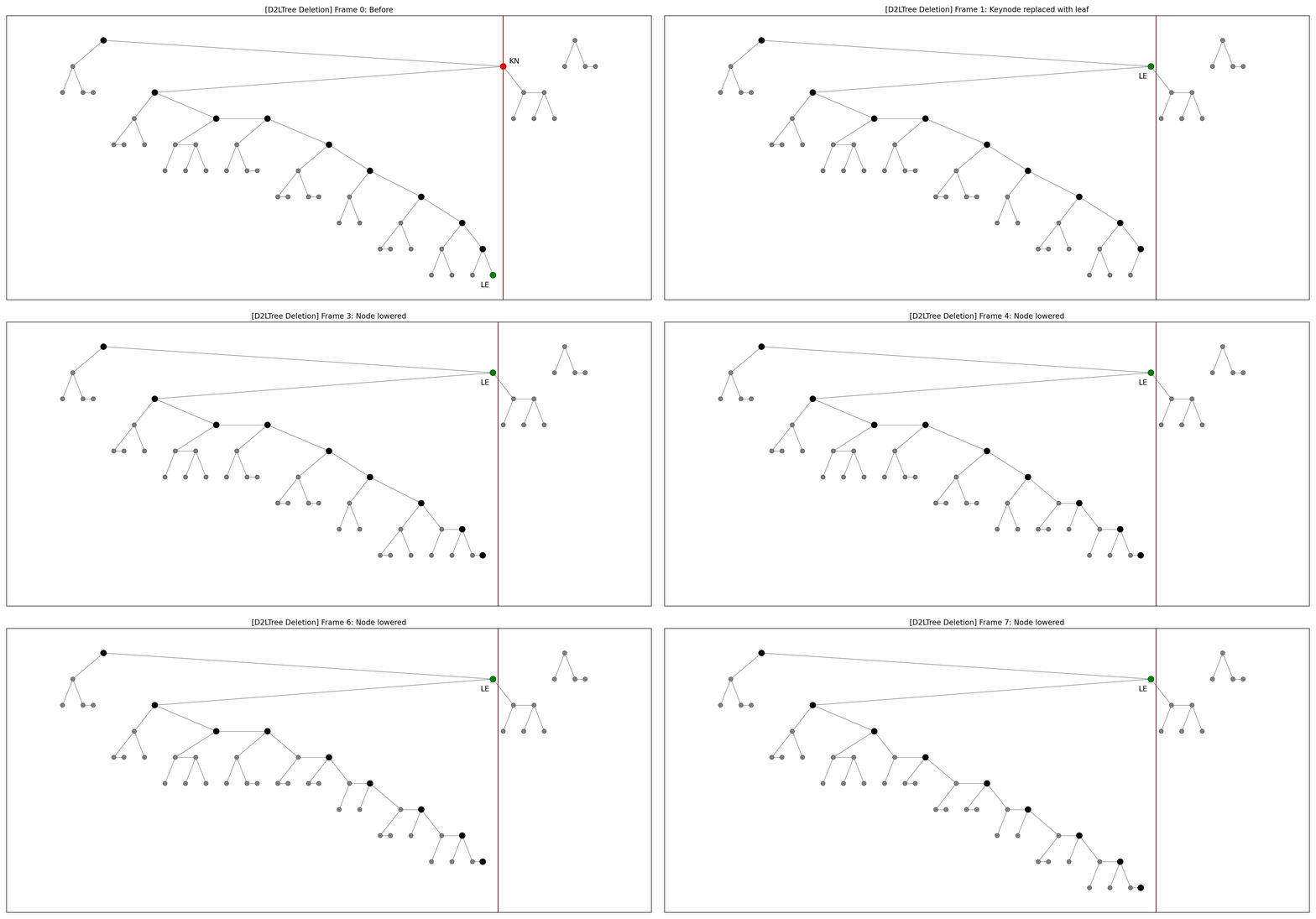
- The two animations look weird:
- Why are the gray nodes lifted rather than lowered as we'd expect?
- This happens because there's no way to represent an internal hole.
- To do that, we'd need a way to indicate that a node is 2 levels lower than its parent.
- This is what should happen when we lower B2 to close the hole:
B1 ==> B1 / \ ==> / \ B = black / \ ==> / \ g = gray g1 B2 ==> g1 \ / ==> \ g2 hole ==> g2 --> B2- That is, the hole "bubbles up" and it's midway between B1 and g2.
- What happens, instead, is that we just connect B1 to g2 this way:
B1 ==> B1 / \ ==> / \ / \ ==> / \ g1 B2 ==> g1 g2 --> B2 / ==> g2 hole ==>- Note that g2 --> B2 makes sense because we shouldn't compensate for the fact that g2 is higher than it should.
- This means that the algorithm has to remember where the hole is, since it's not represented in the tree.
- This is not a problem, of course, but just an implementation detail.
- Ultimately, the two cases merge when the hole is closed for real.
- For instance, let's say B1 is the high right child of some node B0:
- This is the conceptual picture:
B0 --> B1 ==> B0 / \ ==> \ / \ ==> \ g1 \ ==> g1 --> B1 \ ==> \ g2 --> B2 ==> g2 --> B2- This is the picture of the actual tree:
B0 --> B1 ==> B0 / \ ==> \ / \ ==> \ g1 g2 --> B2 ==> g1 --> B1 ==> \ ==> g2 --> B2- Note that we lower B1 by just:
- make B0 point to g1
- make g1 high-point to B1
- (Of course, if g1 has a right child C, then C will become the left child of B1.)
- This always happens at the end of the rebalancing.
- My suggestion is that one thinks about and works with the conceptual picture:
- In the actual implementation it's enough to remember which side the hole is on.
- Since each hole is closed right after it's created, this never becomes an issue in practice.
- Here are the pictures before and after the deletion of the node without rebalancing:
7.3. Additional Remarks
- Note that to go back up towards the root (to rebalance the tree) we can just remember the path we took during the descent.
- Of course, the remembering is
- explicit in an iterative implementation, and
- implicit in a recursive one.
- For the actual (iterative) implementation, see section Implementations below.
7.4. Parallelization
- 2‑Lexi Trees are not so easy to parallelize because...
- ...operations are bidirectional:
- down‑phase: search + insertion / removal
- up‑phase: rebalance by repeatedly lifting or lowering nodes, going up.
- When an operation in its down‑phase meets an operation in its up‑phase, we've got trouble.
- As I said before, I like to think that 2‑Lexi Trees follow the Clean after yourself approach.
8. 3‑Lexi Trees
- Recall:
- for each list :
- no holes along any rootleaf path
- for each list :
- Example
- Here's a 3‑Lexi Tree with 100 nodes:
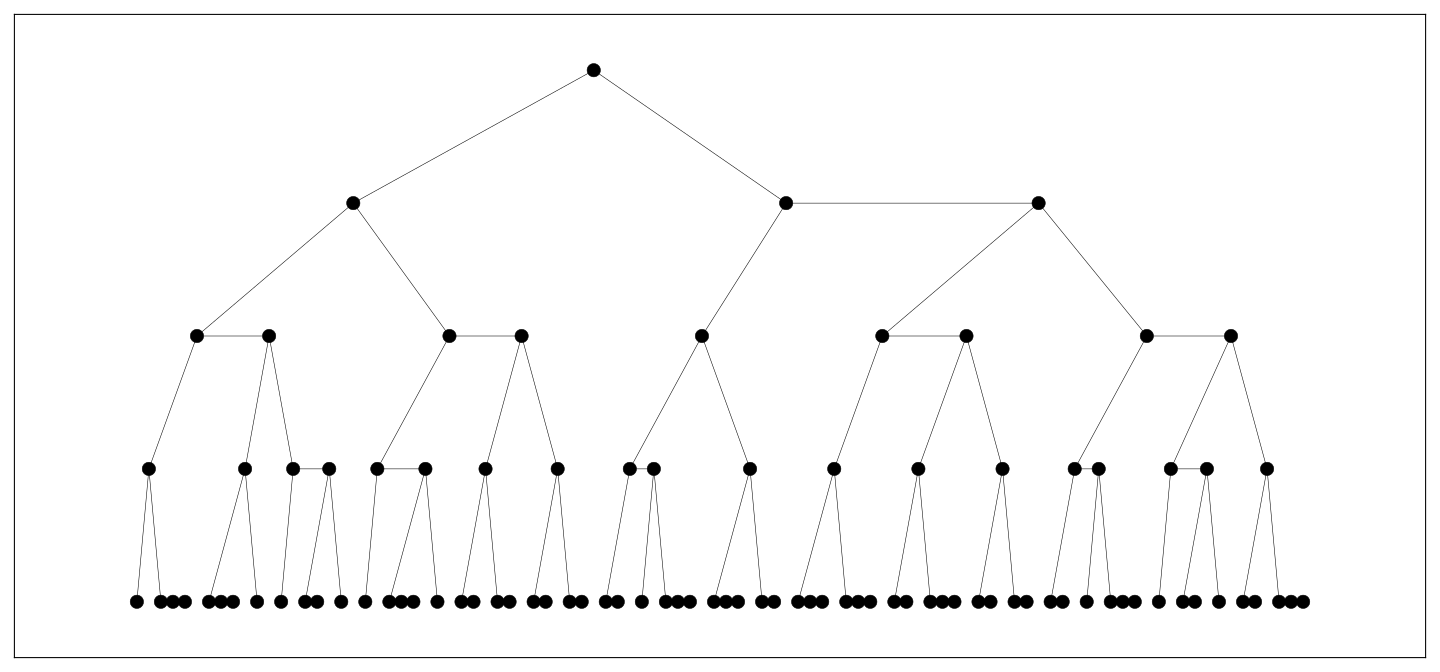
- This was created by inserting 100 random uniformly distributed nodes one after the other.
- Note that full lists are rare at the higher levels.
- Here's a 3‑Lexi Tree with 100 nodes:
8.1. Insertion
- We want to insert a new node .
- We search for the right position at level 0 to insert .
- While we do the searching along a rootleaf path, we lift the middle node of every list of length 3 we come across.
- The lifting is always possible since, by the time we reach a node, its parent can't be in a list of length 3.
- We insert .
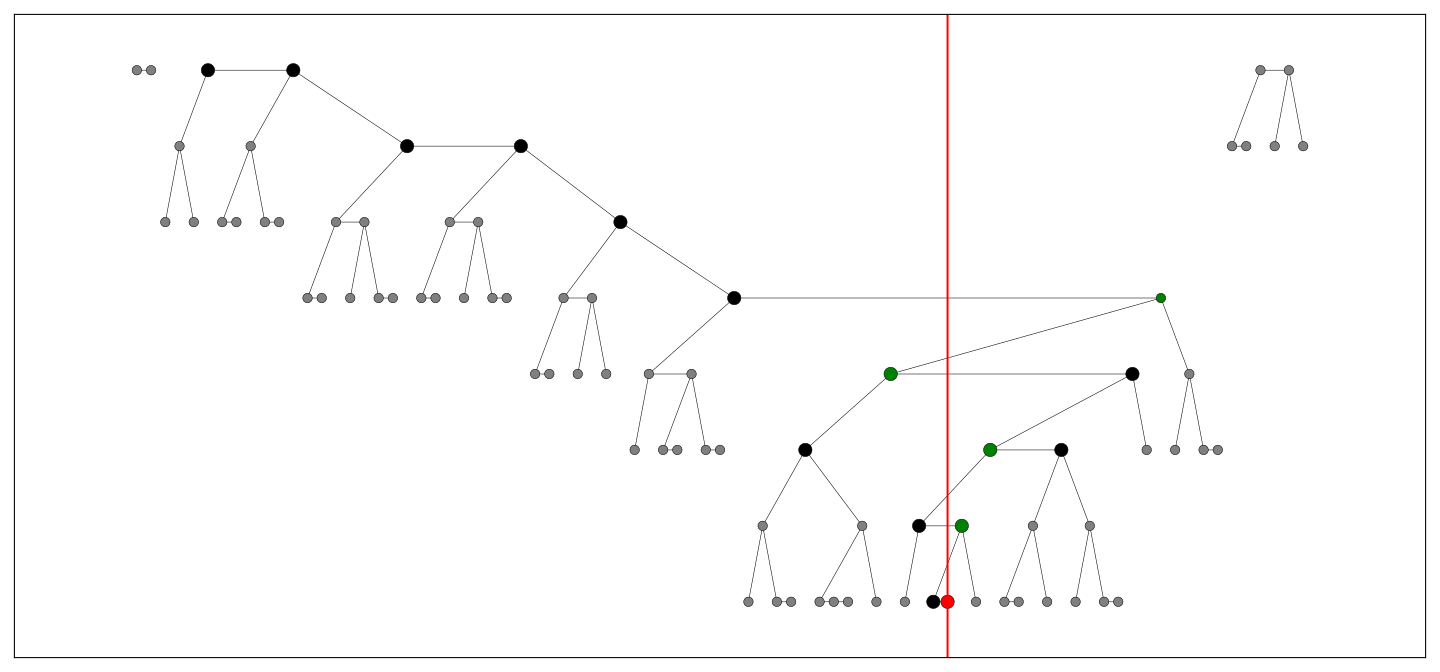
- Example:
- Because of the repeated lifting, triples are surprisingly hard to find:
- In a tree of 1M nodes, I could find no instance of 5 consecutive triples at the end of a search path.
- Here are the pictures before and after the insertion:
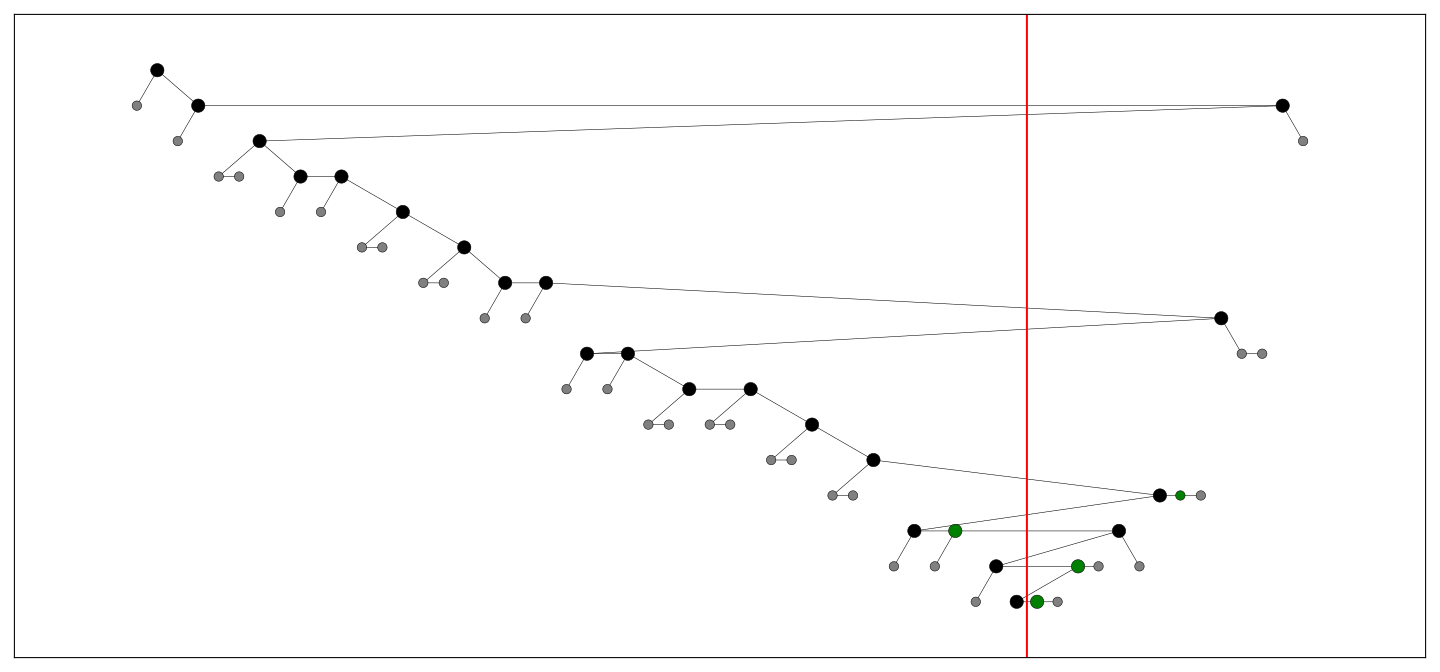
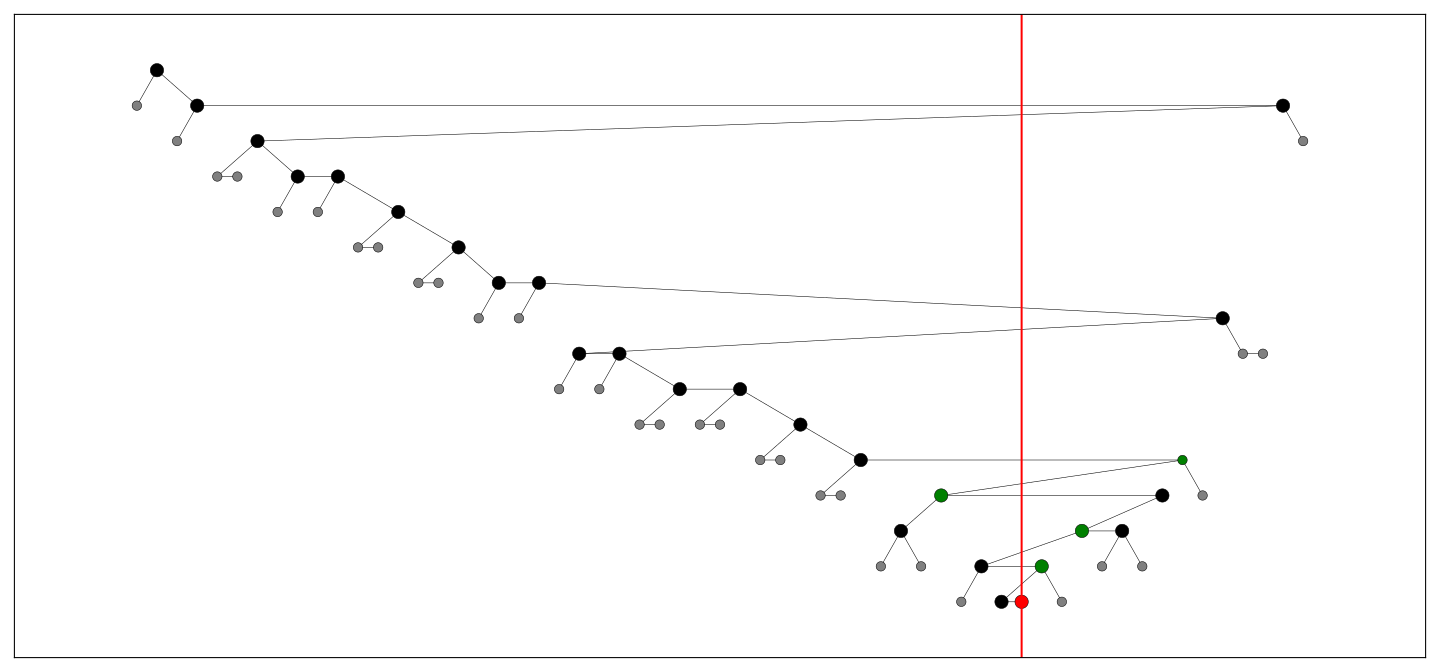
- Here's the full animation:
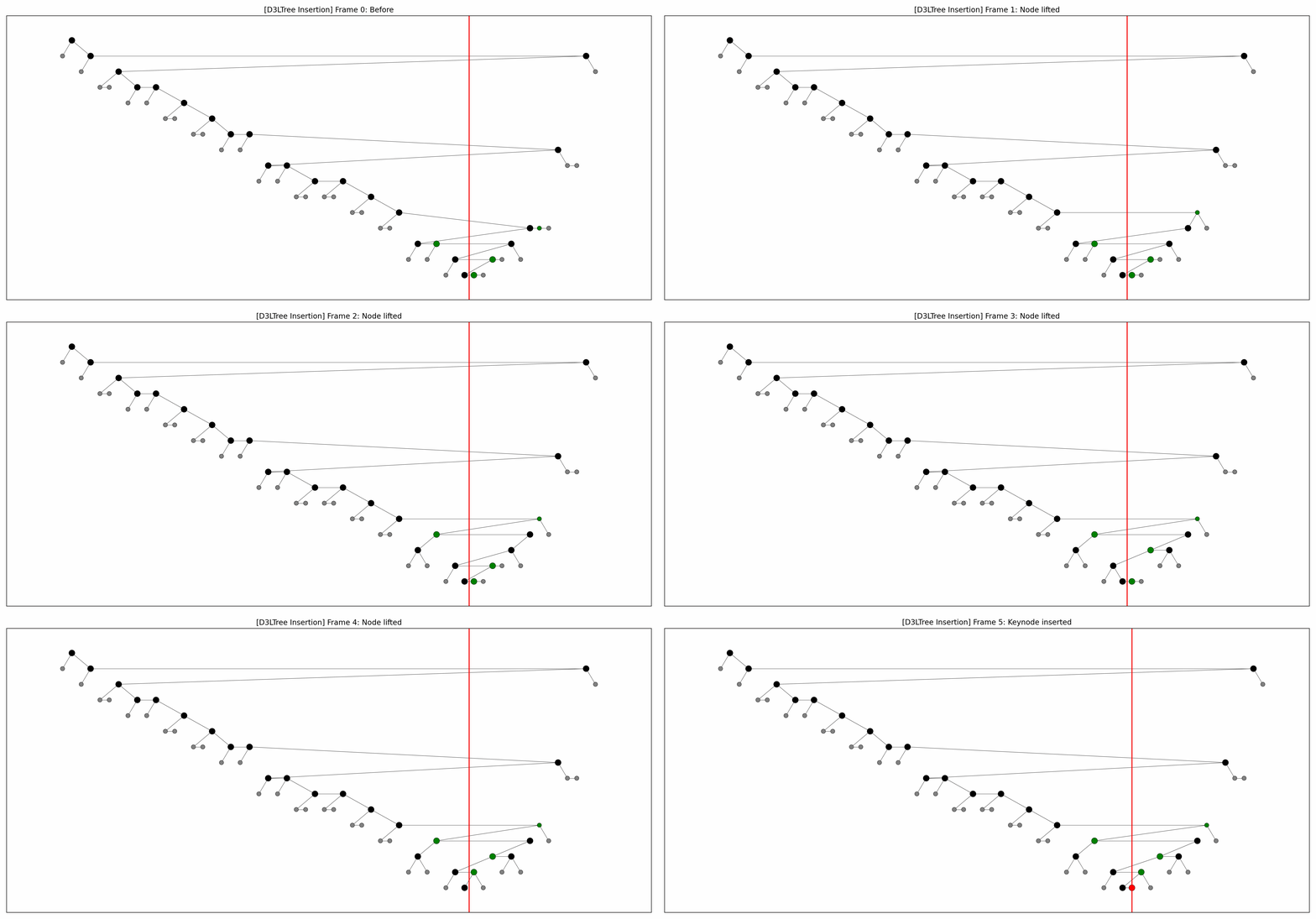
- Let's focus on the lower levels and add another level of gray nodes:
(before)
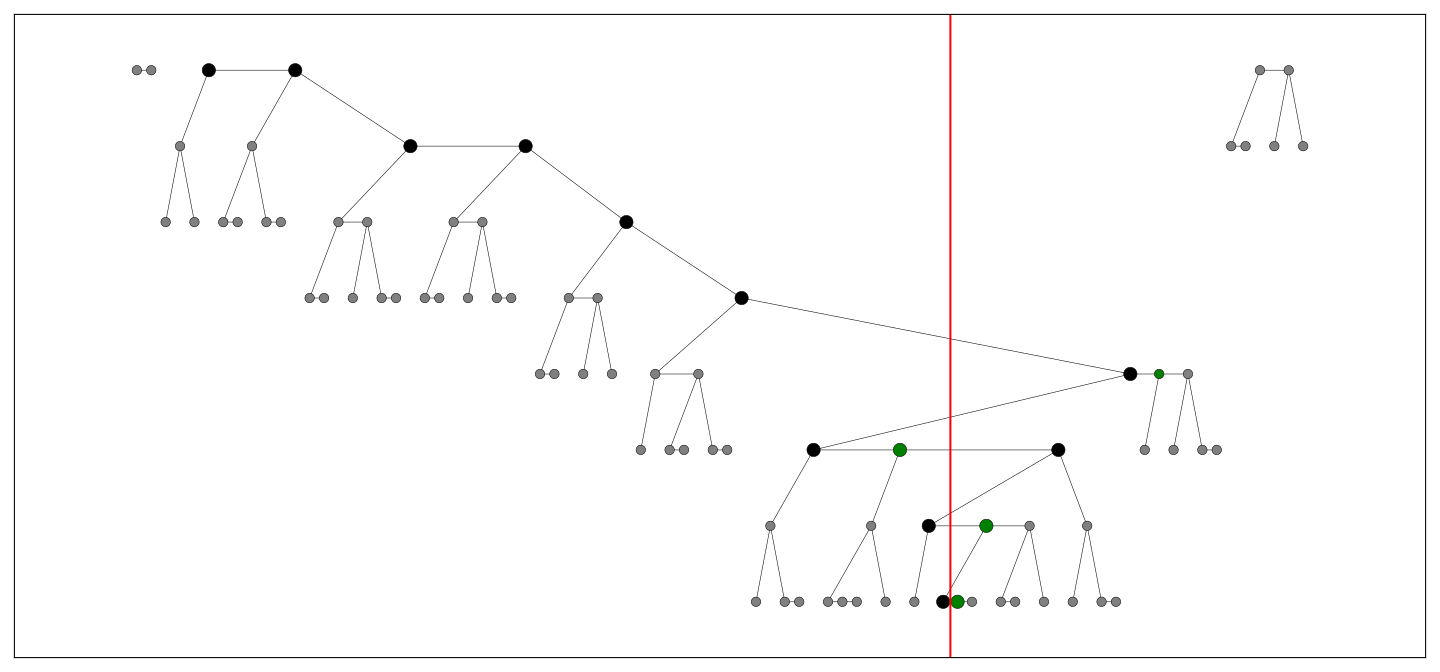
(after)
(animation)
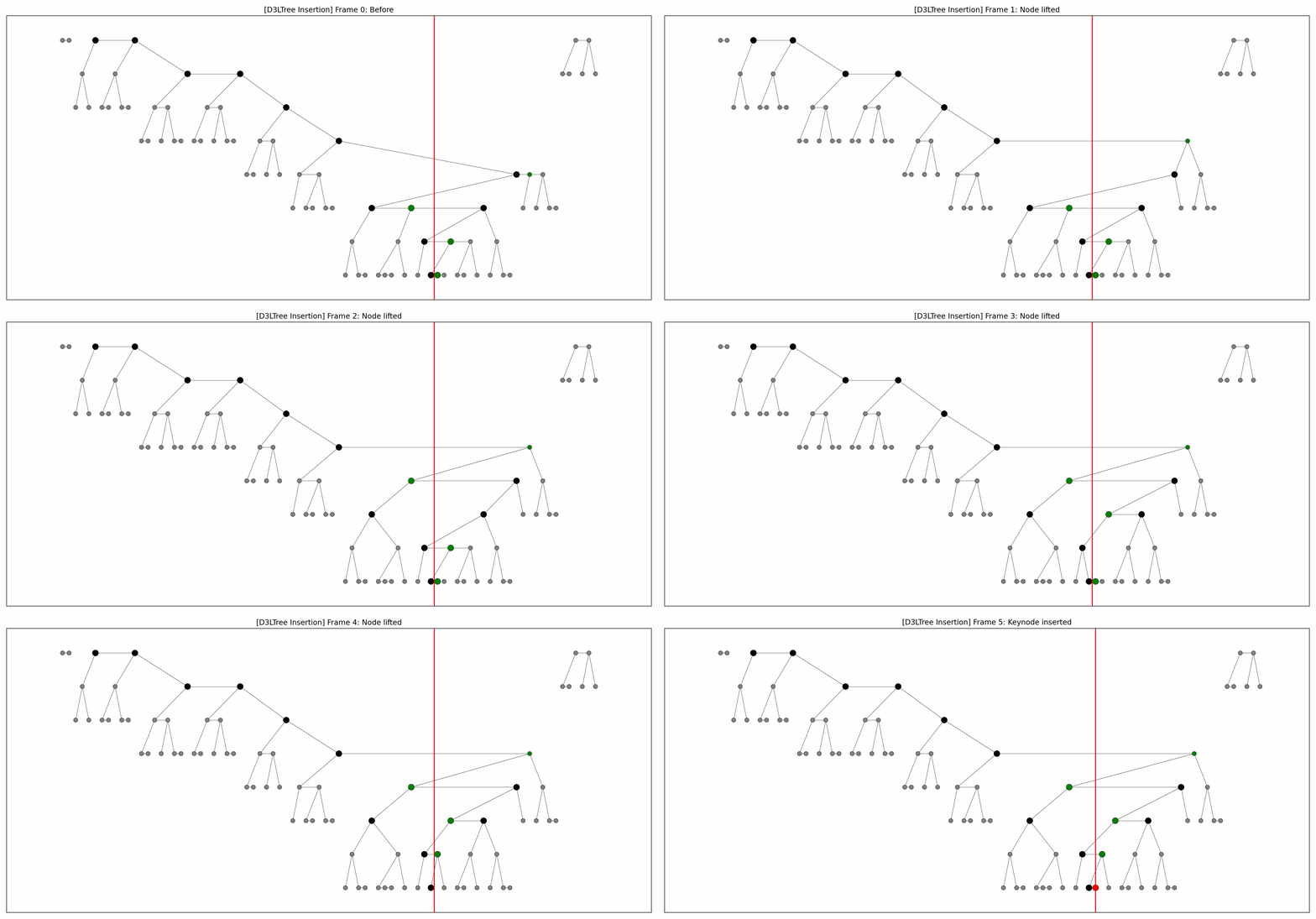
- We lift the green nodes as we go down.
- Note how:
- each lift makes room for the lift below it, and
- there's technically no rebalancing whatsoever going on.
- Because of the repeated lifting, triples are surprisingly hard to find:
8.2. Deletion
- We want to remove a node with key .
- We do a rootleaf search for , collecting 3 pieces of information along the way:
- : the node with key , if any.
- : the leaf immediately key‑before :
- We just go left one step when we find and then...
- ... we go all the way to the right.
- is the last node in the search path.
- : the last node we found that can be lowered.
- Example
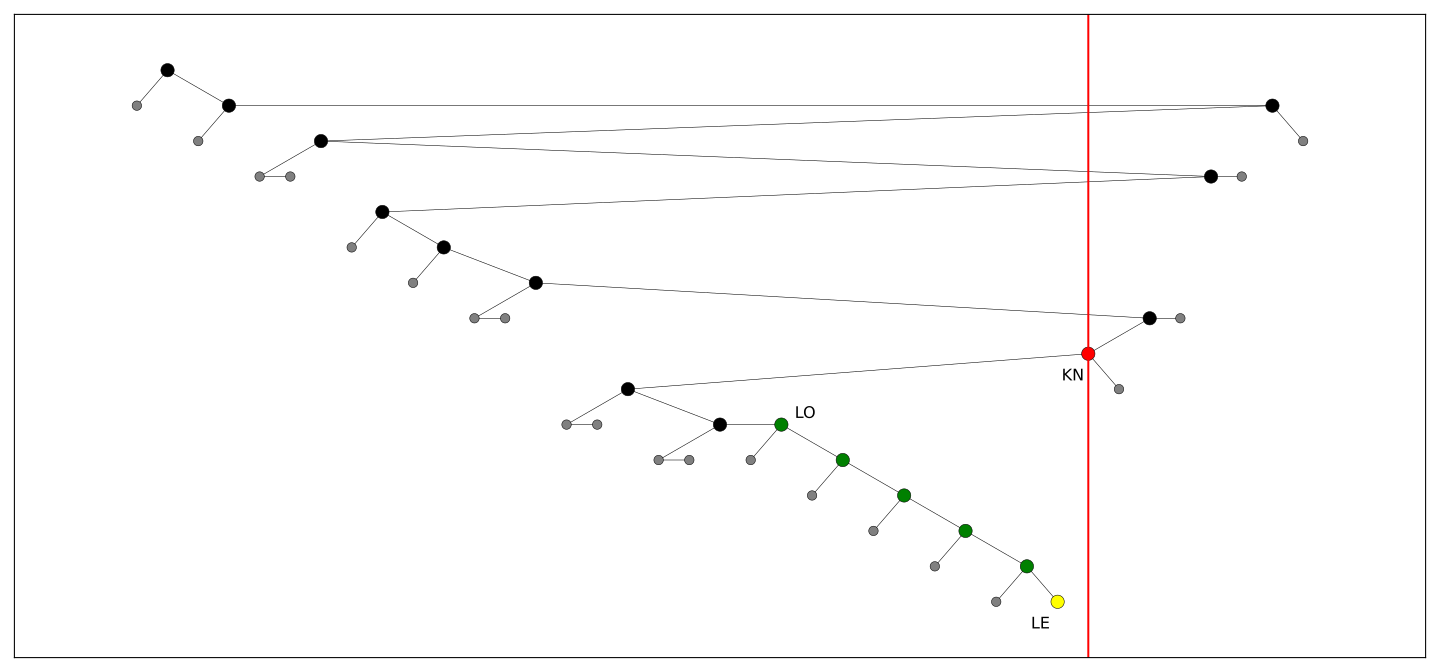
- A node is lowerable if lowering it won't leave a hole.
- In particular, a node is lowerable if
- it's in a list of at least 2 nodes, or
- it has at least 3 children.
For instance:N ==> S2 _____/ \ ==> / \ / \ ==> / \ S1 -> S2 N2 ==> S1 N -> N2 Lowering N doesn't leave a hole because S2 takes its place.
- Below there are no lowerable nodes.
- If is a leaf, then is .
Proof:- is in the same list as .
- is lowerable because it's in a list of at least 2 nodes.
- is the last node.
- is the last lowerable node.
- is .
- We lower the sub-path .
- In other words, we lower all the nodes starting from .
- That's possible since there are no lowerable nodes below , so there's space:
- That's the whole point of finding in the first place.
- By lowering the sub-path, we make sure is in a list with at least 2 nodes.
- We can now remove without leaving a hole.
- If is , we just remove .
- If is not , just like with 2‑Lexi Trees, we replace with .
- Example
- Here are the pictures before and after the deletion:
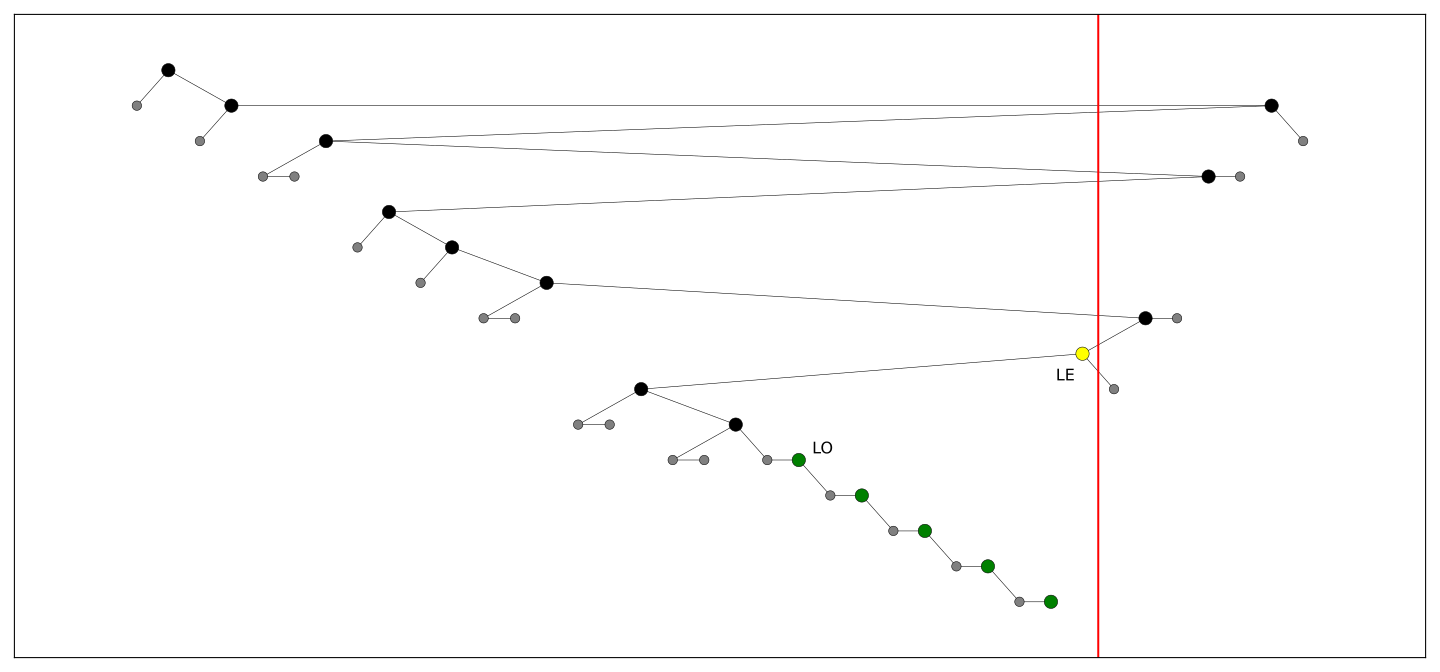
- Here's the animation:
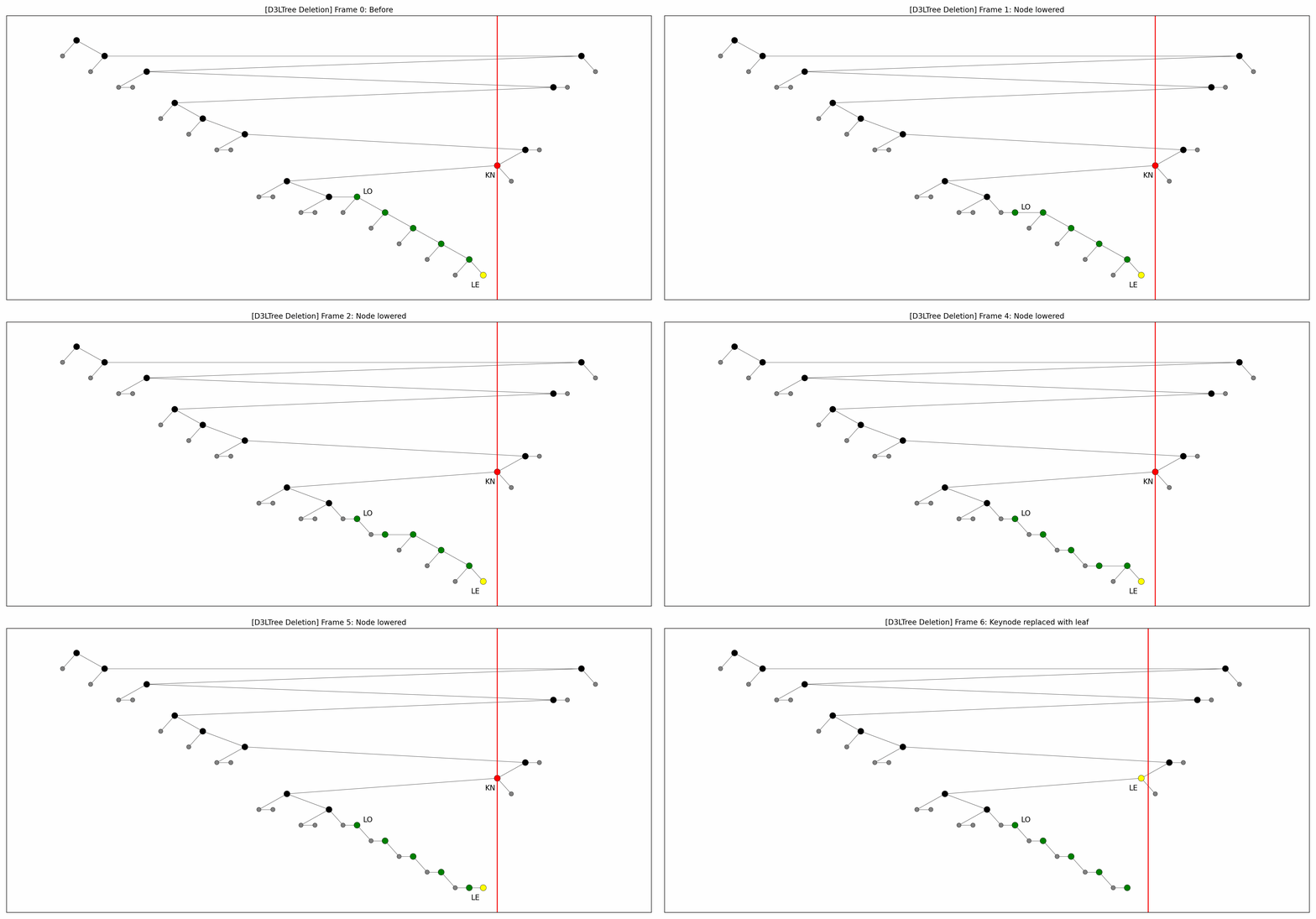
- Let's focus on the lower levels and add another level of gray nodes:
(before)
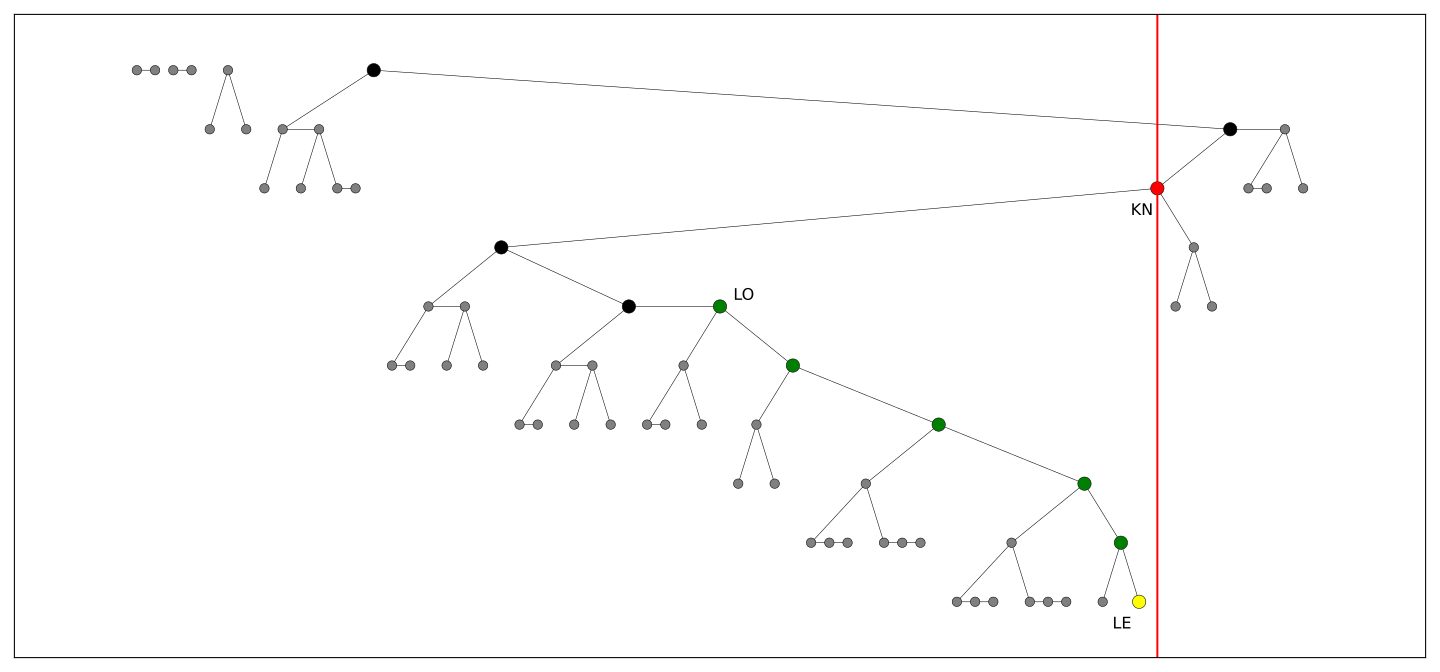
(after)
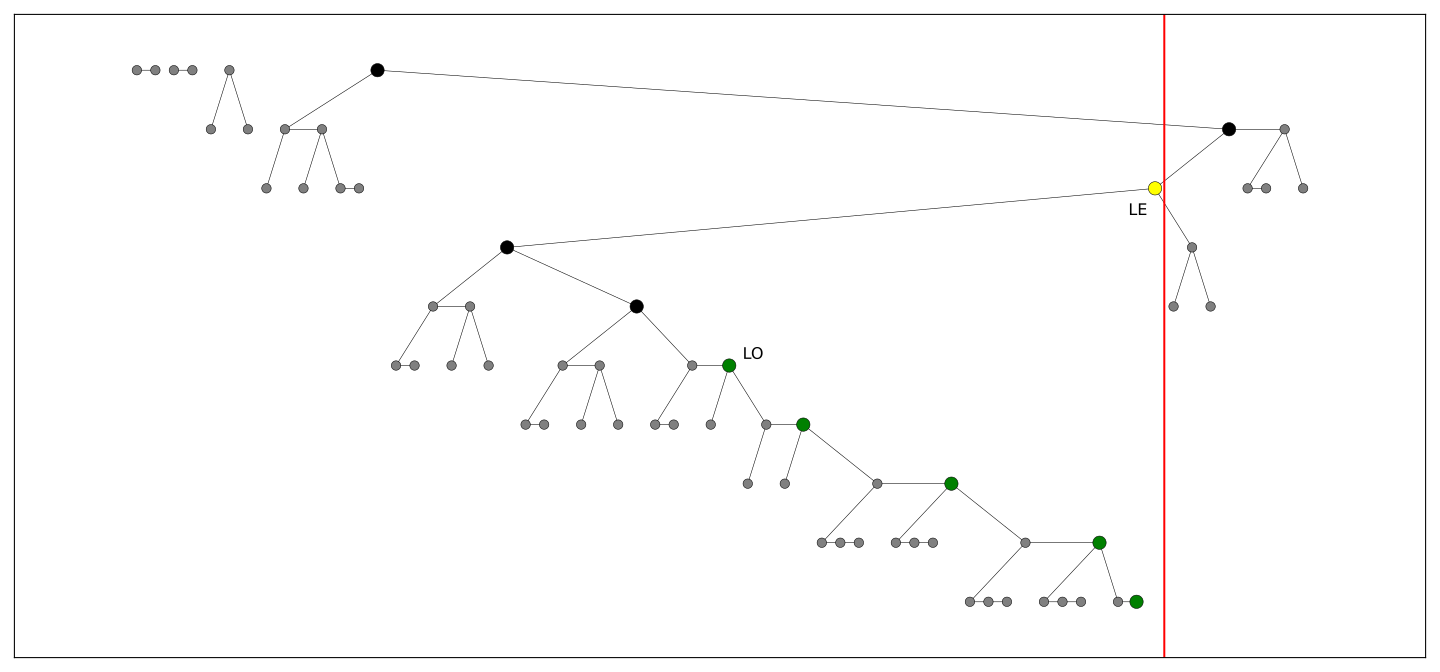
(animation)
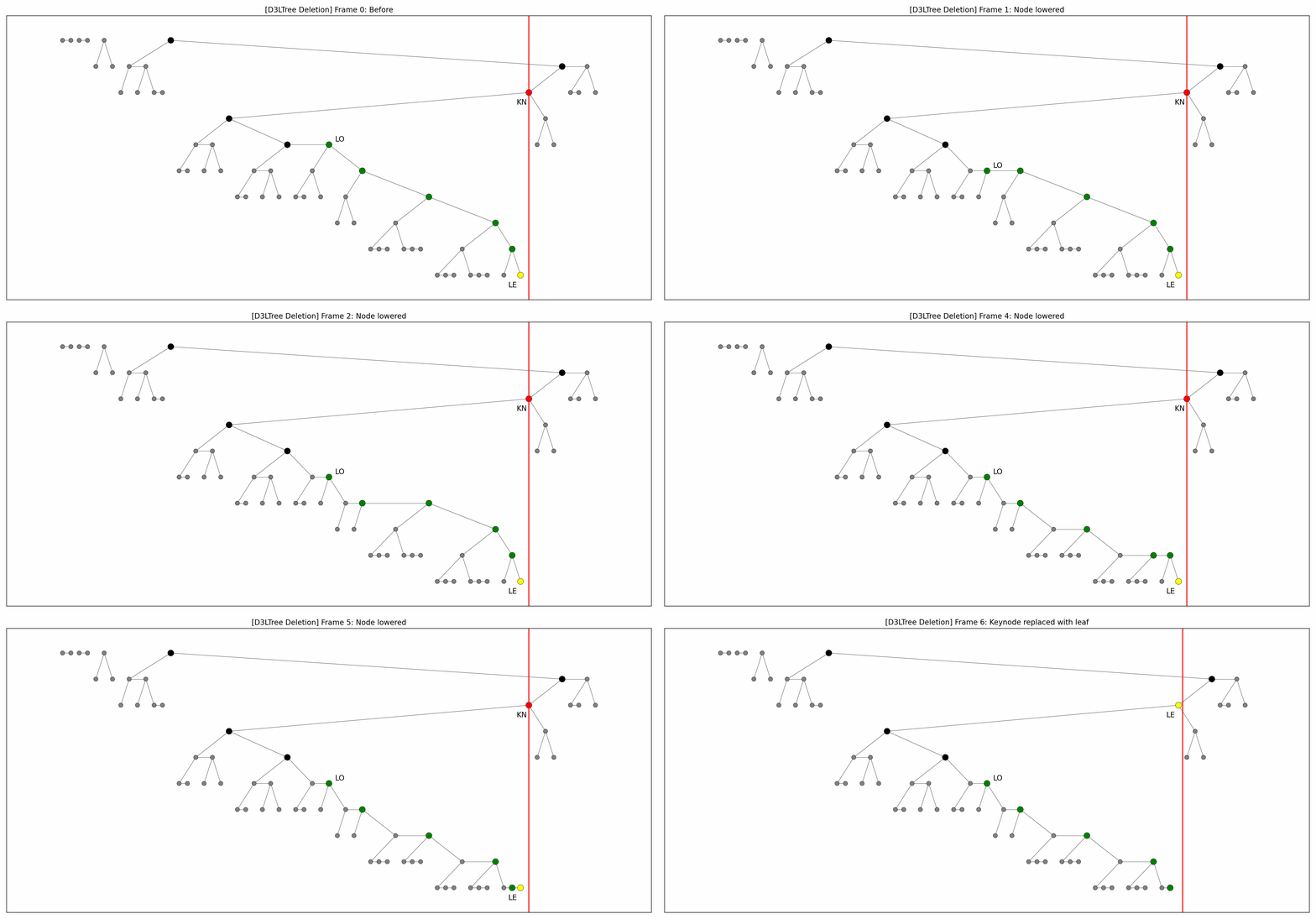
- Note that:
- The green nodes are lowered while going down:
- This is always possible by definition of .
- Like with insertions, there's technically no rebalancing whatsoever.
- The green nodes are lowered while going down:
- Here are the pictures before and after the deletion:
8.3. Additional Remarks
- Lowerable Nodes:
- During a search, if a node is in a list alone, we normally need to do an extra lookup to tell whether it's lowerable or not.
- This can be avoided by keeping additional information on :
- we could use 1 bit to tell whether has at least 3 children, or
- 2 bits, one per side, to tell whether each side has at least 2 children.
- The version with 2 bits is more efficient to keep up to date during the operations.
Basically:- the 2 bits are the high bits of the pointed nodes,
- assuming those bits are set only when the right nodes really exist.
- Lifting VS lowering:
- We could use something analogous to for insertions as well.
- We don't do it because, in general:
- lifting shortens the paths, which is good:
- we can lift as much as we want
- lowering lengthens the paths, which is bad:
- we should lower as little as possible:
- LOLE is the shortest subpath we need to lower
- we should lower as little as possible:
- lifting shortens the paths, which is good:
- We could also lift during normal searches (i.e. outside insertions or deletions).
- By performing many liftings we can, in principle, keep the paths as short as the ones in 2‑Lexi Trees.
- For the actual implementation, see section Implementations below.
8.4. Parallelization
8.4.1. High Level
- 3‑Lexi Trees should be easier than 2‑Lexi Trees to parallelize because...
- ...operations have only down‑phases:
- down‑phase: search + lifting (for insertions),
- down‑phase: lowering (for deletions).
- I like to say that 3‑Lexi Trees follow the Don't litter approach.
- The difference is that:
- 2‑Lexi Trees break the invariants during insertions/deletions and then fix the tree.
- 3‑Lexi Trees prepare the tree beforehand for the insertions/deletions so that they don't break the invariants at all.
- This is the case because:
- 3‑Lexi Trees can break lists of length 3 and make room.
- 2‑Lexi Trees can't break or shorten lists of length 2 to make room.
- 2‑Lexi Trees need to wait for the appearance of lists of length 3 before they can break them, but those lists are a violation of the invariants.
8.4.2. Low Level
- It's a pity I don't have time to implement this for now 😦
- Without a C/C++/Rust/... implementation, what follows is conjectural:
- Feel free to let me know what you think about it.
- Any contribution is more than welcome!
- (This applies to the whole project, by the way.)
8.4.2.1. Versioning
- We can add a version field to the nodes and implement something similar to a SeqLock.
- This way we can do searches without locking any nodes.
- When we go through nodes along the search path, we do:
- (assuming we need to go right)
- if :
- we need to go back and restart from .
- else:
- (assuming we need to go left)
- if :
- we need to go back and restart from .
- etc...
- We need to memorize the path so that we can go back when something changes under our feet.
- We want to avoid a single problem: skipping nodes.
- We can inadvertently skip a node in two cases:
- the node is lifted above us,
- we are lowered below it.
- During the updates, the version of each node must be updated (i.e. incremented) every time:
- is lowered, or
- nodes that come lexi‑after (along the search path) are lifted.
- The fact the lists have length 3 at most simplifies things because we just need to look at adjacent nodes:
- Note that we don't care if nodes we left behind are lifted. All we care about is that no node moving in the afterbefore direction can pass through us without us realizing it.
- We're dealing with pointers, so we must use some kind of blazingly fast constant time Garbage Collector:
- We keep lists of nodes to delete (one list per execution unit no synchronization required)
- When we are sure that no operations currently accessing the tree can have a reference to certain nodes, we deallocate those nodes.
- We should only use timestamps and completely ignore the values of the pointers.
- The timestamps might be owned by the lists (of nodes to delete) rather than by the nodes themselves:
- this would reduce the number of timestamps and comparisons.
8.4.2.2. Locking
- We could lock nodes by setting 2 bits in the version field.
- I'd use two types of locks:
- reserve: Nobody can modify this node, but we're not modifying it either at the moment, so searches can go through without problems.
- mutation: We're actually modifying the node.
- Nodes should be locked in lexicographic order to avoid deadlocks:
- The lexicographic order is handy because we don't need to do any extra sorting.
8.4.2.3. Deletions
- Deletions are way more complicated than insertions.
- What follows is a little involved because of the need to lock nodes in lexicographic order.
- I would proceed as follows:
- During the search we remember all the potential s (we already remember the path to be able to go back, anyway).
- When we reach , the node to delete, we put a reserve lock on it.
- From this point onward, we also keep a reserve lock on the latest .
- We do this by moving the lock from to by first locking the new and then unlocking the previous one.
- If we found no after :
- We unlock (because of the lexicographic order requirement),
- we go back to the latest and keep going back to the previous saved s until we find a valid one (remember the versioning?).
- If we don't find a valid :
- we restart from the root.
- We go down again, tracking the latest with a reserve lock.
- When we reach , we put a reserve lock on it.
- We keep tracking the latest , even jumping over .
- When we reach the leaf:
- we turn the reserve locks into mutation locks,
- we carry out the operation.
- Why do all that?
- It's a heuristic:
- The happy path should be good enough.
- There's no risk of starvation (i.e. of trying forever without ever completing the operation).
- Other heuristics with different guarantees are certainly possible.
- It's a heuristic:
9. Implementations
- I implemented one single-threaded version of:
- P‑Lexi Trees
- 2‑Lexi Trees
- 3‑Lexi Trees
- I'm sure many other (substantially different) implementations are possible.
- I won't go over the specific cases and similar details because I find them terribly boring and uninteresting.
- Since that's the way I roll, I decided to write readable source code instead:
- I chose the Python language because it reads almost as pseudo-code.
- You can install all the external dependencies with
pip install -r requirements.txt - I tested the code with CPython (Python 3.9) and Pypy (Python 3.8).
- It's a pity static typing is a little clunky (compared to Typescript).
- You can install all the external dependencies with
- I prioritized readability and simplicity both at the language and the algorithmic level.
- All the cases are documented in the code:
- I like to include remarks, small proofs, and ASCII pictures in my code.
- I chose the Python language because it reads almost as pseudo-code.
9.1. P‑Lexi Trees
- See file PLTree.py.
- I don't think there's anything important left to explain:
- the gap between the conceptual and the concrete implementation is negligible.
9.2. 2- and 3‑Lexi Trees
- For 2-Lexi Trees, see files:
- D2LTree.py: main file
- DLTree.py: common file
- lift.py: lift operation
- lower2.py: lower operation
- For 3-Lexi Trees, see files:
- D3LTree.py: main file
- DLTree.py: common file
- lift.py: lift operation
- lower3.py: lower operation
- The code should be clear enough, but I want to point out a couple of gotchas:
- Some operations alter the search paths so:
- if one saves the search path:
- one needs to keep it up to date by fixing it when necessary,
- or just be aware of the changes.
- if one saves the search path:
- For instance, in a deletion, replacing the key node with the leaf does modify the search path, so one should update the saved list as well.
- Similarly, the operations may change the order of the nodes one's standing on:
- in my implementation, the lift and lower functions return some useful information to help with that.
- Some operations alter the search paths so:
- The most interesting files are certainly:
- They contain all the cases for the lift and lower operations:
- Every case is illustrated with an ASCII picture.
- Those illustrations are very important so I'll briefly describe how to interpret them.
9.2.1. Case I of lift in lift.py
# Case I: prev.right = cur
# P            ==>  P --> r
#  \           ==>       / \
#   c  r  r2   ==>      c   r2
#     /        ==>       \
- The "==>" wall is a beforeafter wall, that is, it separates the situation before from the situation after the operation.
- Let's call the left and the right sides the before and after sides, respectively.
- This is not so important now but:
- = parent
- = cur,
- = right
- = right2
- The horizontal arrows/segments between , , and on the before side in the picture above are omitted for clarity.
- Let's call the arrows (
/and\) at the bottom of the picture downward arrows. - Because is lifted, the node pointed to by will be pointed to by .
- This is the only change relative to the eventual children of , , and .
- Because of this, and are the only downward arrows depicted.
- Going from the before to the after side:
- the downward arrows move,
- but never change in number.
9.2.2. Case II of lift in lift.py
# Case II: prev.left = cur
# P2 ------------.   P2  ==>  P2 ---.   .-------- P2
#                 \ /    ==>         \ /
# P2 ------------> P     ==>  P2 ---> r ---> P
#        _________/      ==>         /      /
#       /                ==>        /      /
#      c   r   r2        ==>       c     r2
#     /   /              ==>      / \
# NOTE: Prev2 can be in any of the 3 positions shown above.
- is Prev2, of course.
- As the NOTE says, can be in 3 different positions:
- above , on its right
- above , on its left
- at the same level of , on its left:
- is the high right child of .
- The only difference is that we must modify the correct pointer of .
- Note that (a bit, in practice) is left untouched:
if prev2.right is prev:
    prev2.right = right         # keeps same high_right
else:
    prev2.left = right
9.2.3. Case Right of lower in lower3.py
# Case Right3
# P --.    .------------ P  ==>  P ----------.    .----- P
#      \  /                 ==>               \  /
# P --> c1 - - - - - > r    ==>  P ----------> o2 - -> r
#      /  \    _ _ _ _/     ==>       ________/  \    /
#     /    \  /             ==>      /            \  /
#   c2      o1  o2  o3      ==>     c2  c1  o1     o3
#     \    /   /            ==>        /   /  \
#
# Case Right2
# P ---.    .--------- P  ==>  P -------.    .----- P
#       \  /              ==>            \  /
# P ---> c1 - - - -> r    ==>  P -------> o1 - -> r
#       /  \    _ _ /     ==>        ____/  \    /
#      /    \  /          ==>       /        \  /
#    c2      o1  o2       ==>      c2  c1     o2
#      \    /             ==>         /  \
- Since these two cases are very similar, I consider them a single one.
- The only novelty is that :
- As an example, Case Right3 can be expanded as:
# Case Right3-no-r
# P --.    .------------ P  ==>  P ----------.    .----- P
#      \  /                 ==>               \  /
# P --> c1                  ==>  P ----------> o2
#      /  \                 ==>       ________/  \
#     /    \                ==>      /            \
#   c2      o1  o2  o3      ==>     c2  c1  o1     o3
#     \    /   /            ==>        /   /  \
#
# Case Right3-r
# P --.    .------------ P  ==>  P ----------.    .----- P
#      \  /                 ==>               \  /
# P --> c1 ----------> r    ==>  P ----------> o2 ---> r
#      /  \    _______/     ==>       ________/  \    /
#     /    \  /             ==>      /            \  /
#   c2      o1  o2  o3      ==>     c2  c1  o1     o3
#     \    /   /            ==>        /   /  \
- Note that now the arrows from and to r are continuous.
- As an example, Case Right3 can be expanded as:
9.2.4. Remarks
- The lower function lifts nodes as well, when needed.
- The cases can be simplified by decoupling the lowerings and the liftings.
- I designed lower that way because:
- I didn't want operations to break invariants.
- I didn't want to set arrows one way just to change them an instant later.
- I don't know if it was worth it, though:
- As always, one should try several variations and see what are the pros and cons of each.
10. Tests & Statistics
10.1. Tests
- I use what I call a seasonal test:
- Its seasonal nature is controlled by two parameters:
- , the number of operations
- , the number of cycles
- The test performs a total of operations.
- The operations are conceptually chunked into contiguous sequences of operations.
- (In the actual implementation, the cycles are mapped directly to the operations.)
- In each chunk:
- Each operation can either be an insertion or a deletion.
- The time goes from to .
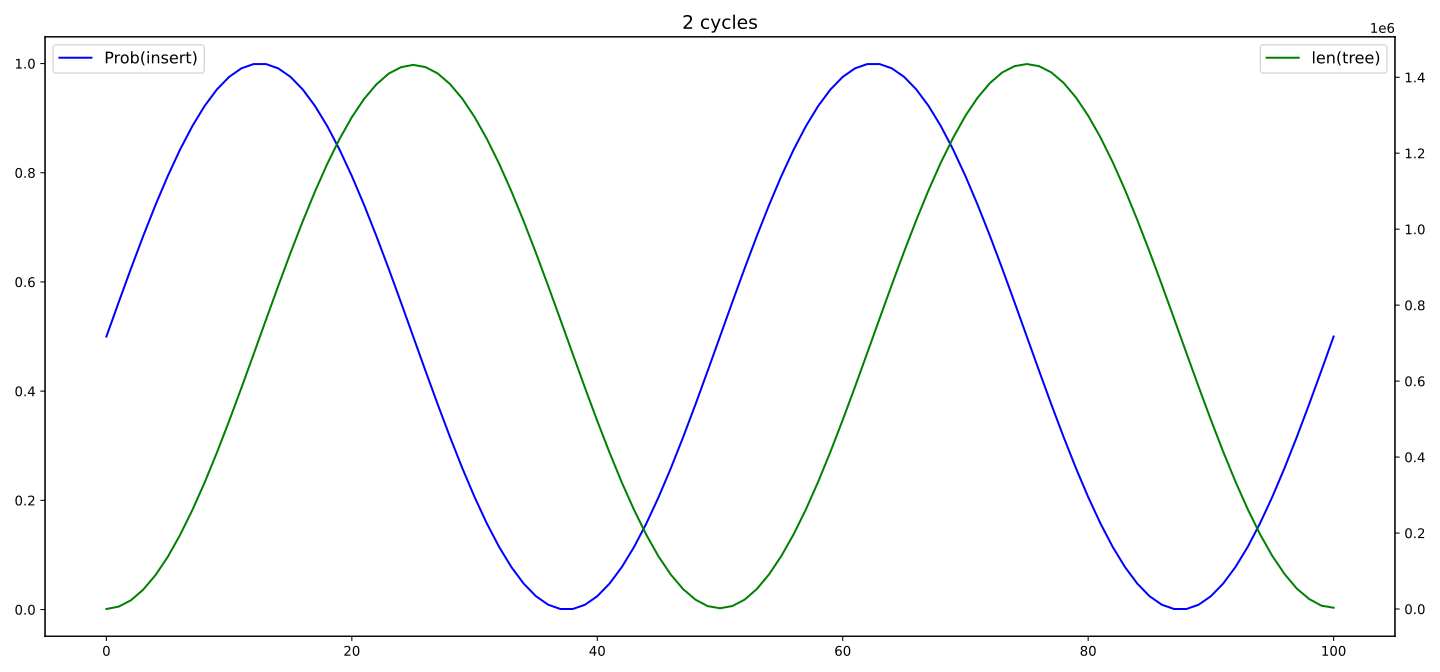
- At time , the probability of the current operation being an insertion is .
In fact:
- The tree tends to grow when and shrink when :
- Its seasonal nature is controlled by two parameters:
- Of course, the test is full of asserts and it also checks the invariants of the tree at regular intervals of time.
- The test also takes a key picker which generates the keys to insert and delete.
10.2. Key Pickers
- A key picker is implemented as a class KeyPicker.
- Here's the interface:
class KeyPicker(Protocol[K_Cov]):
    def get_ins_key(self) -> K_Cov:
        """NOTE: The returned key is remembered and can be returned by
        get_del_key."""
        ...

    def get_del_key(self) -> K_Cov | None:
        """NOTE: The returned key is forgotten."""
- I implemented the simple key pickers illustrated in the following image:
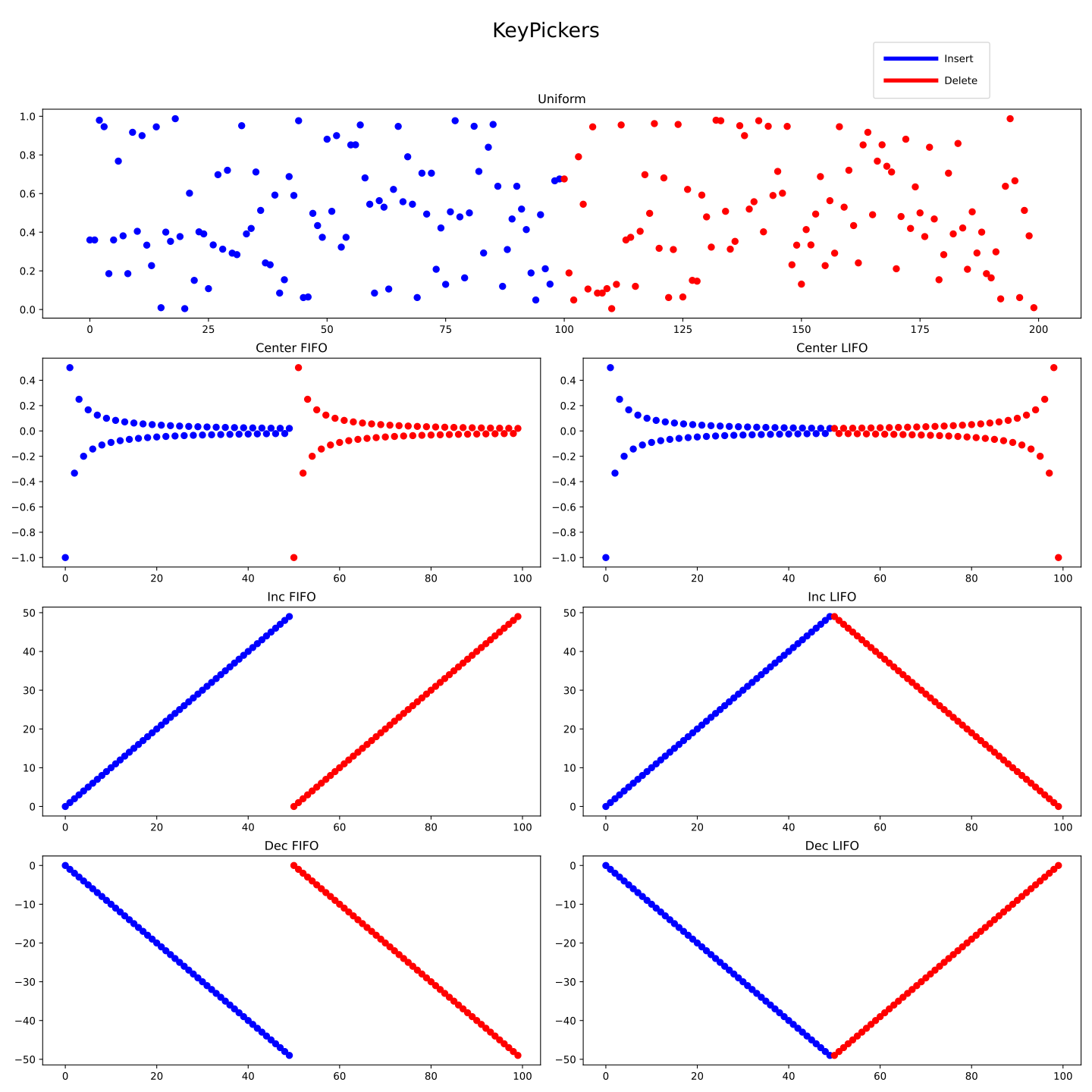
- The image was created by requesting first insertions and then deletions.
- Remember, though, that the real test chooses the type of each operation at random, according to the cycle.
- Uniform:
- The keys to insert are (almost) uniformly distributed over a given interval.
- I said "almost" because:
- one can ask the Uniform key picker to only return integer keys, and ...
- ... I use round instead of floor to map the floats to ints.
- I said "almost" because:
- The keys to delete are returned in random order.
- Sometimes, the key picker returns (on purpose!) keys to delete that were never inserted.
- The keys to insert are (almost) uniformly distributed over a given interval.
- The FIFO versions return the keys to delete in the same order as the keys to insert.
- The LIFO versions invert the order, unsurprisingly.
- Center FIFO and Center LIFO are the only ones ("almost" above aside) that generate keys that are NOT uniformly distributed.
- Here's the code for Center FIFO:
def _get_center_key(count: int):
    sign = 1 - 2*(count & 1)
    return sign * 1/count

class CenterFifoKeyPicker(KeyPicker[float]):
    _start_count: int = 0
    _end_count: int = 0

    def get_ins_key(self):
        self._end_count += 1
        return _get_center_key(self._end_count)

    def get_del_key(self):
        if self._start_count != self._end_count:
            self._start_count += 1
            return _get_center_key(self._start_count)
        return None
10.3. Statistics
10.3.1. Method
- The test collects, at regular intervals of time, the lengths of the rootleaf paths:
- Note that the lengths of the paths from the root to internal nodes are ignored.
- The path lengths are divided by , i.e. the optimal length of the path lengths.
- This means that we end up with ratios, where 1.0 means optimal.
- -Lexi Trees guarantee that the ratios are never above .
- Just knowing the worst case is not enough.
- I wanted to know more about the ratio distribution.
- I first tried sampling:
- I found the [min_key, max_key] interval for the keys.
- I generated uniformly distributed keys in that interval.
- I searched for each one of those keys, measuring the length of each search path.
- The time complexity is (in expectation, for P-Lexi Trees).
- CONS:
- It only works when the keys are actually uniformly distributed.
- In particular, it won't work with the Center FIFO and Center LIFO key pickers.
- I then decided to compute the exact min, max, mean, and std:
- The time complexity is .
- CONS:
- The ratio distribution is NOT Gaussian and not even symmetric.
- The standard deviation is not enough.
- The final implementation computes the full set of path lengths:
- The empirical distribution is summarized by selecting 19 evenly spaced quantiles, including the min and the max.
- The time complexity is .
10.3.2. Results
- First of all:
- We expect the P‑Lexi Trees graphs to be independent of the key distribution.
- Trivia:
- The graphs were good,
- but then I added the two Center key pickers and
- they gave me very odd results.
- I first suspected that
random()was the culprit and tried a better PRNG. - Then I remembered that I was sampling the path lengths...
- ... assuming that the keys were uniformly distributed, and...
- ... the Center key pickers definitely break that assumption.
- I decided to conduct two types of tests:
- insertions only, 10M operations
- both operations, 20M operations, 2 cycles.
- Uniform Picker, insertions only (10M ops):
- Let's first see the separate graphs:
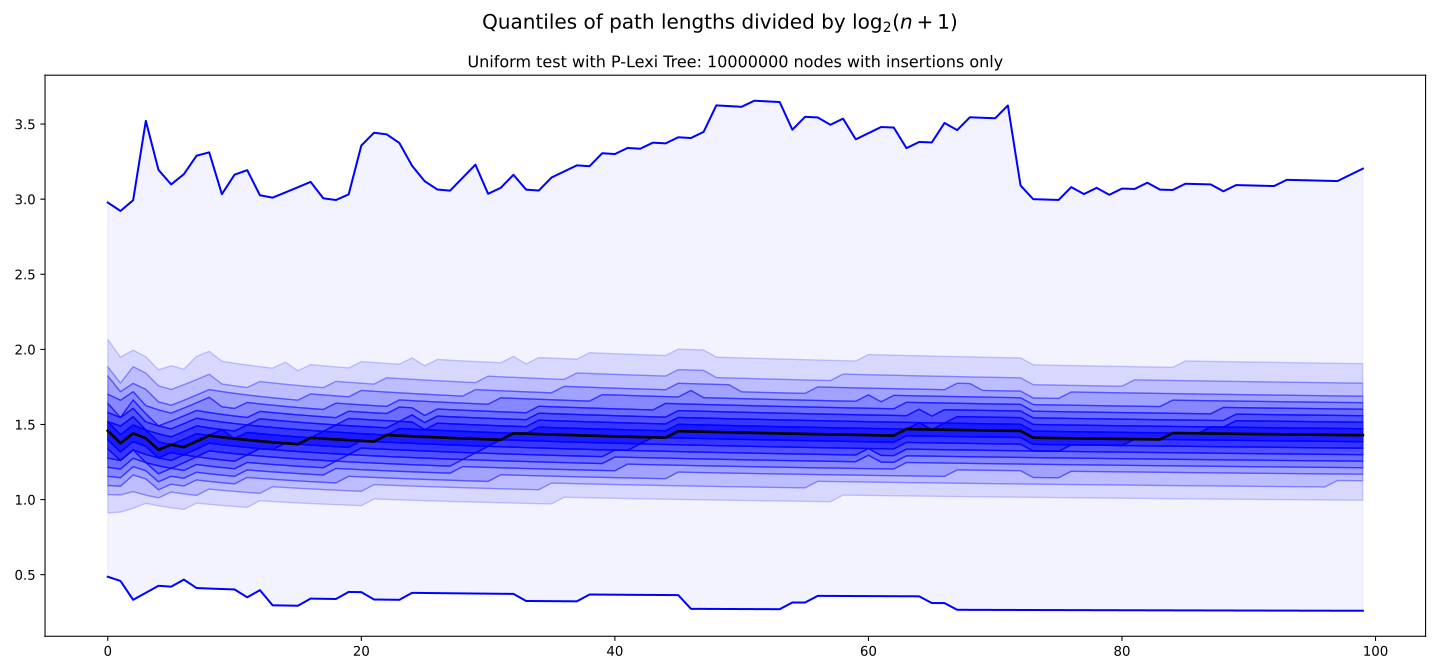
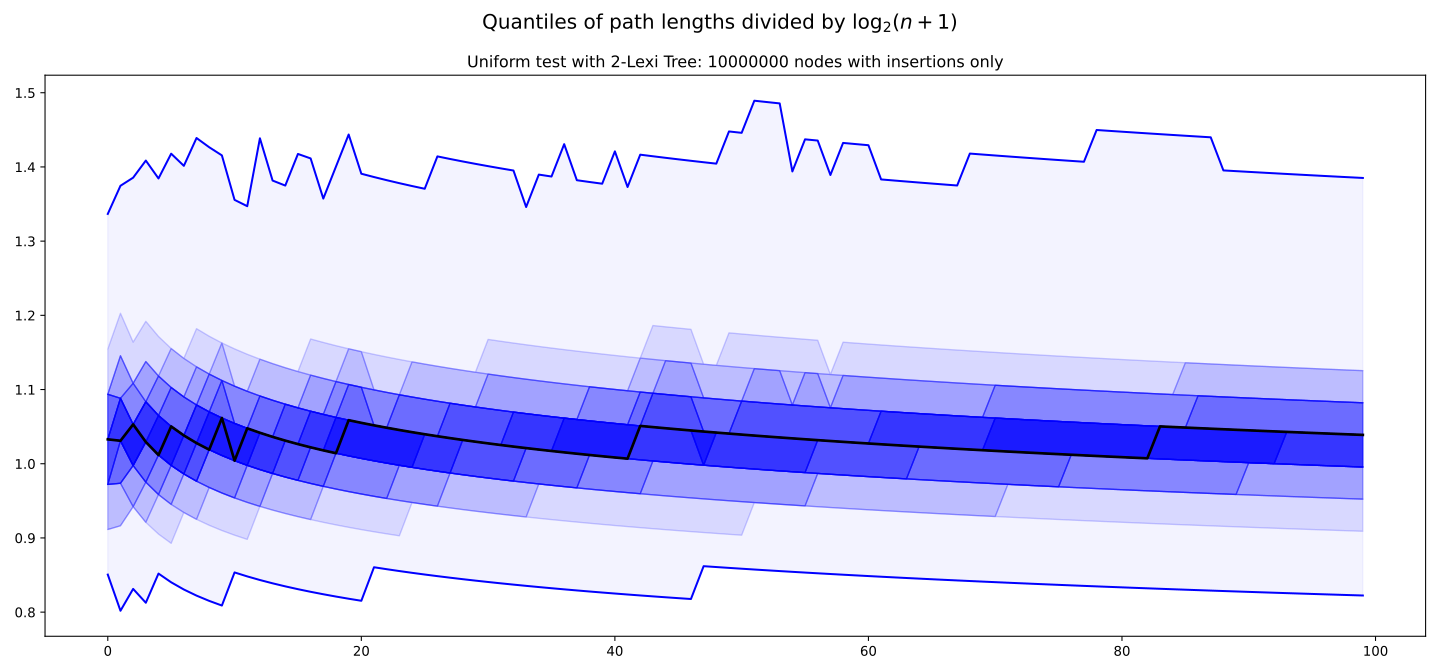
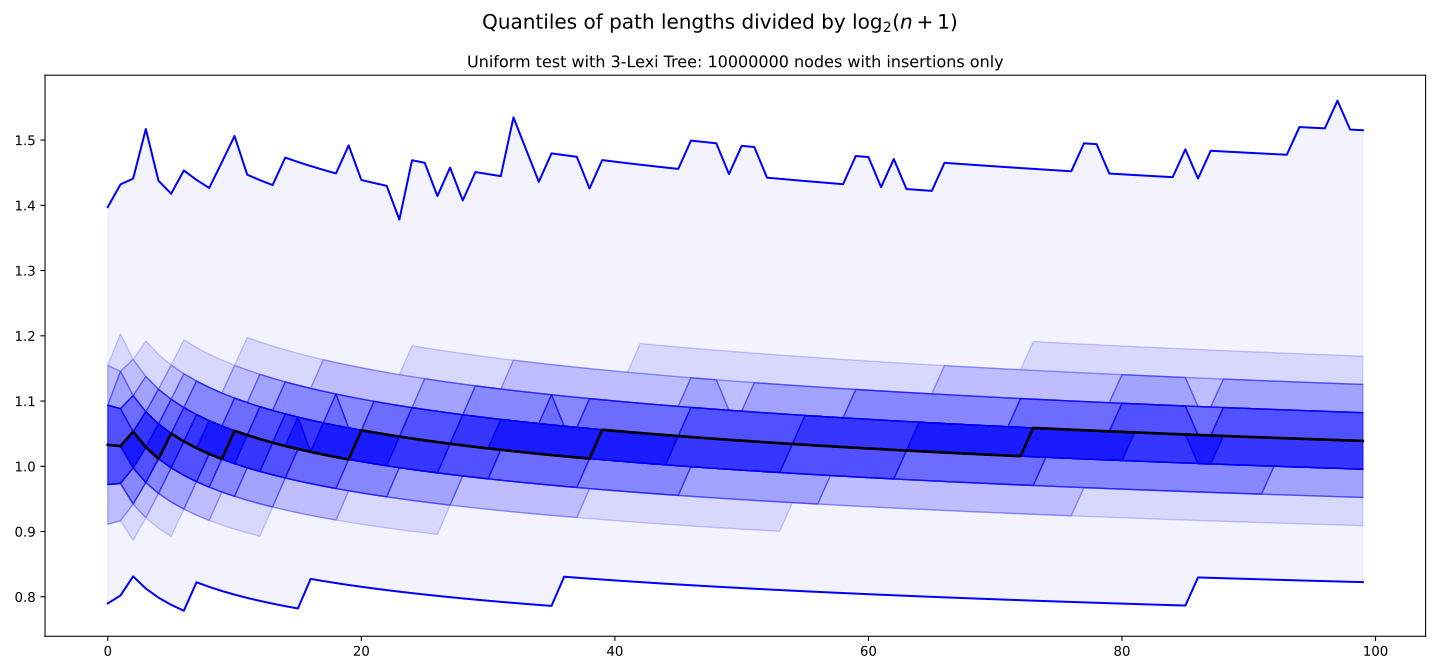
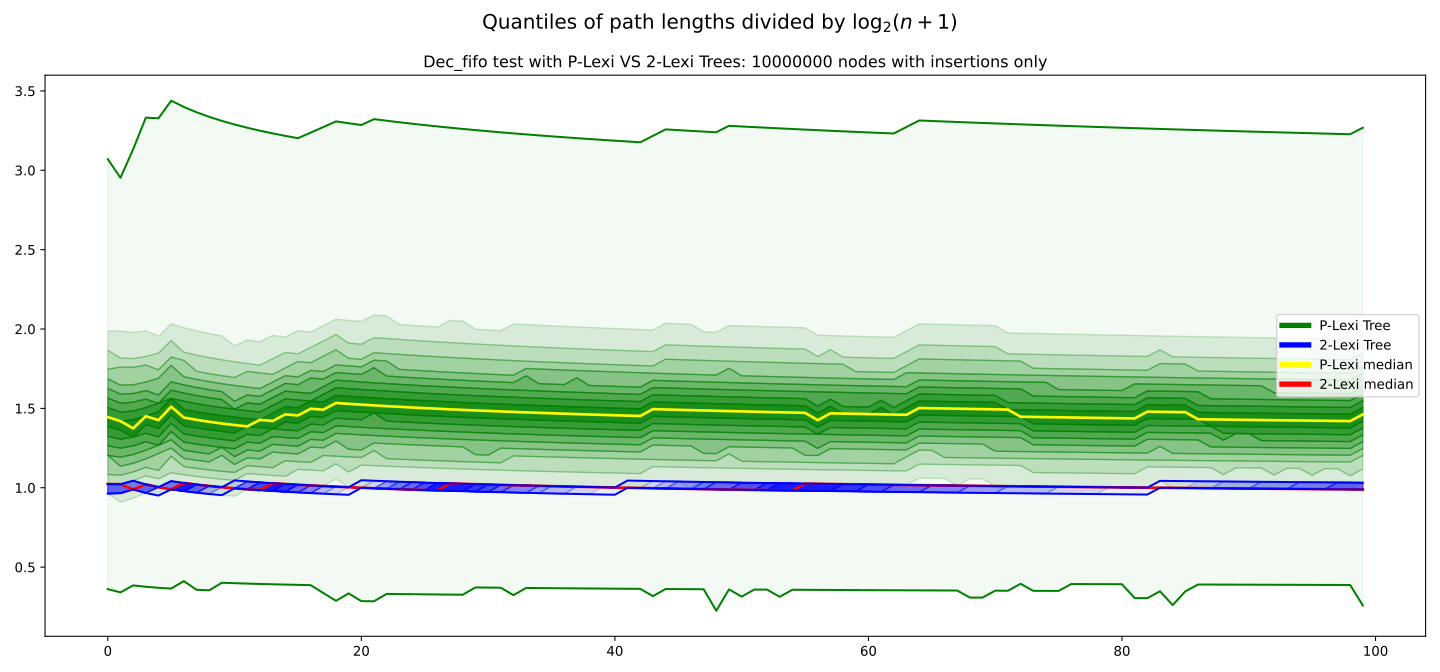
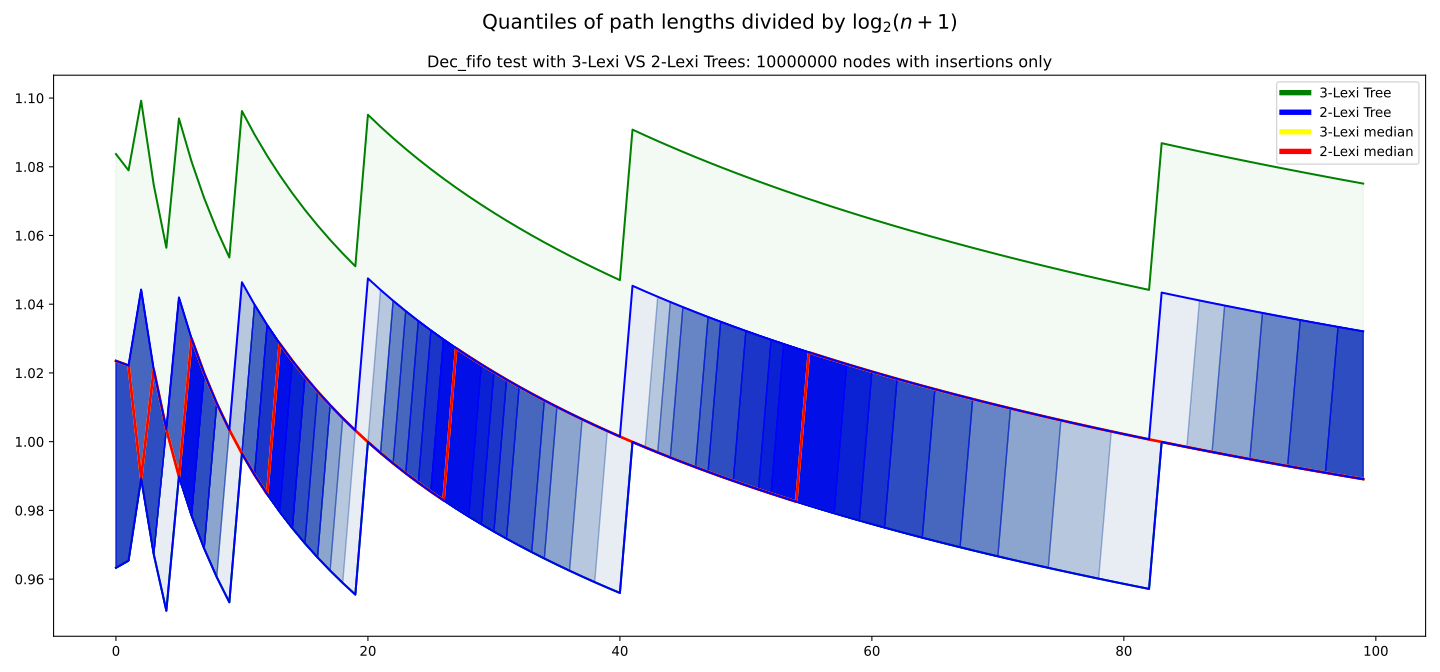
- Here's a direct comparison between P‑Lexi and 2‑Lexi Trees:
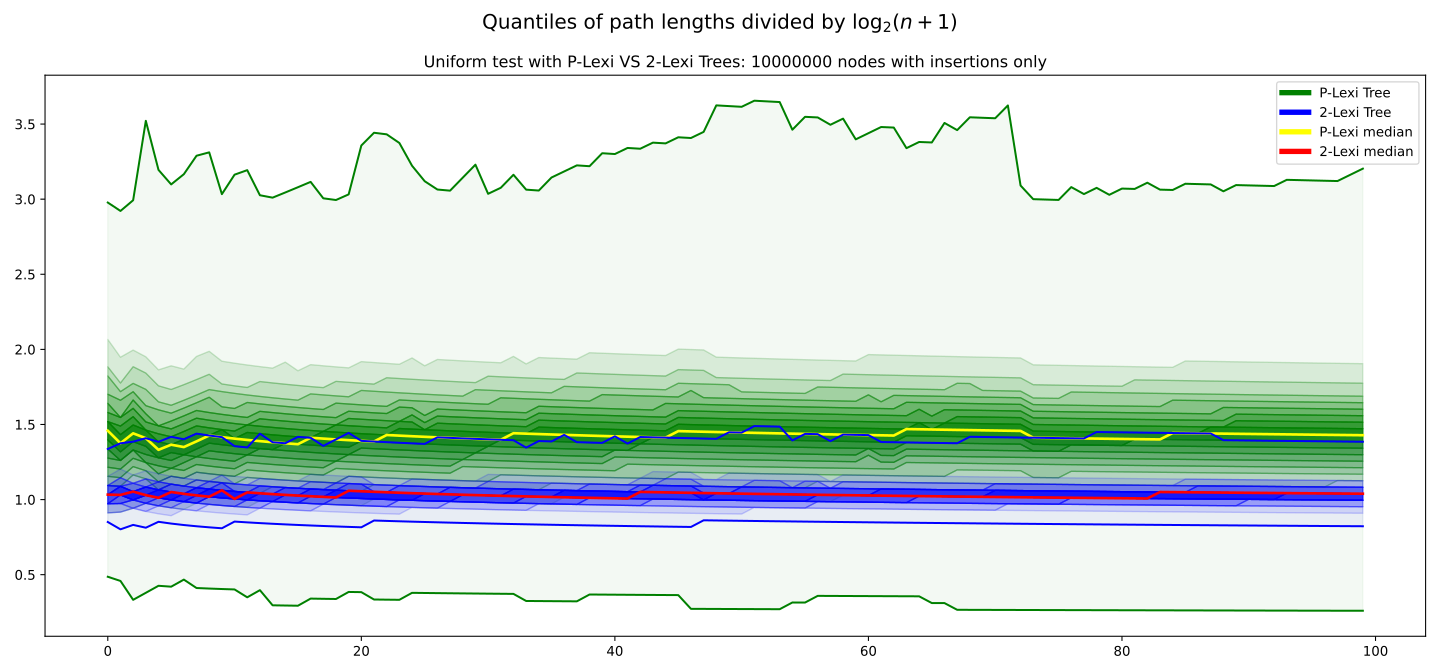
- As we can see, 2‑Lexi Trees are vastly superior to P‑Lexi Trees, at least in this case.
- Here's the comparison between 2‑Lexi and 3‑Lexi Trees:
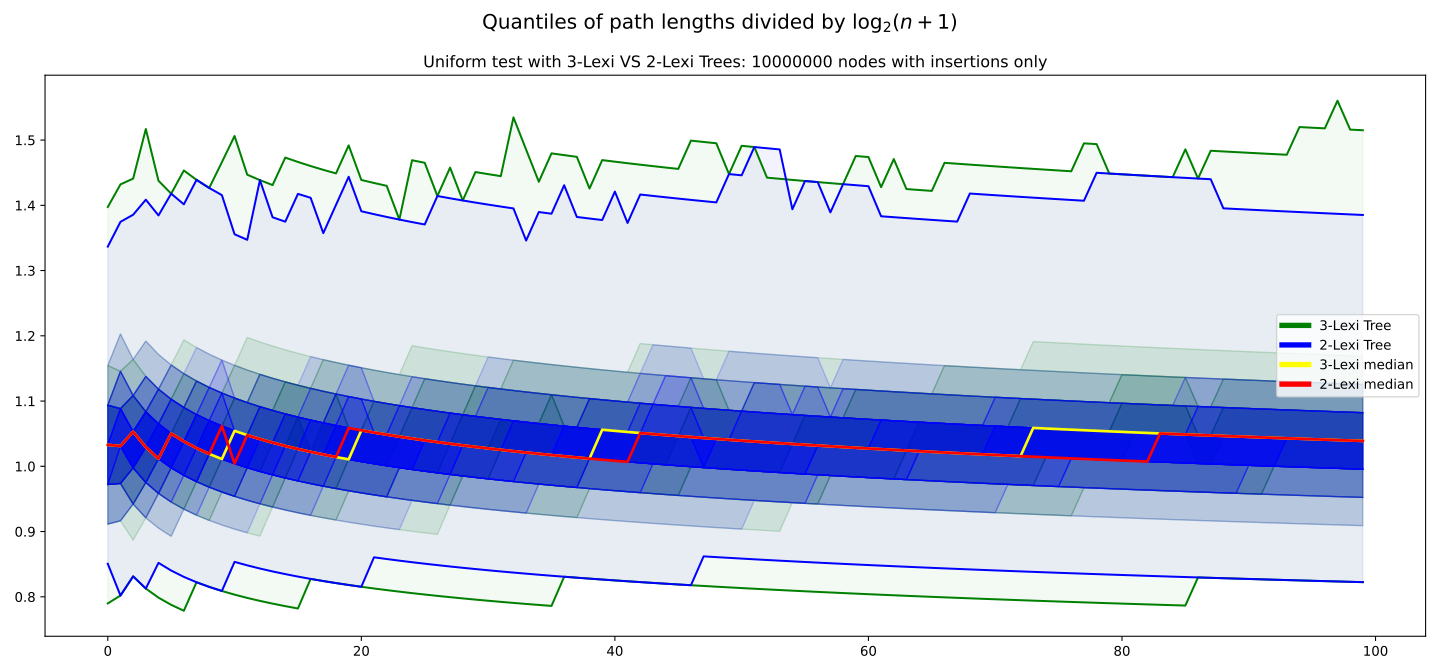
- 2‑Lexi Trees appears to be only slightly better than 3‑Lexi Trees.
- This makes the 3‑Lexi Trees surprisingly good.
- In all cases, the quantiles are all clustered around the medians, which means that...
- ... there are few very short and very long paths.
- Let's first see the separate graphs:
- Uniform Picker, both operations (20M ops, 2 cycles):
- Again, let's start with the separate graphs:
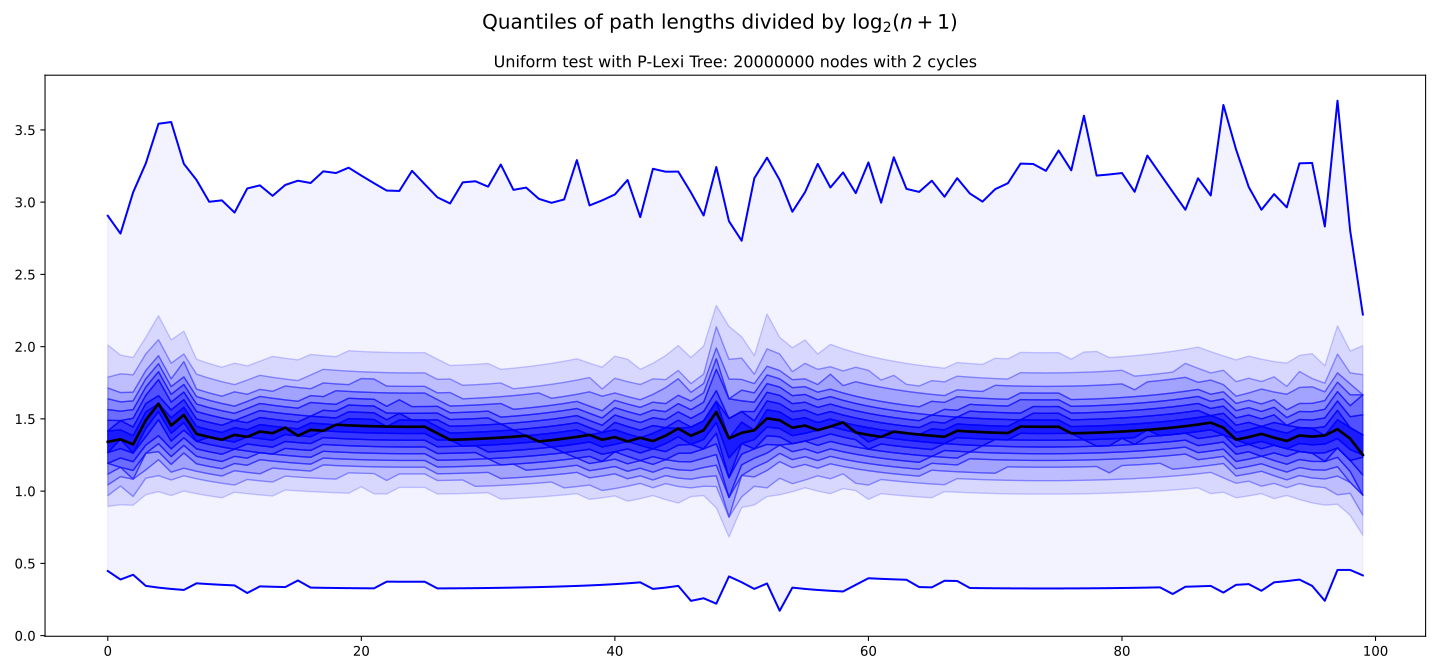
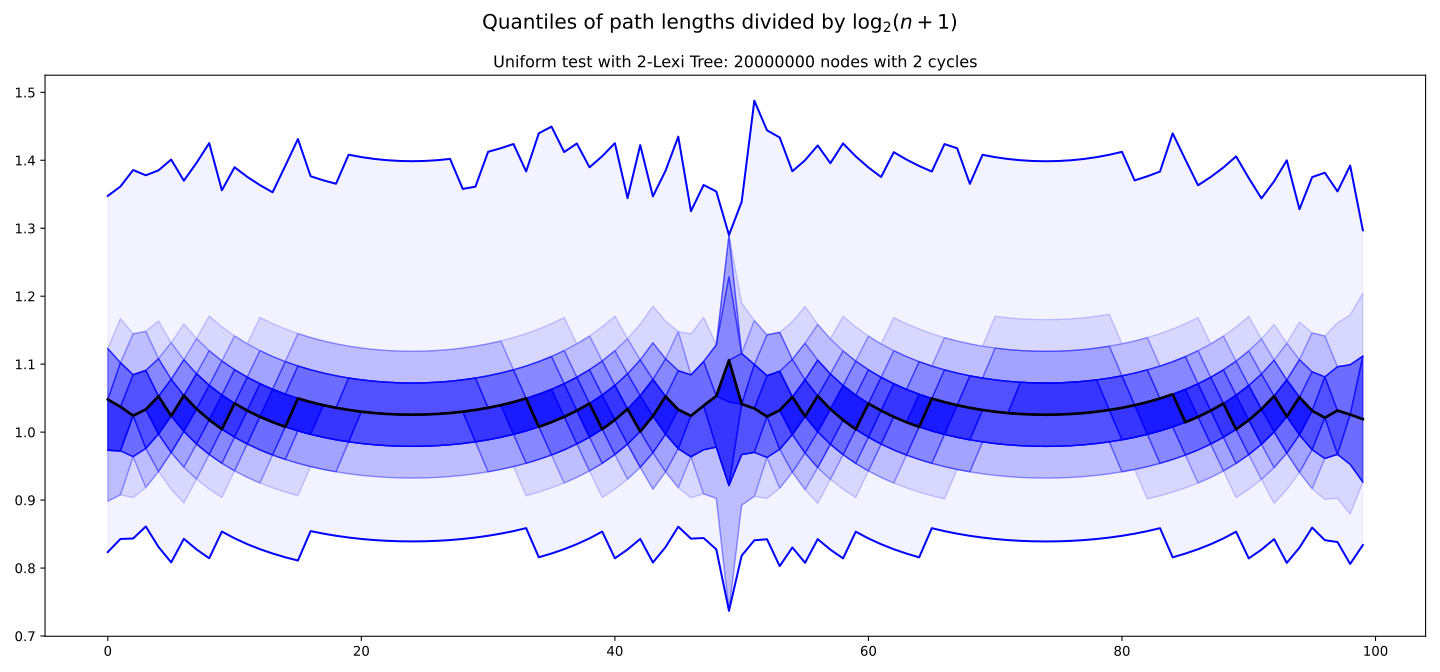
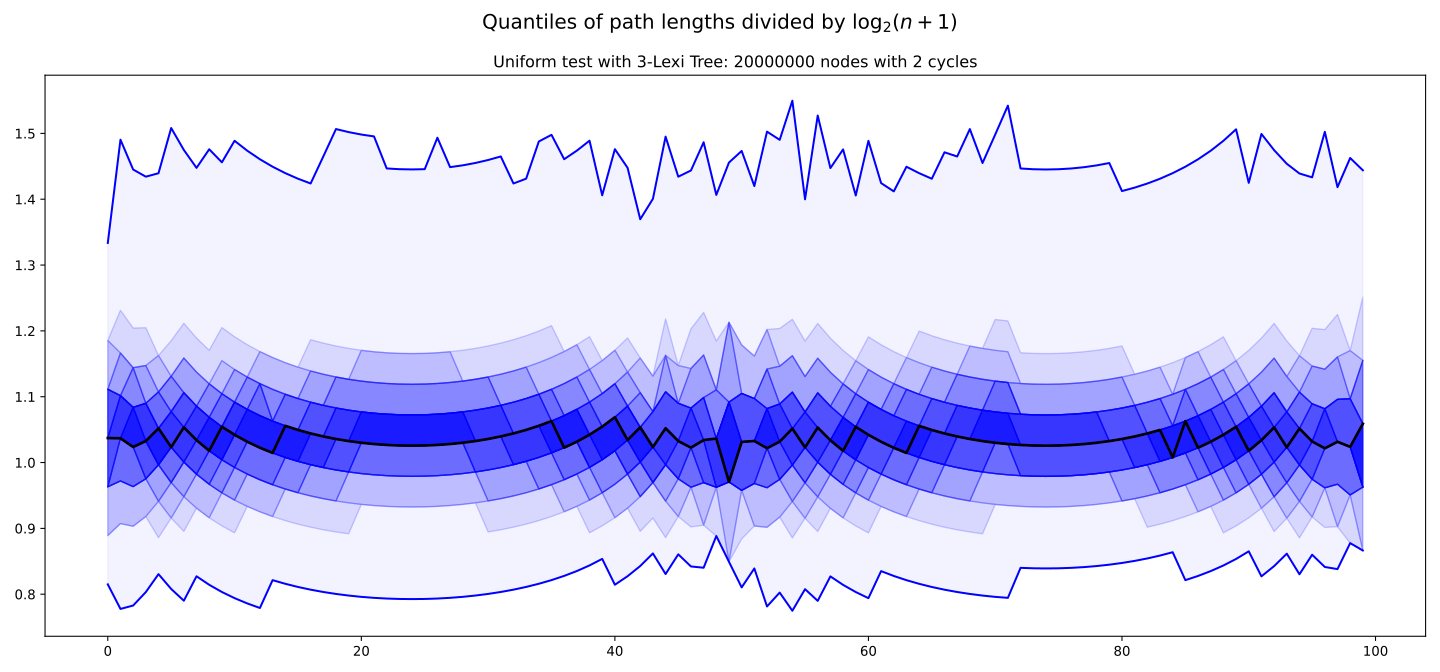
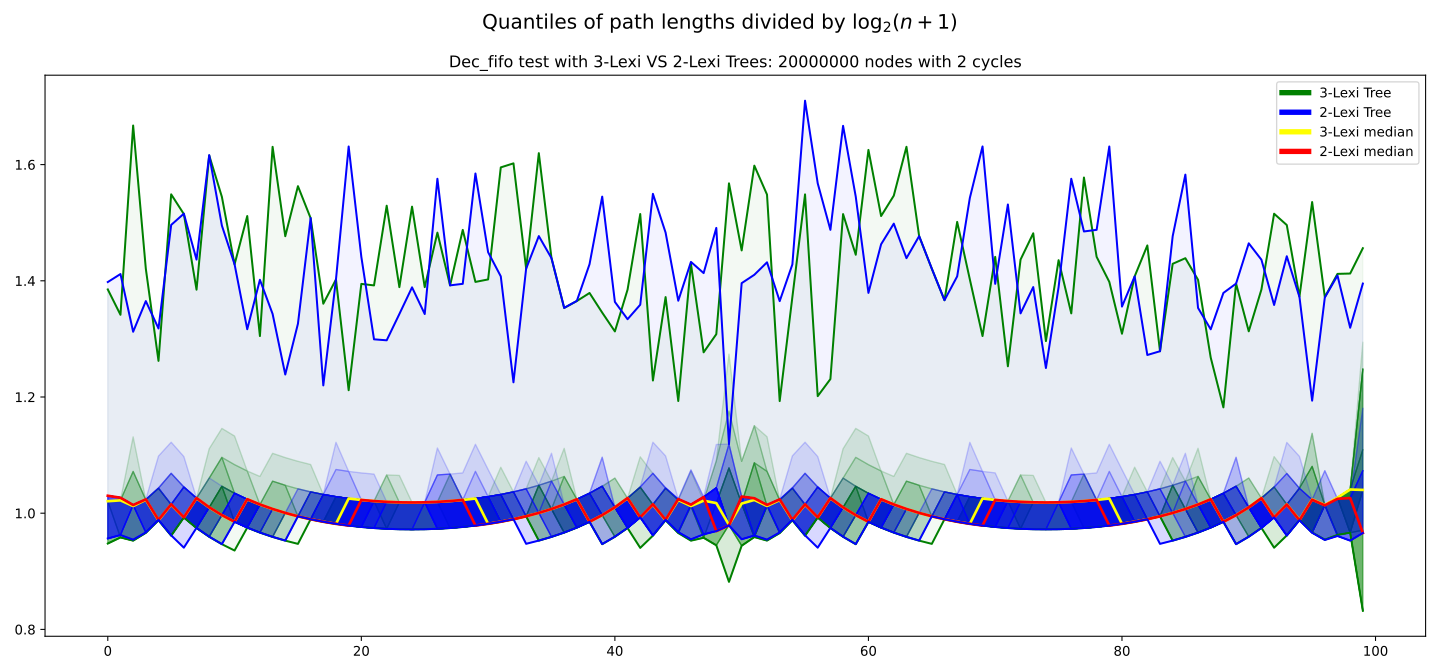
- And here are the comparisons:
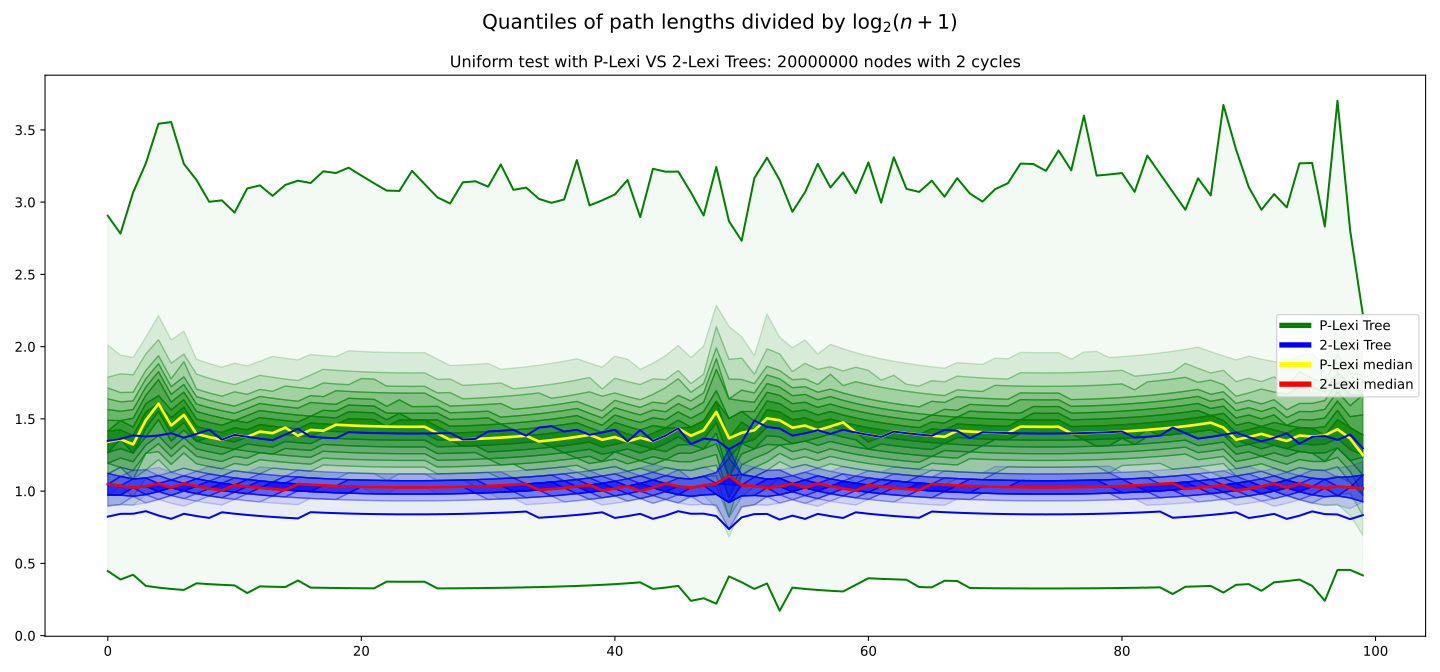
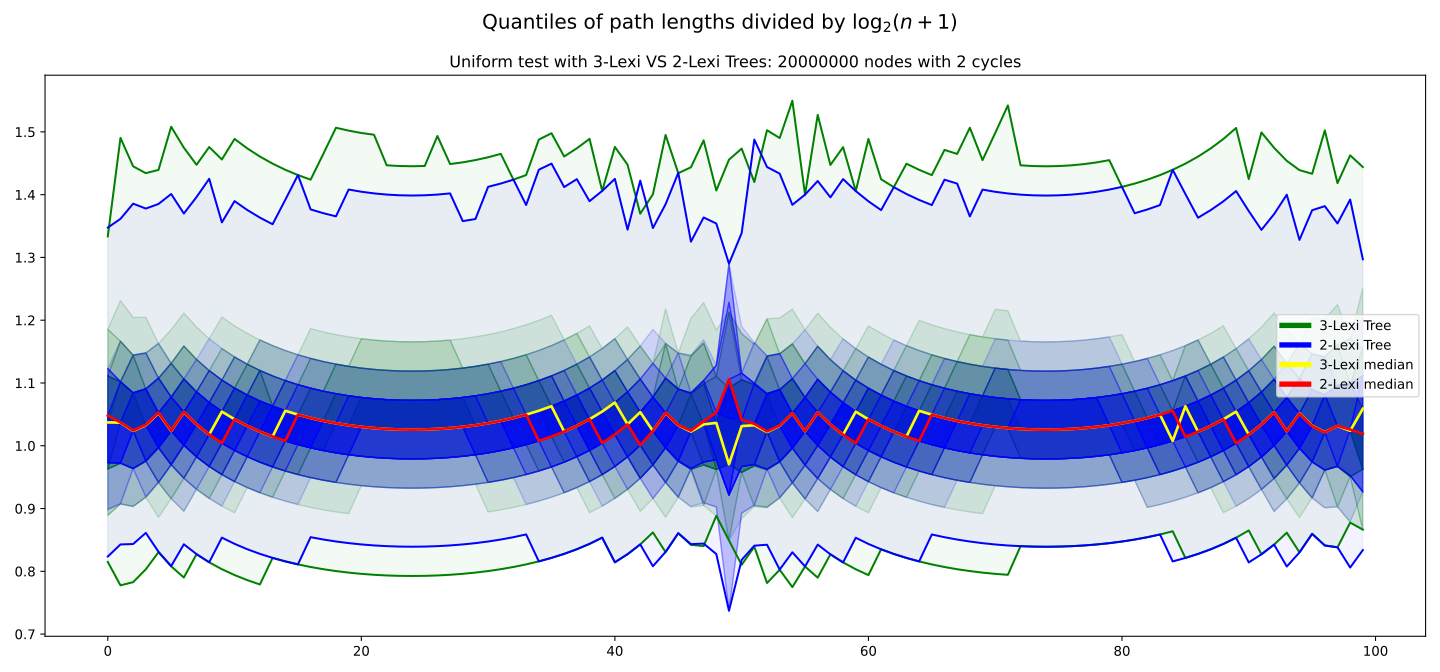
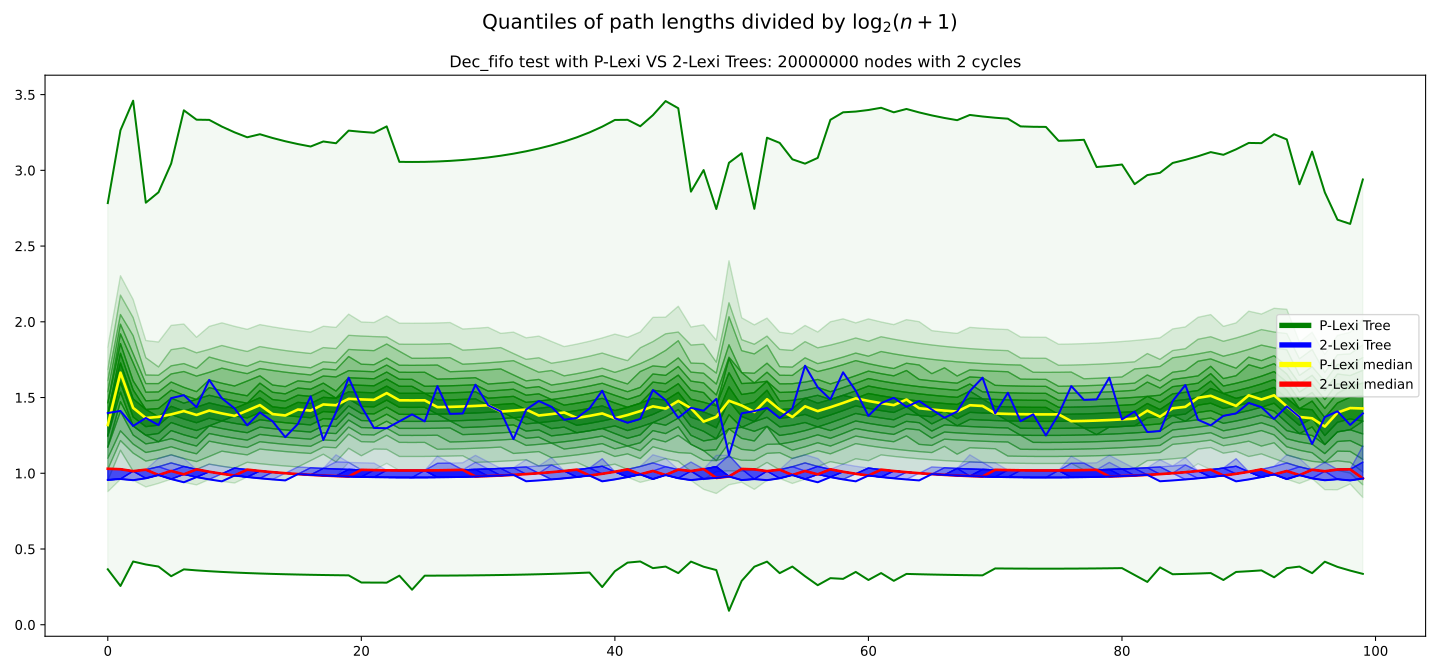
- The situation didn't change much, so the deletions don't seem to cause any problems.
- We can see a spike in the middle (50 on the axis), but that's probably due to random noise:
- ... the trees are very small at that time, because of the 2 cycles.
- It's like when you toss a coin: a few tosses won't give you a great estimation of the true mean and...
- ... if you repeat the experiment you'll get big variations.
- Note that we shouldn't expect the P‑Lexi Trees to do better or worse in different situations.
- If that happens, we have a bug somewhere! Remember the Trivia above.
- Again, let's start with the separate graphs:
- Here are all the other cases for the P‑Lexi Trees:
Show Images
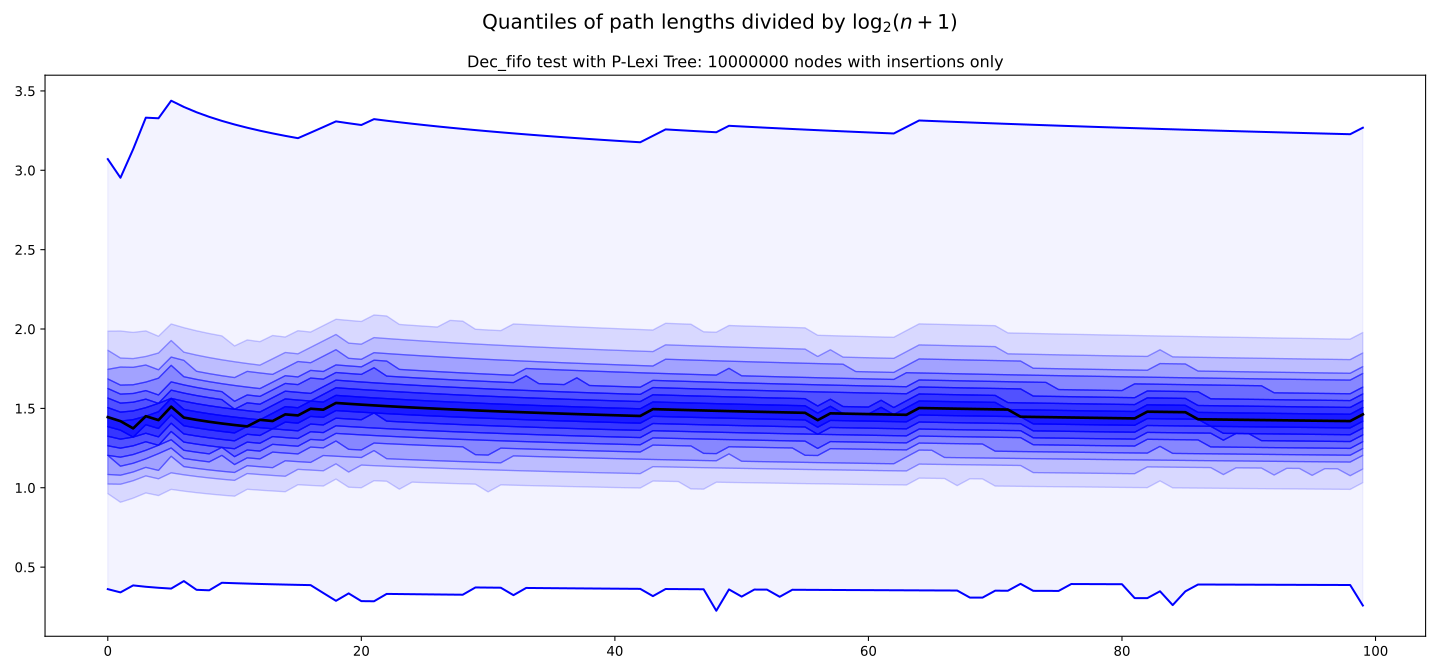
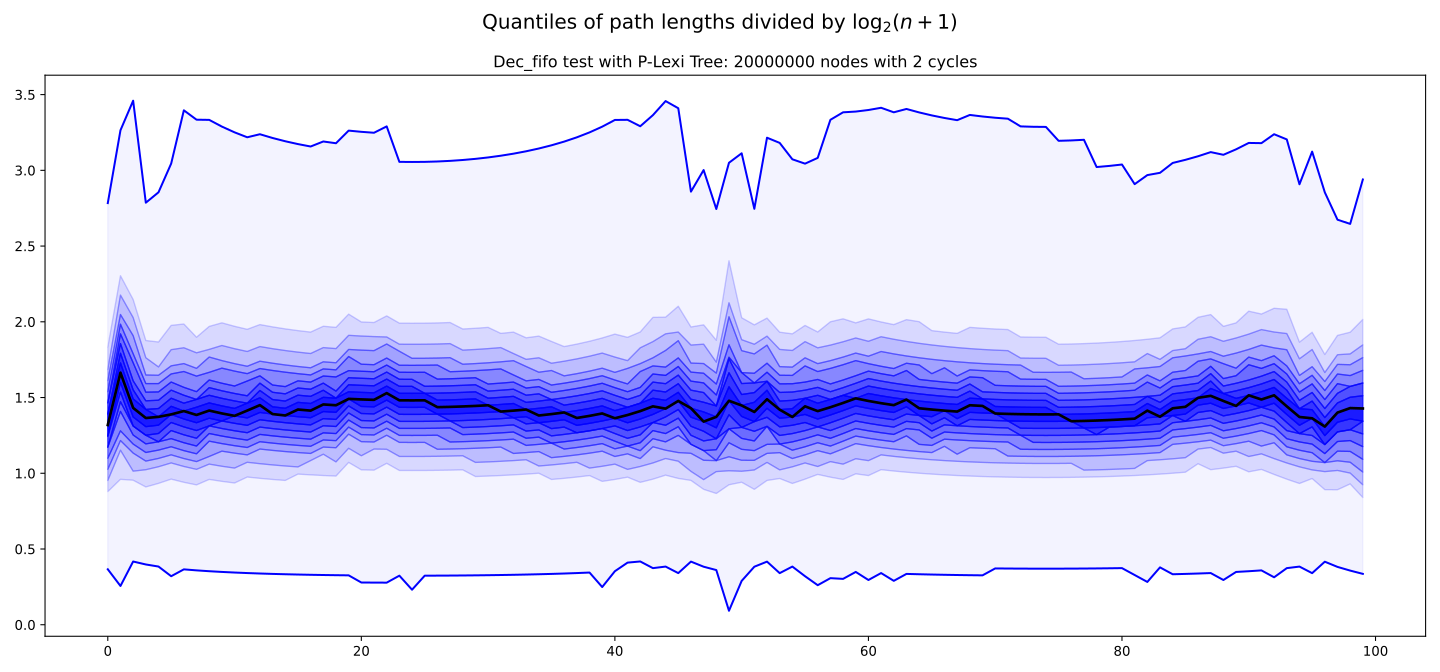
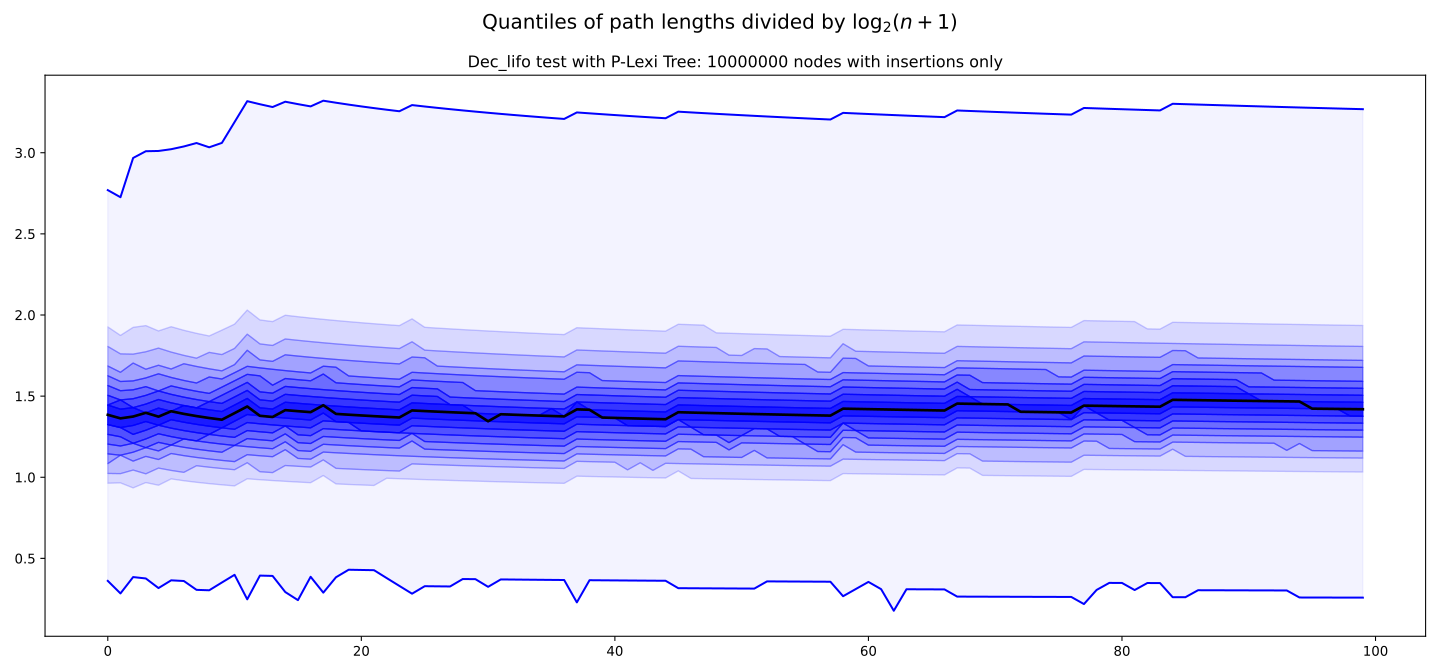
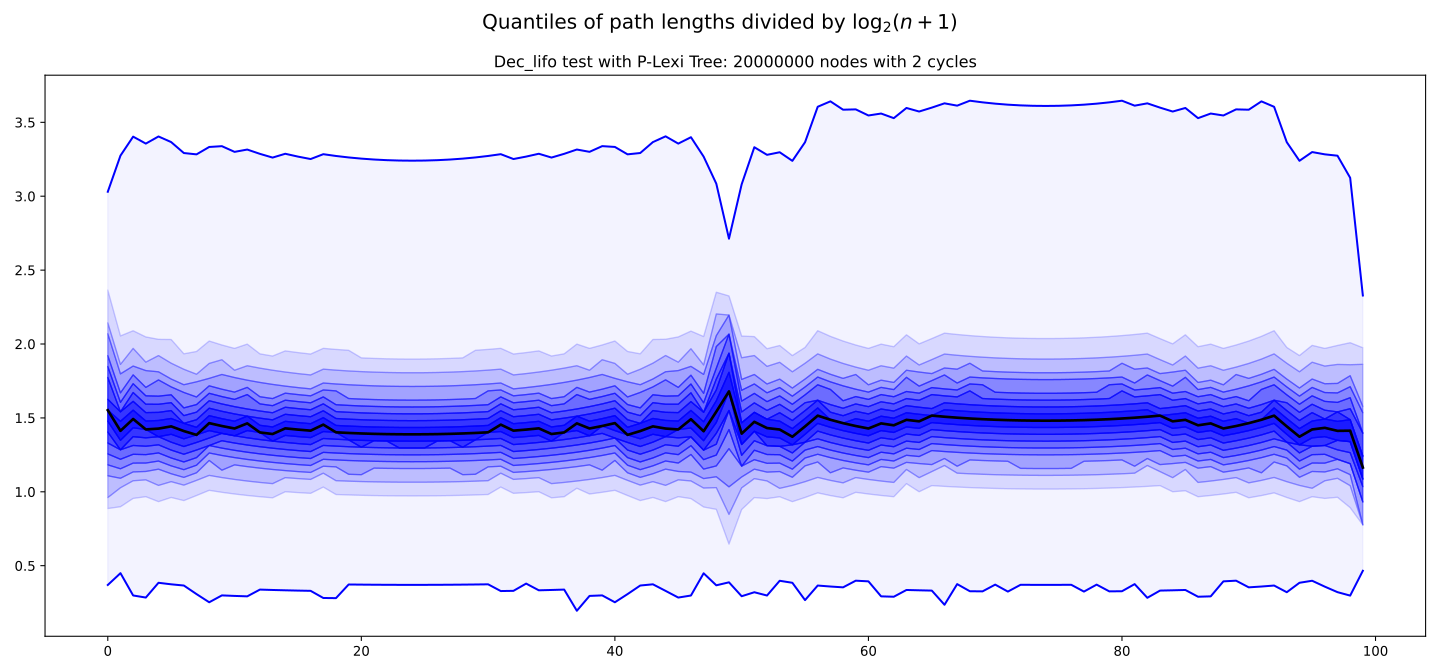
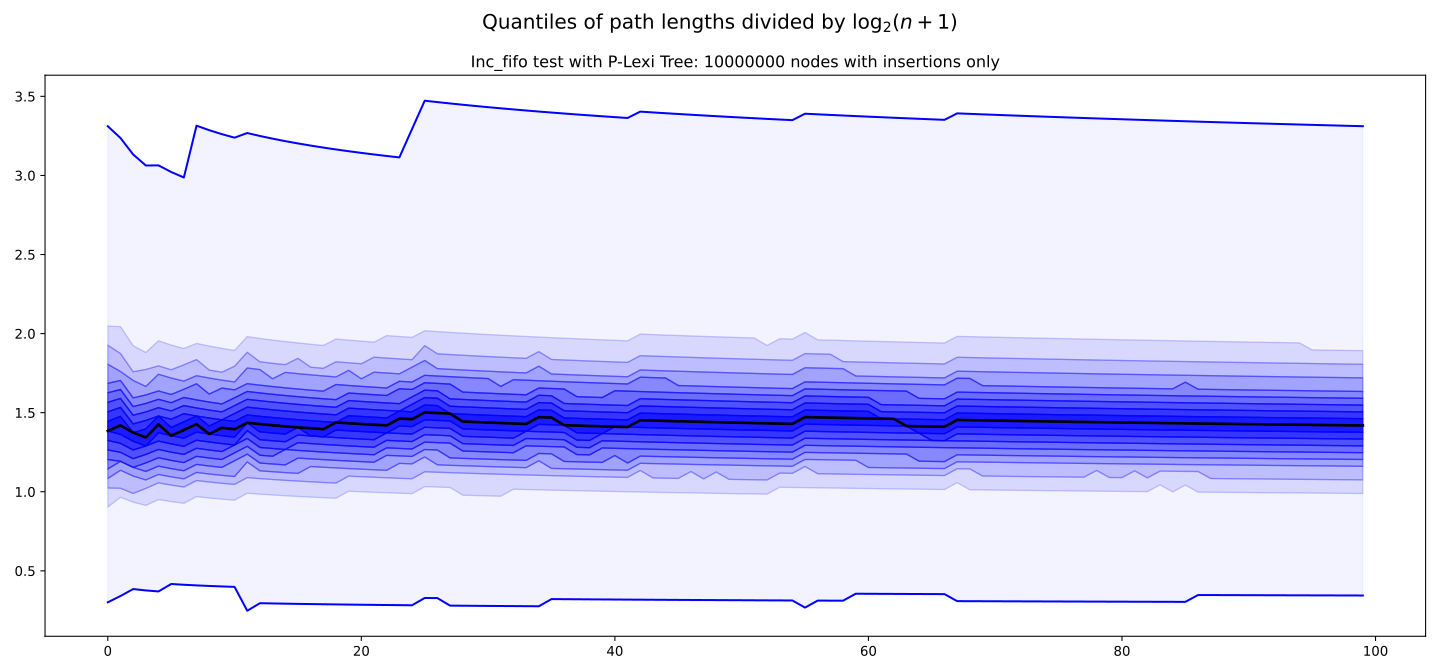
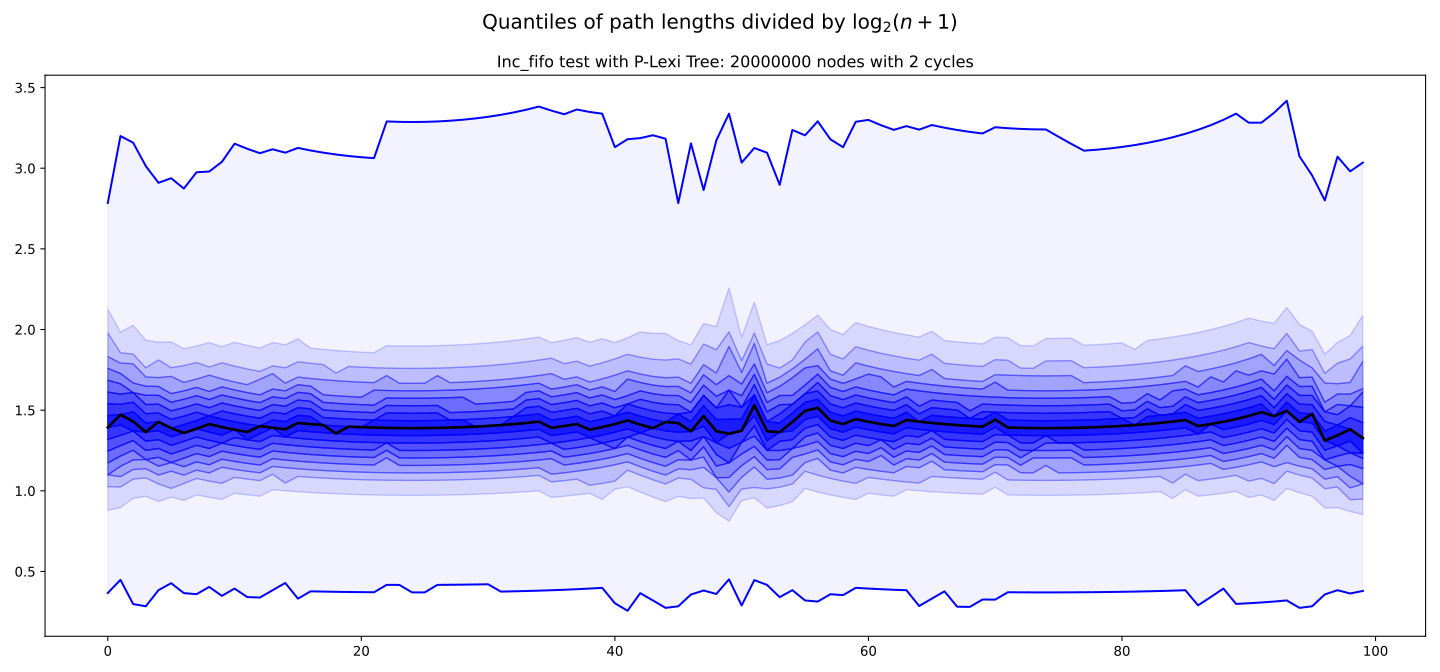
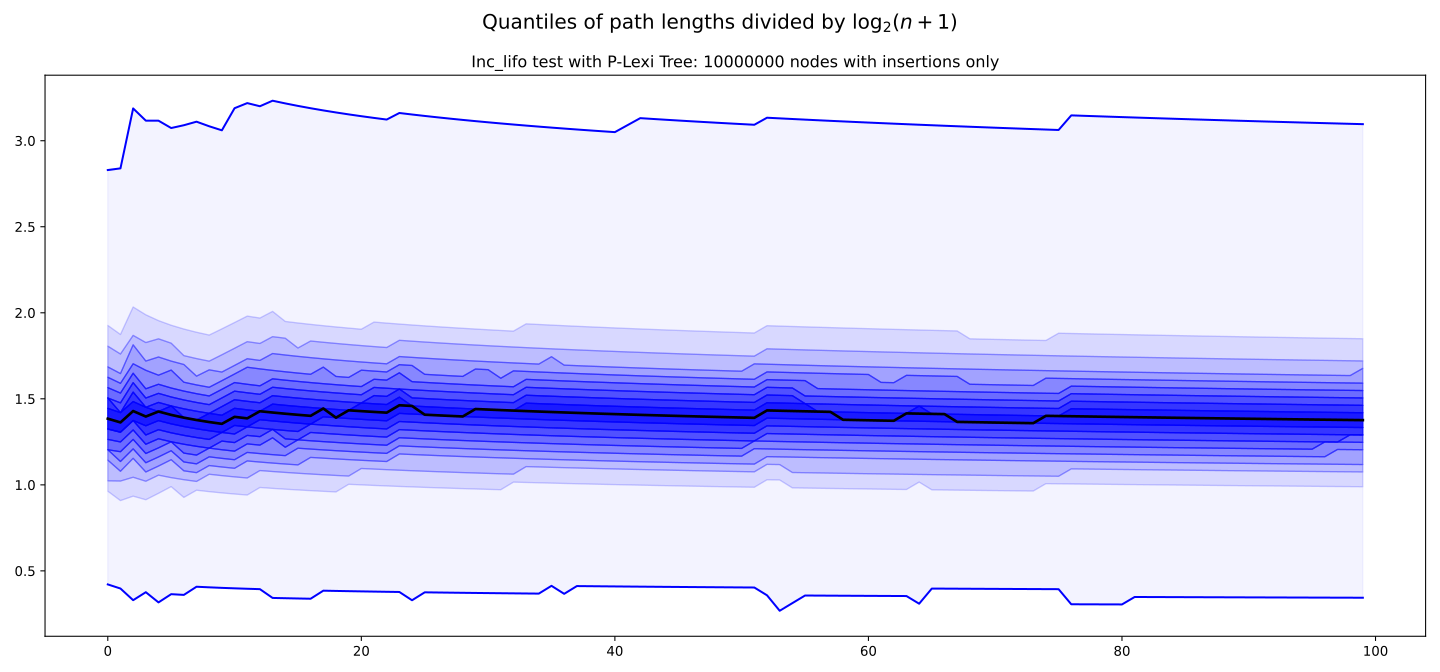
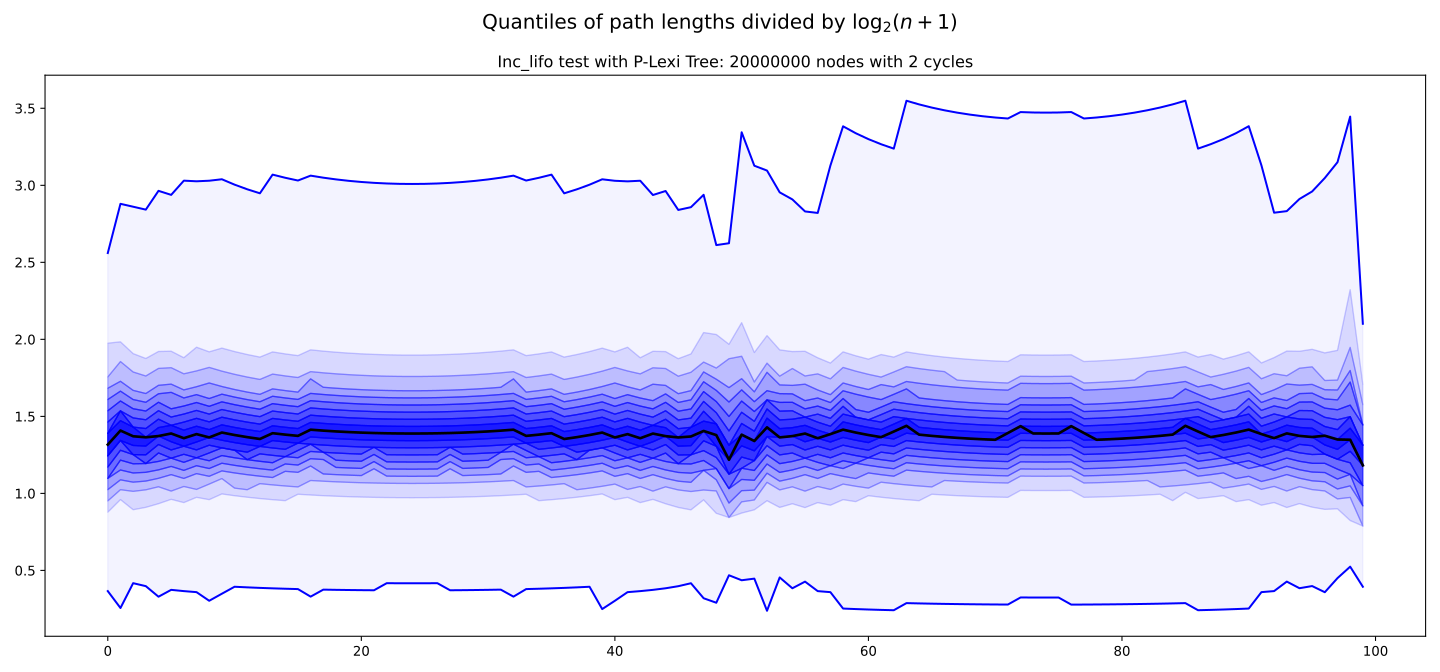
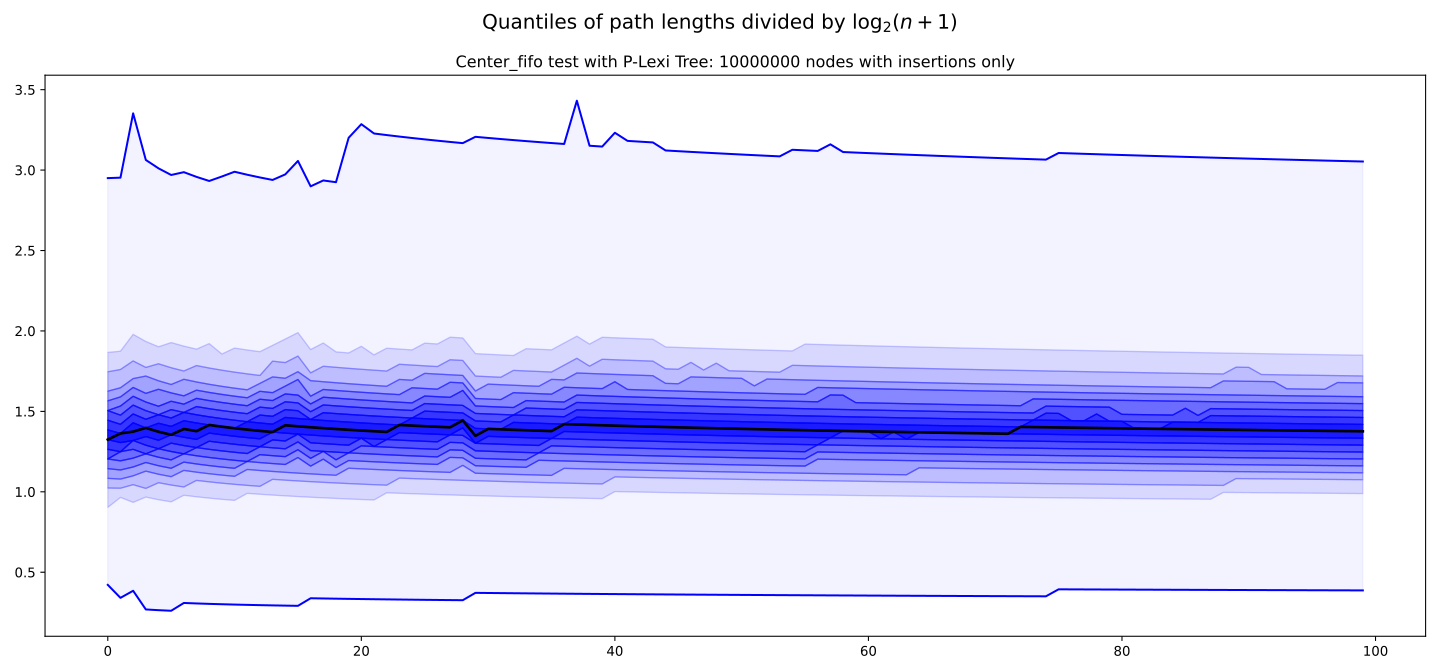
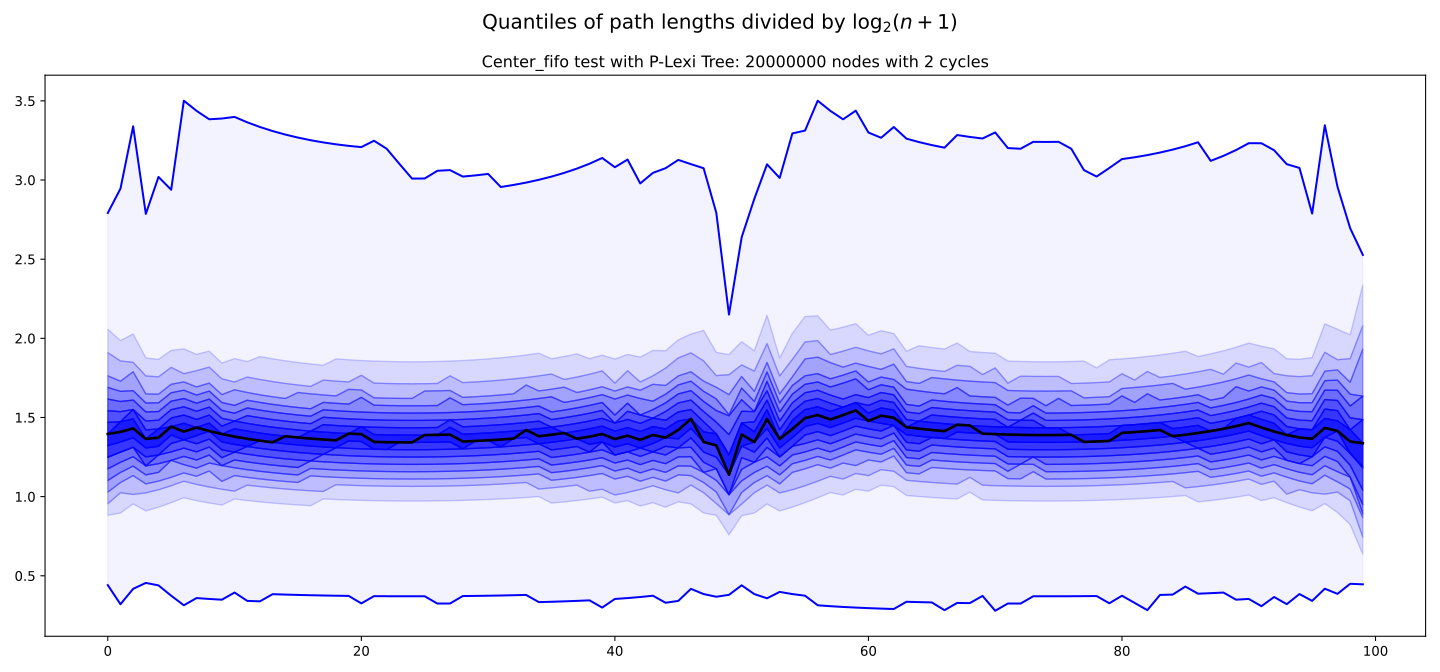
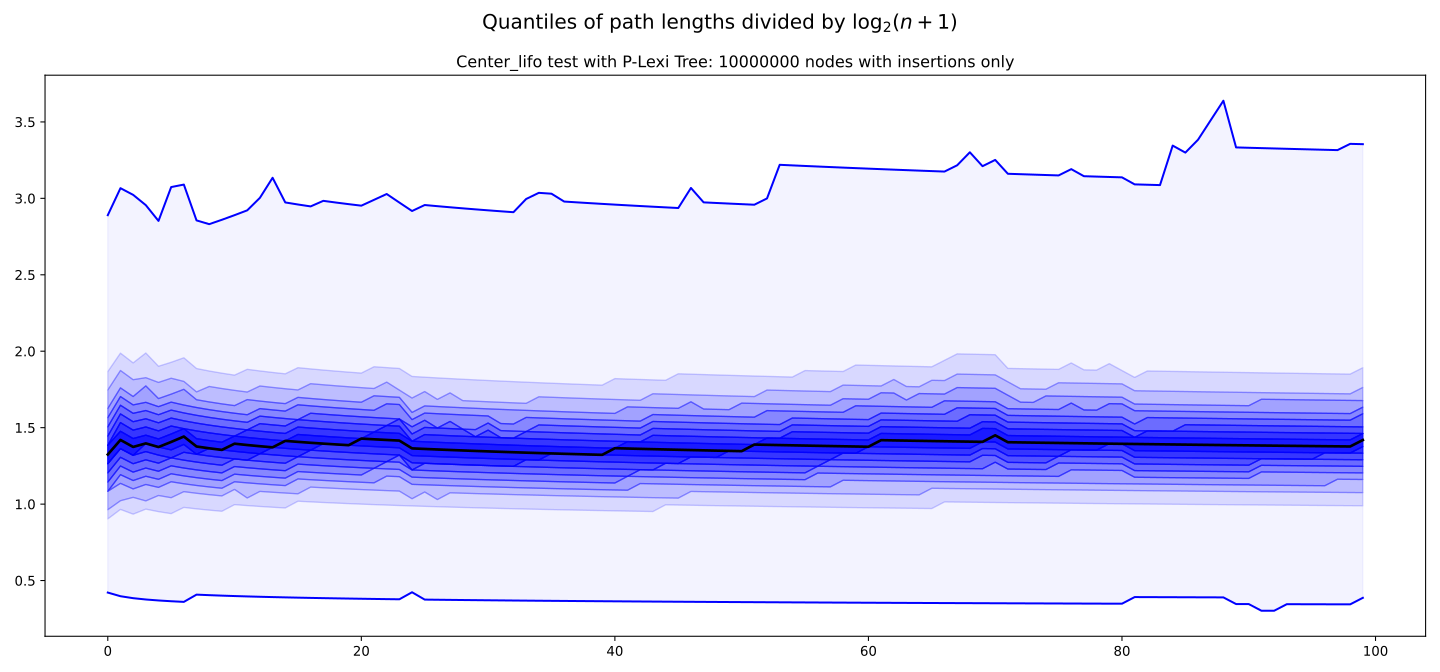
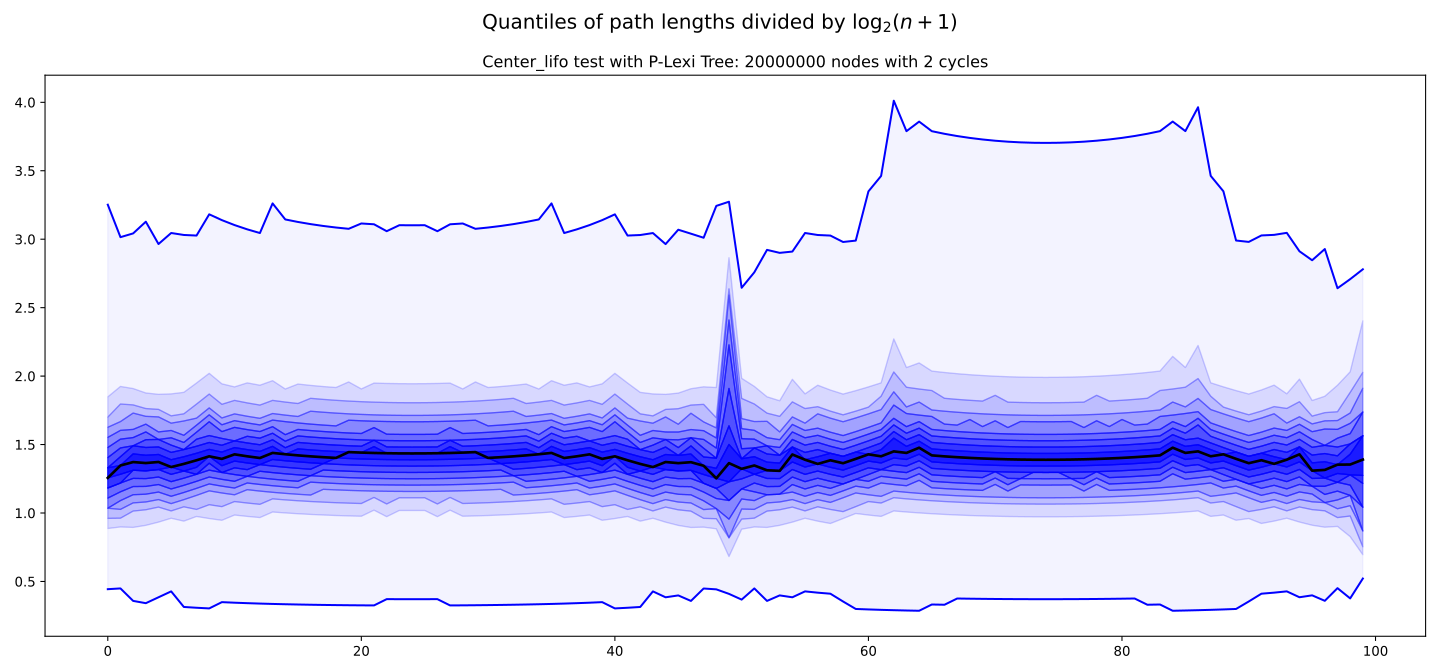
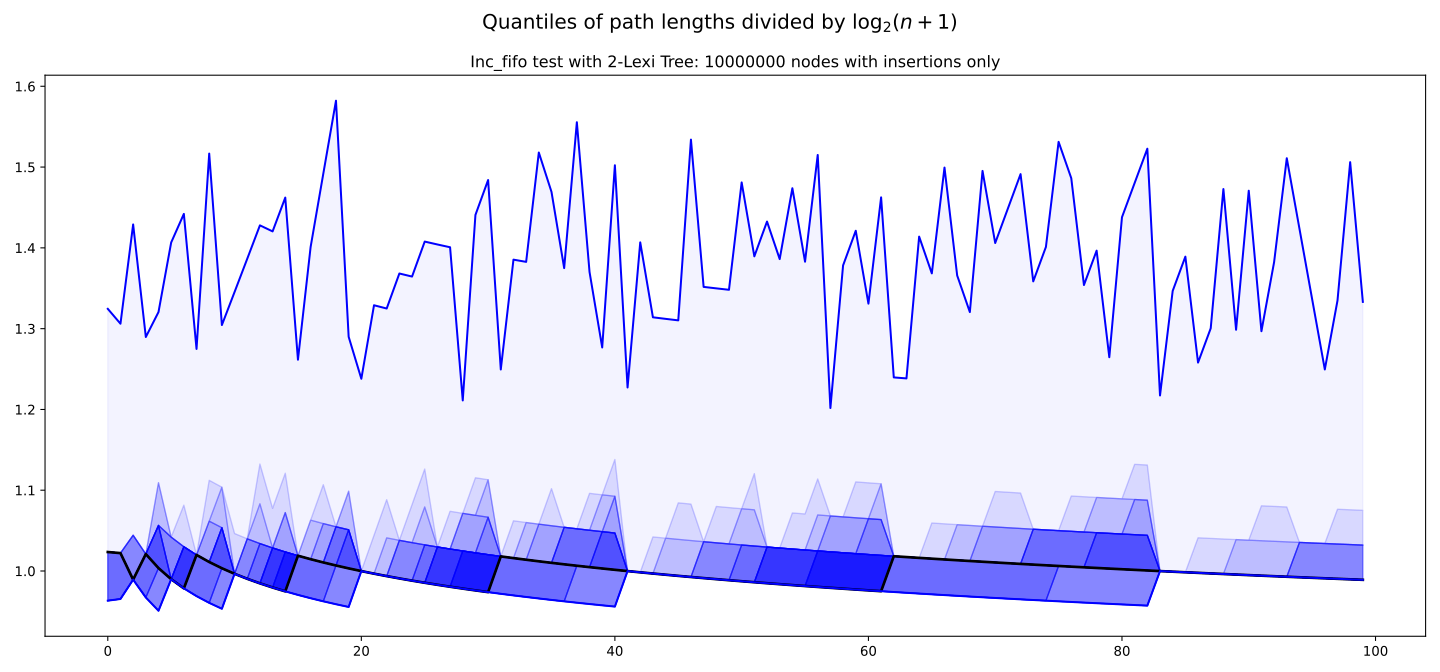
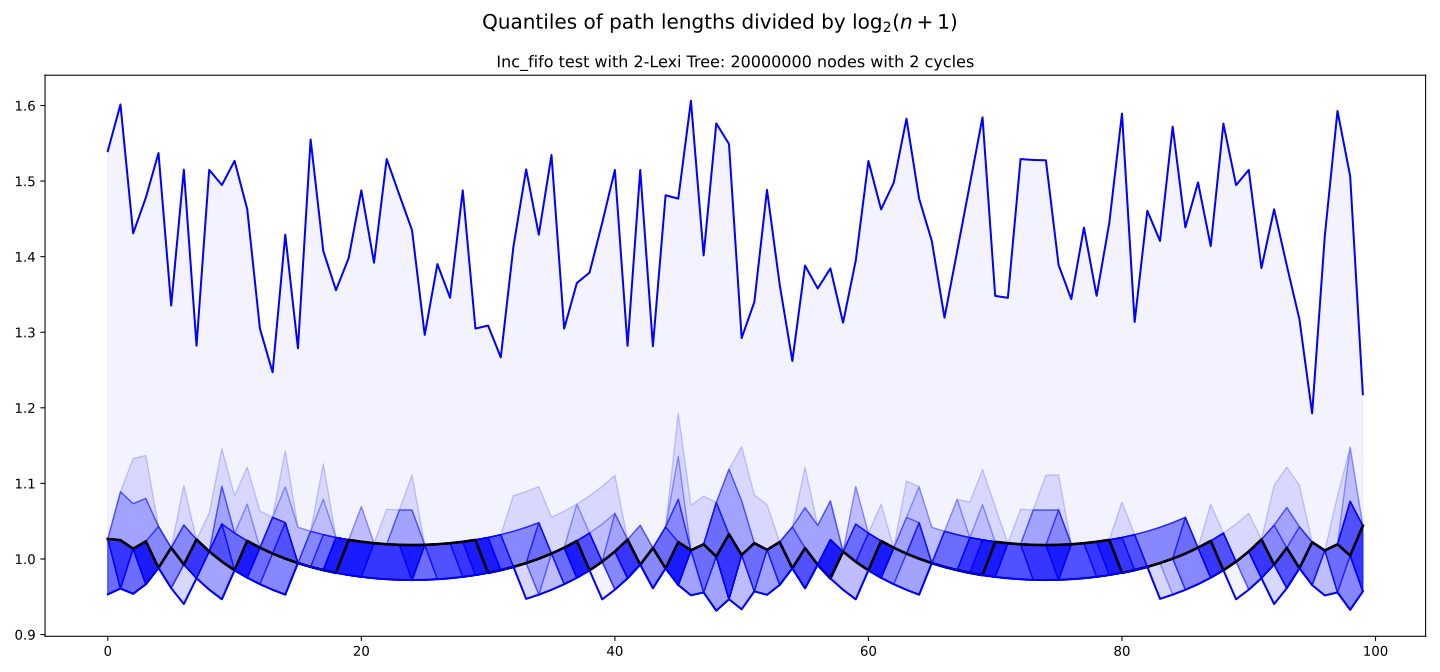
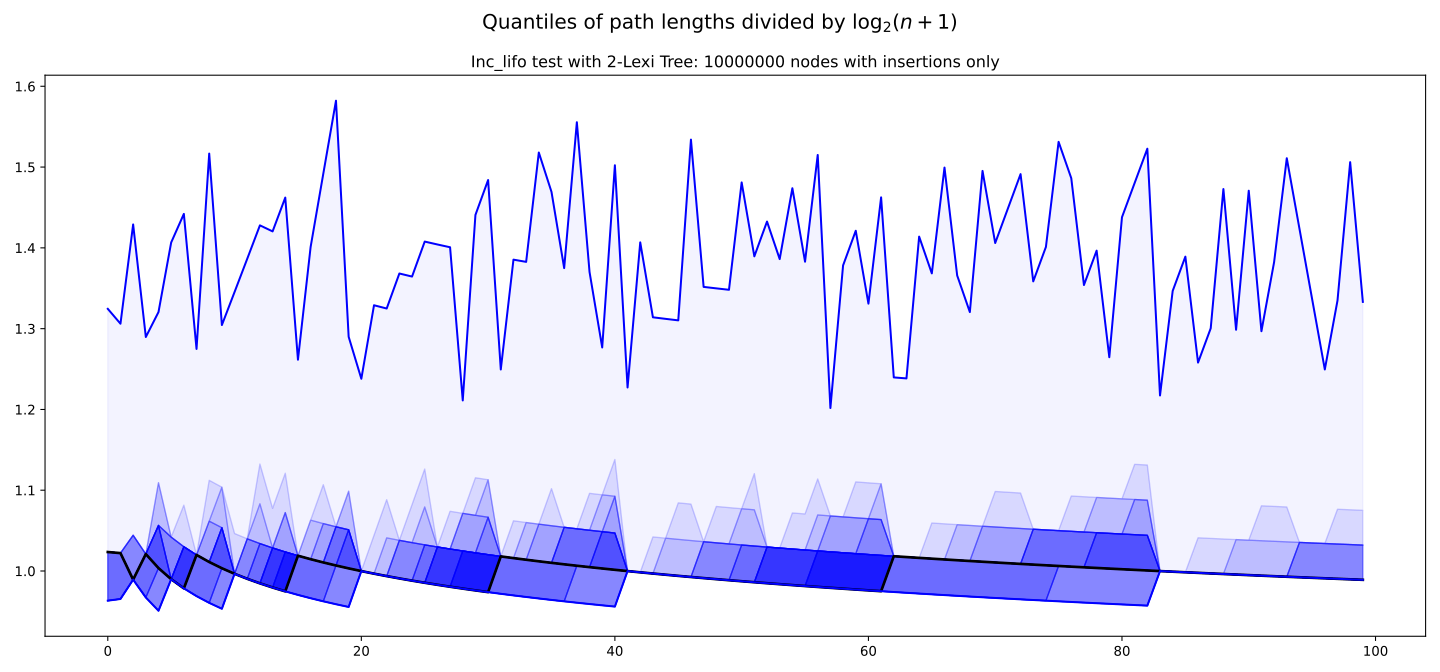
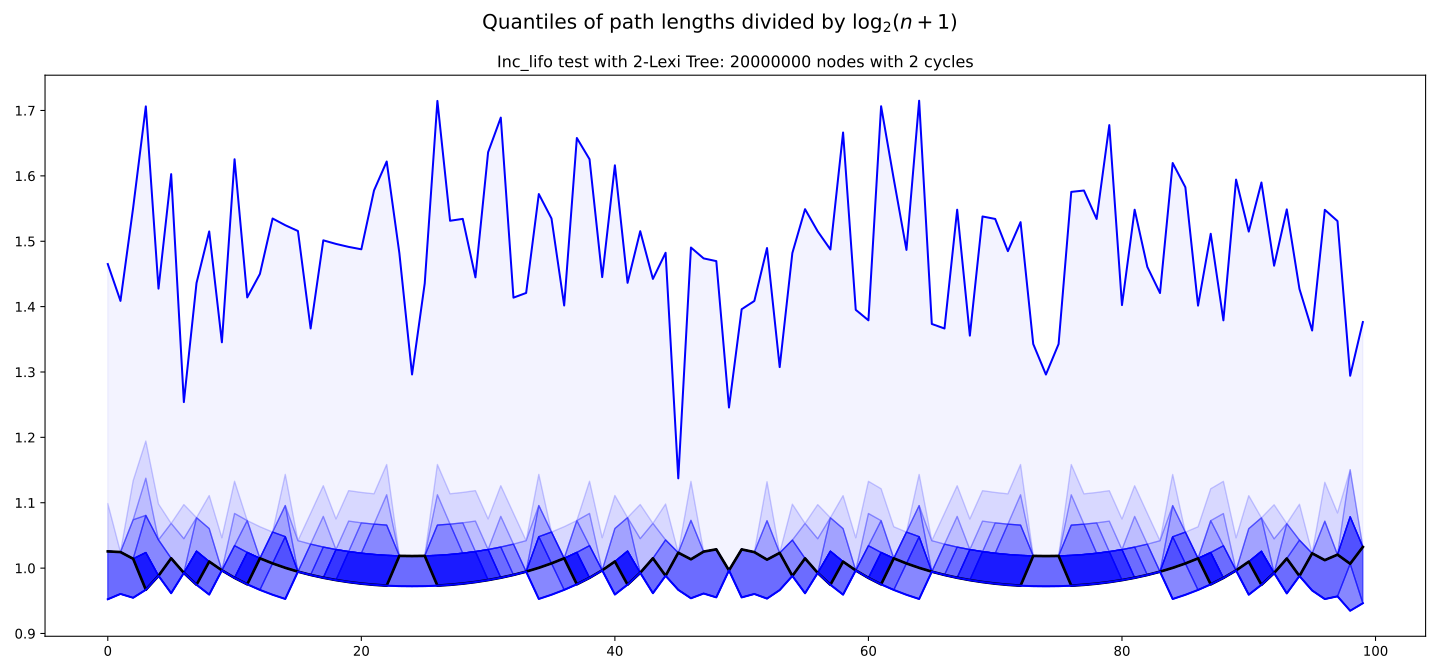
- Here are the ones for the 2‑Lexi Trees:
Show Images
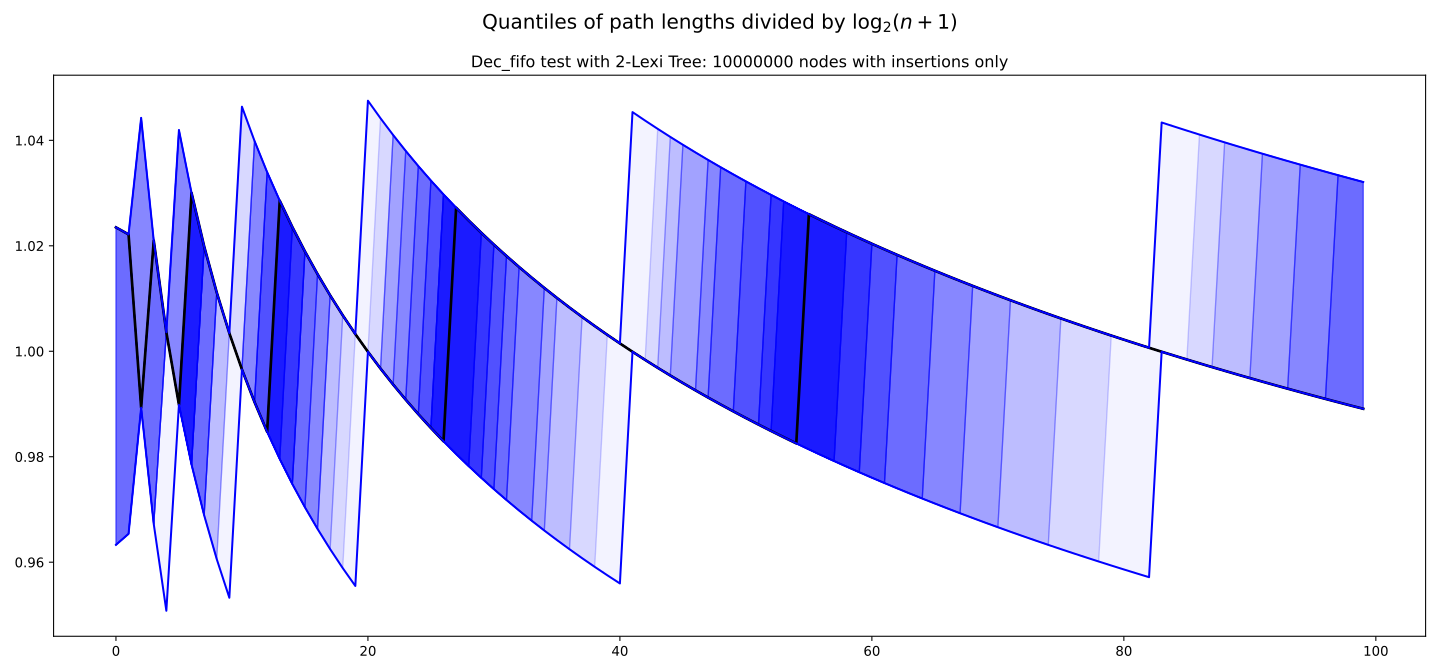
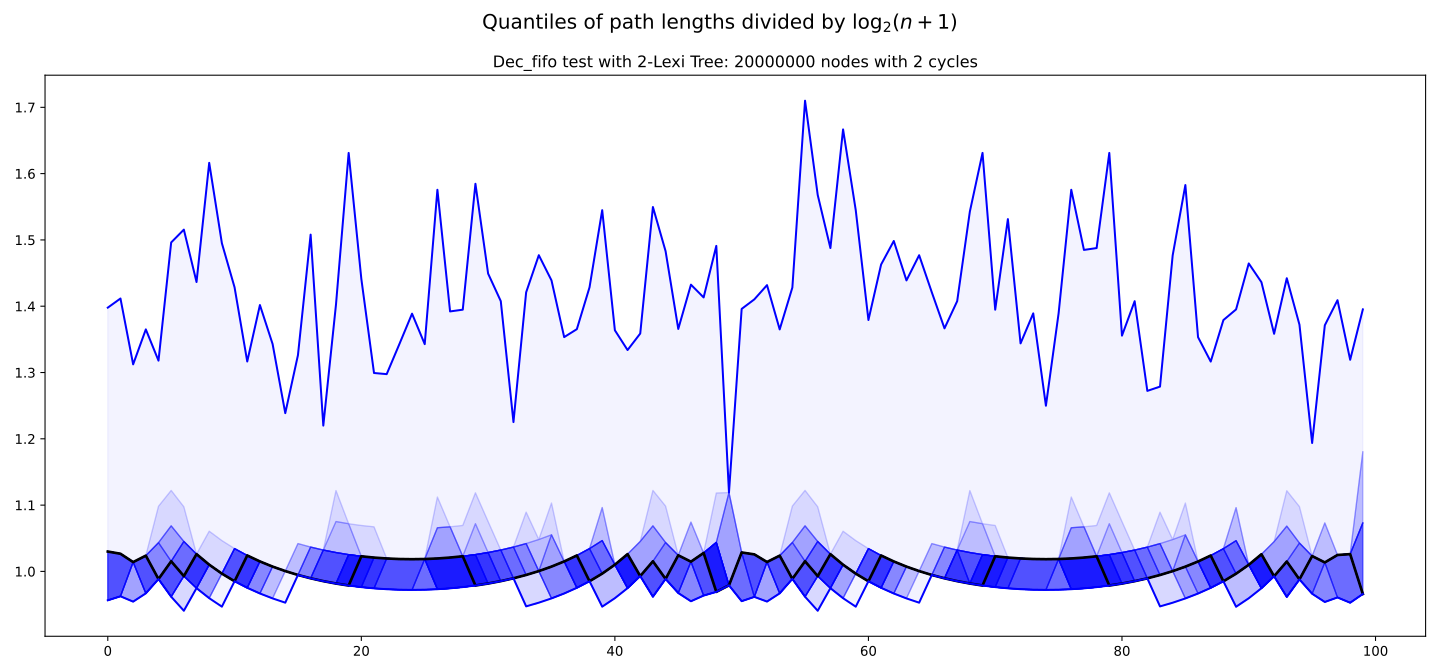
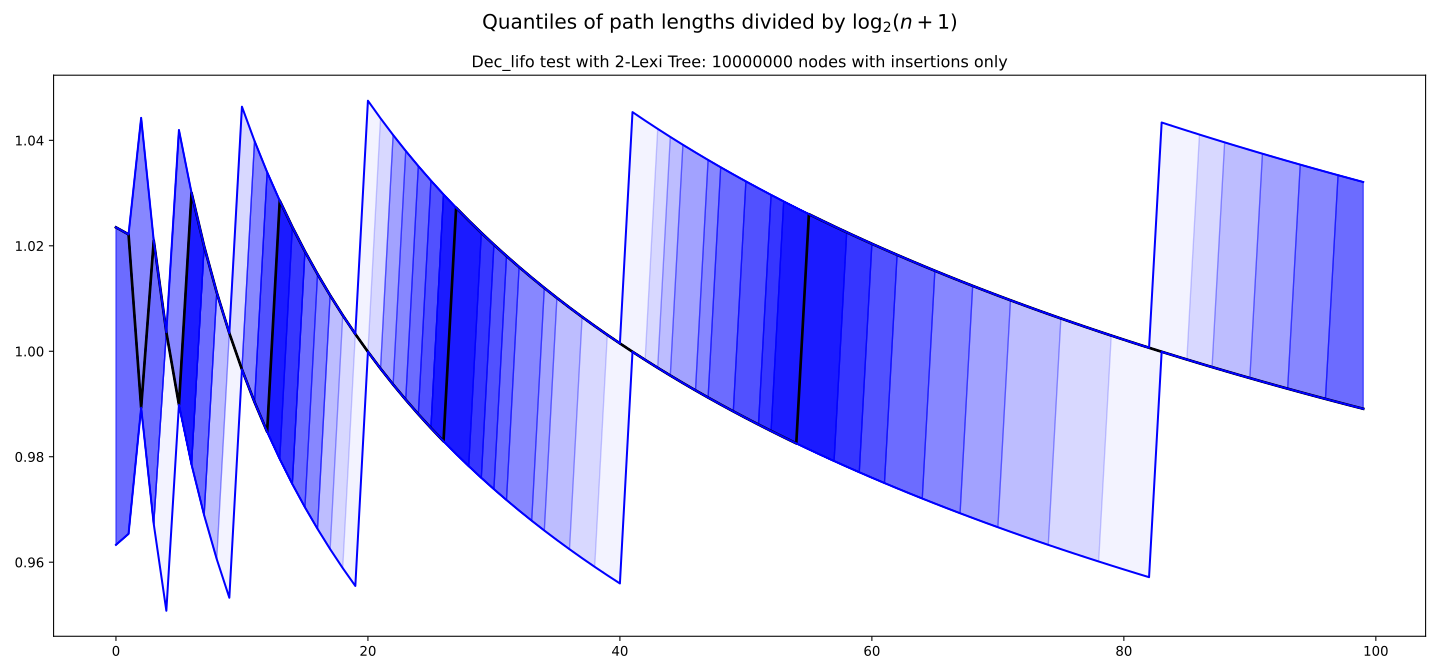
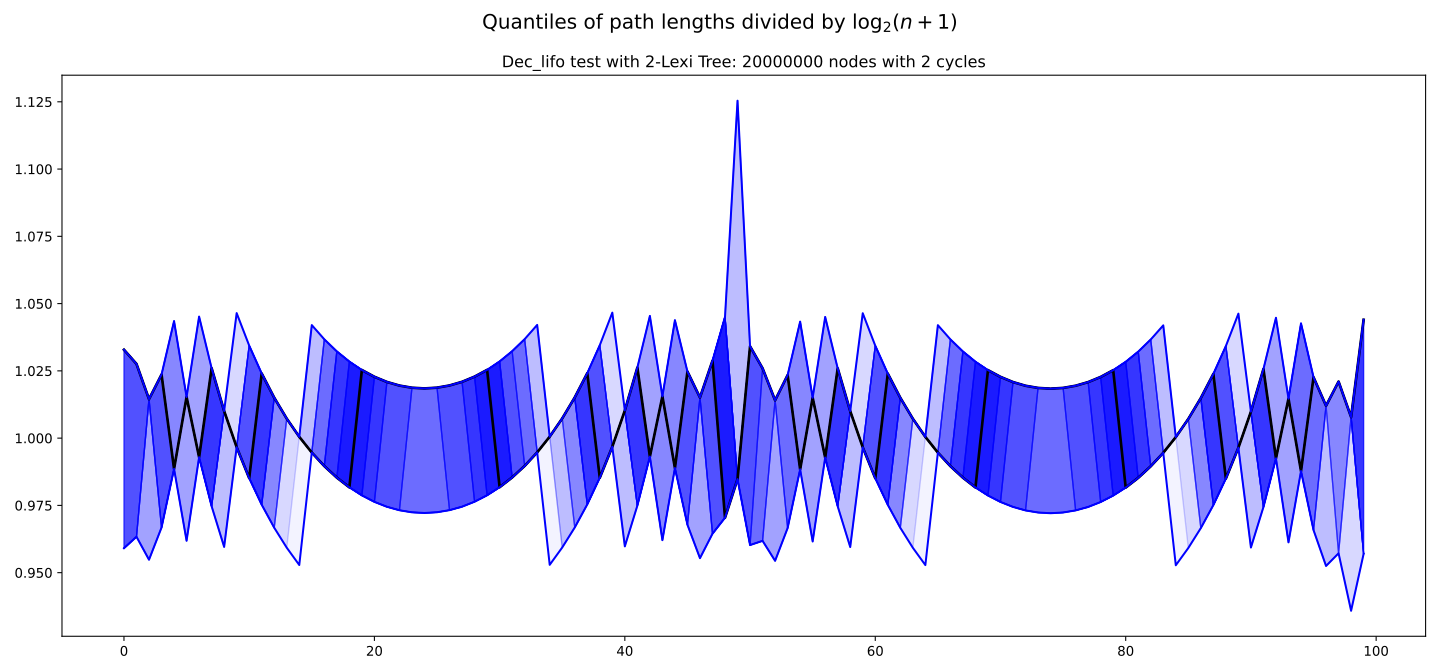
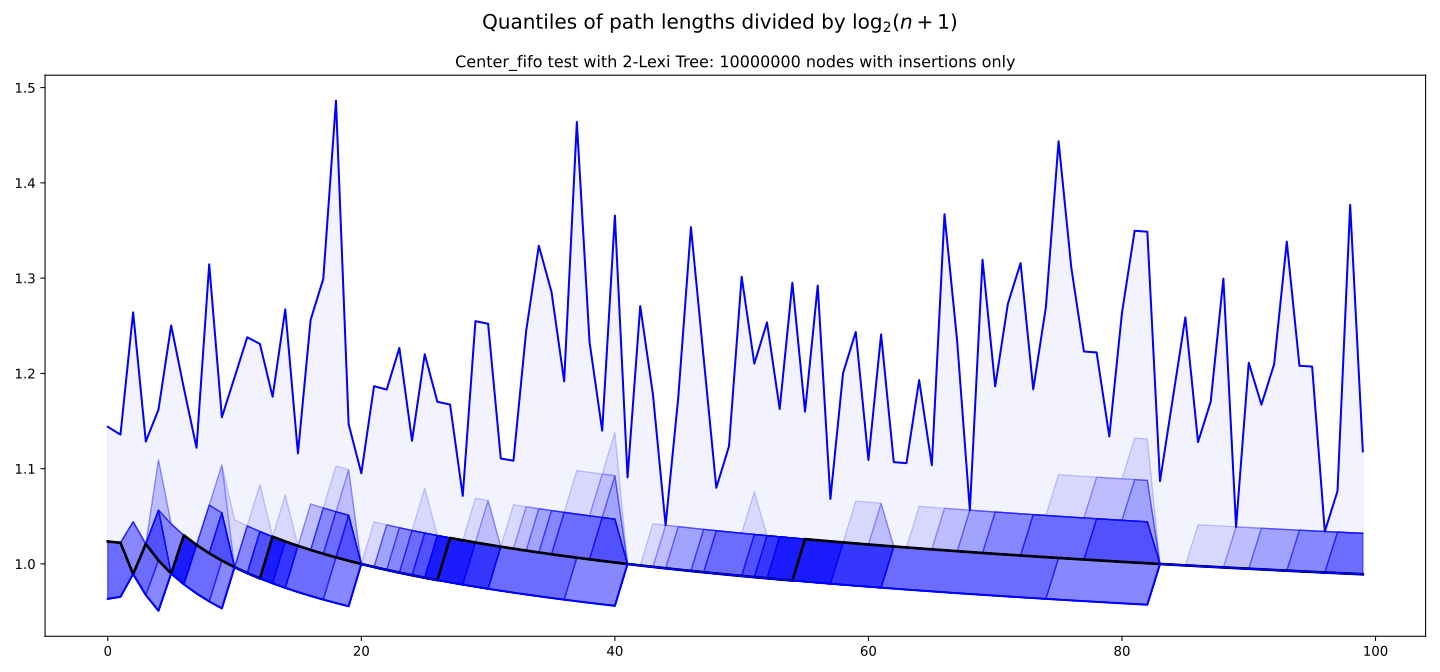
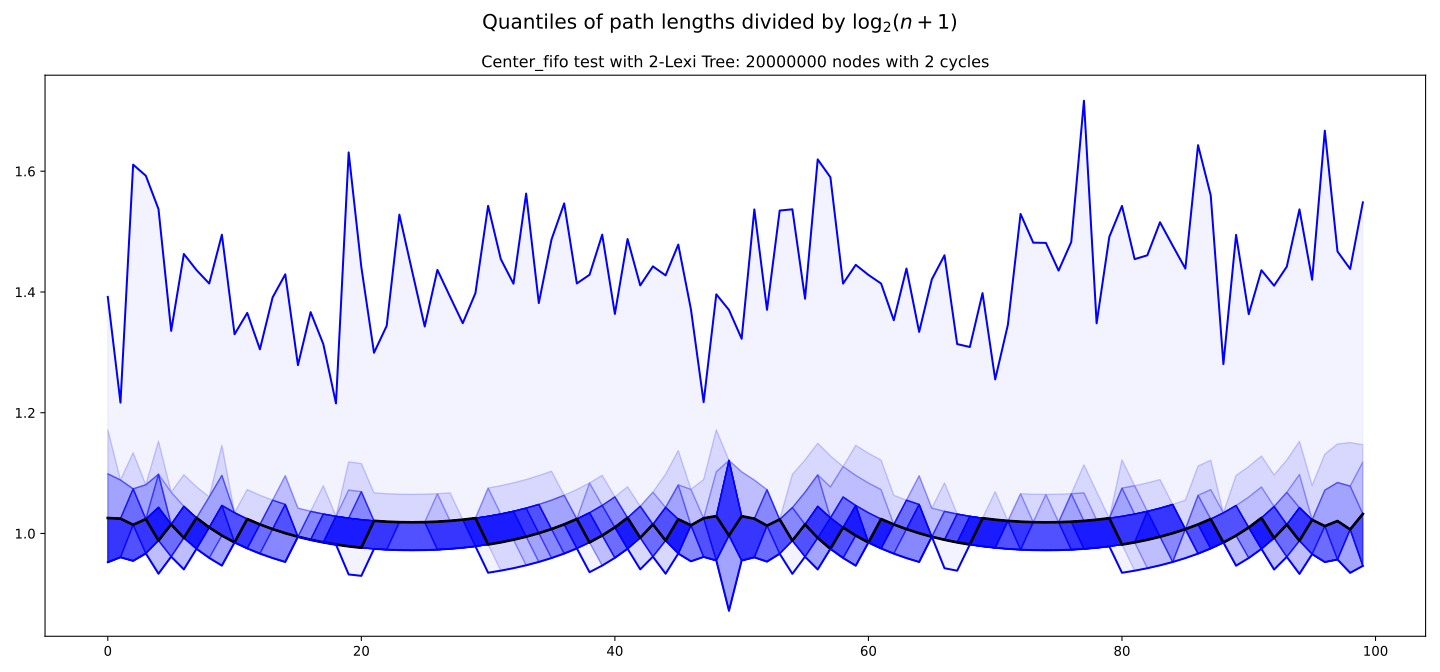
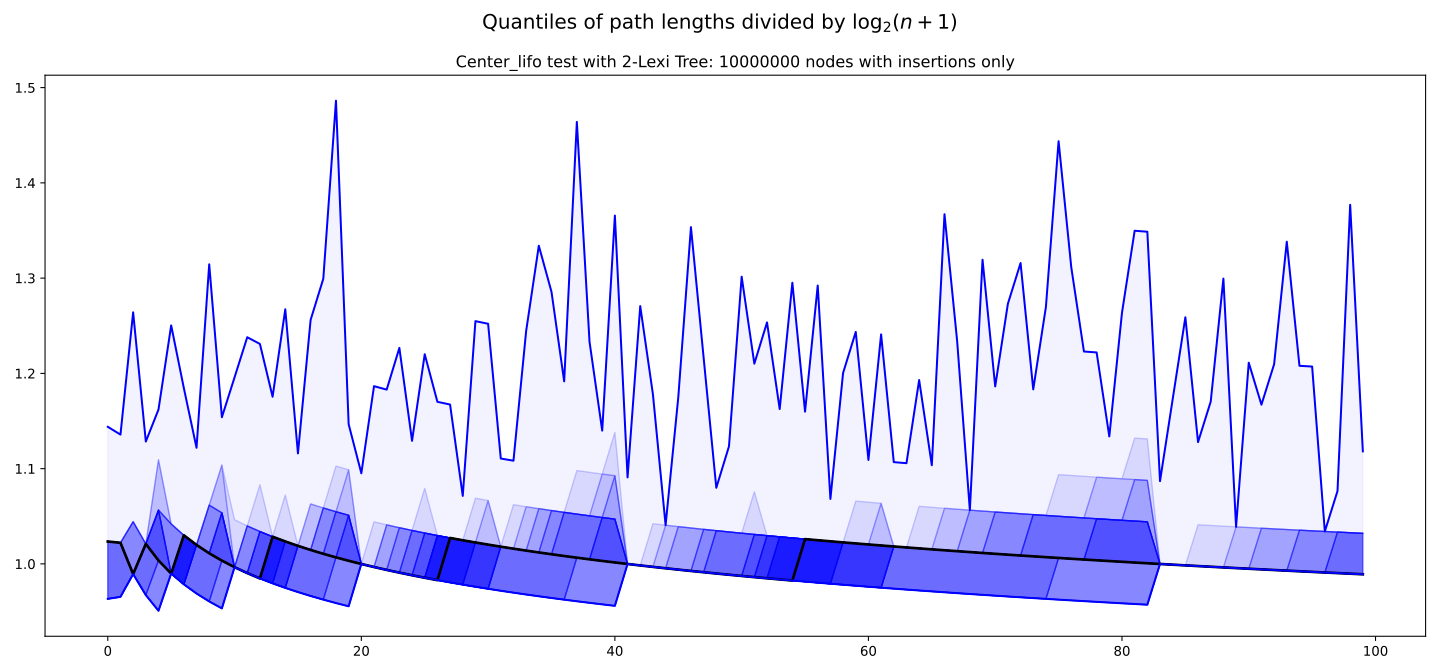
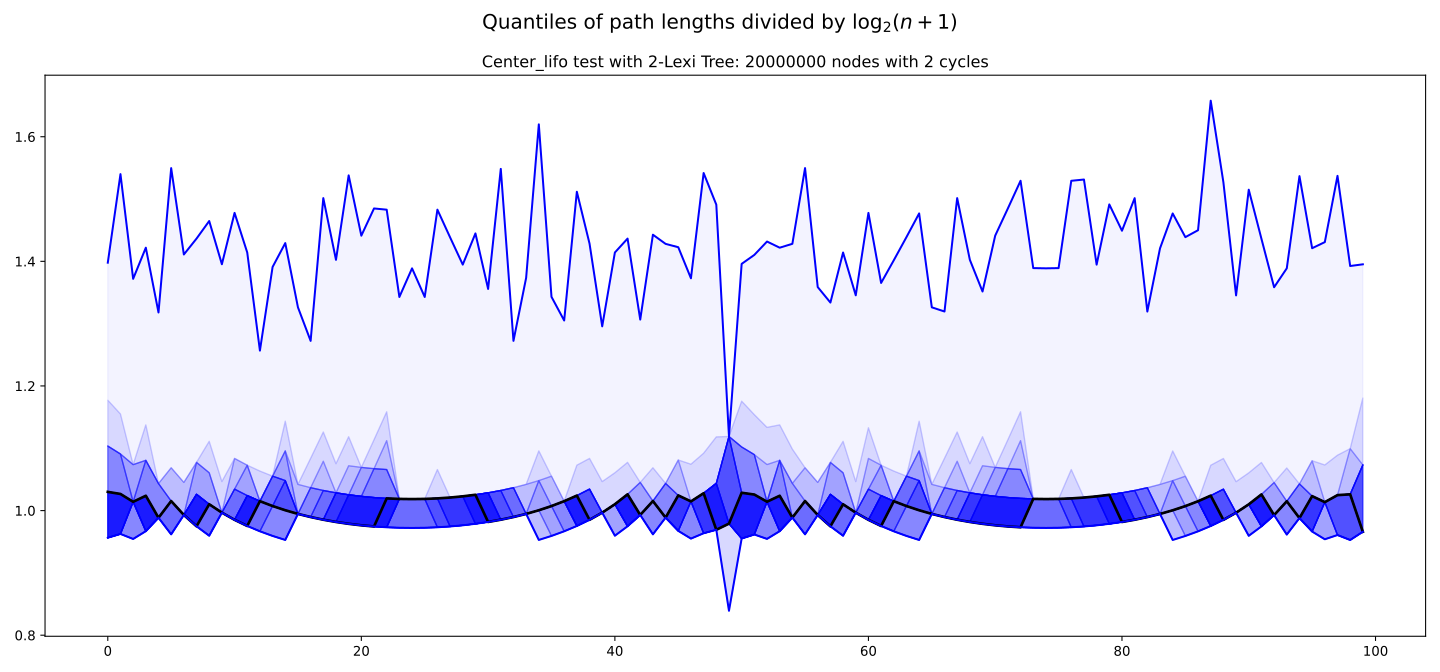
- And here are the ones for the 3‑Lexi Trees:
Show Images
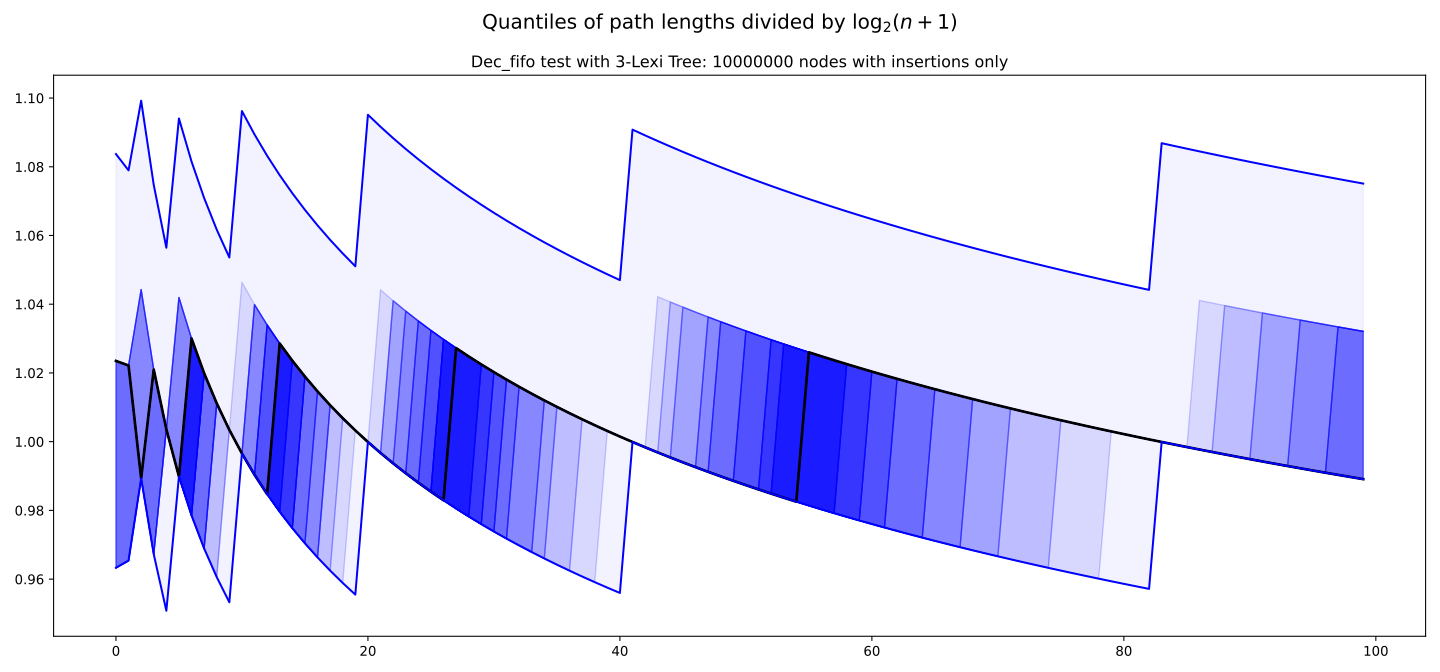
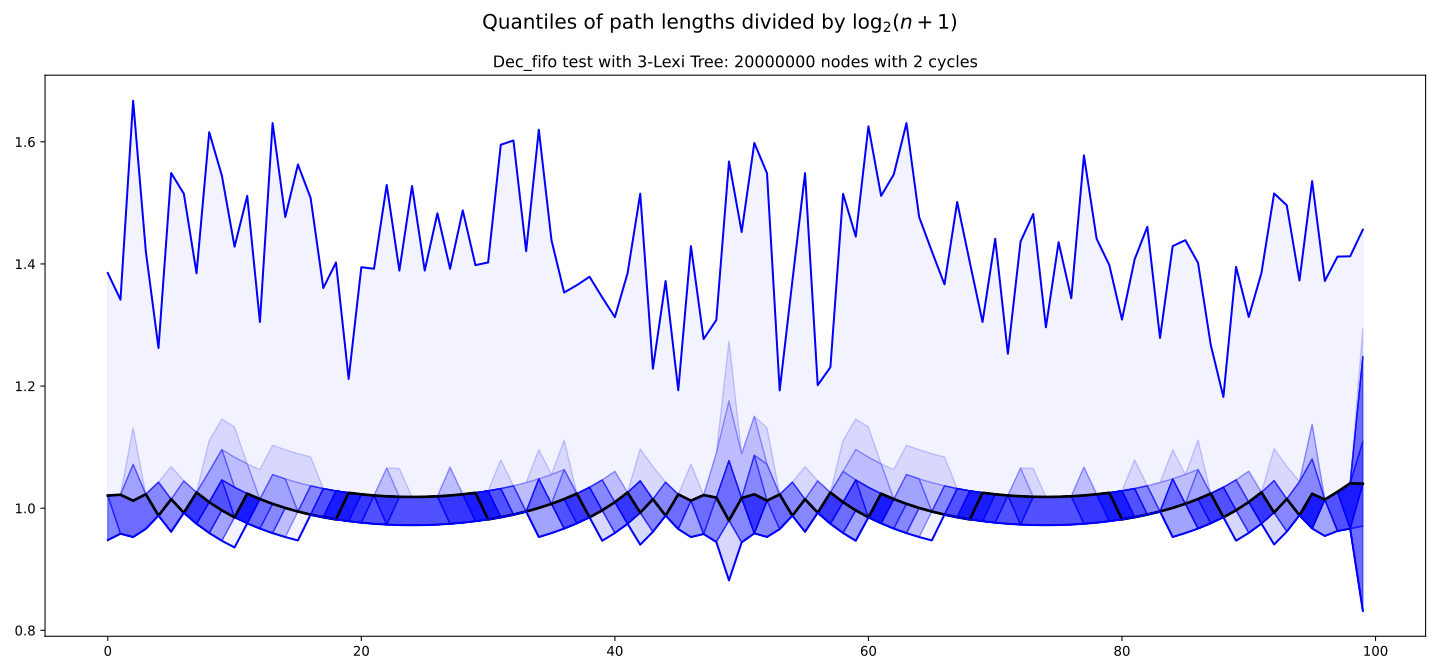
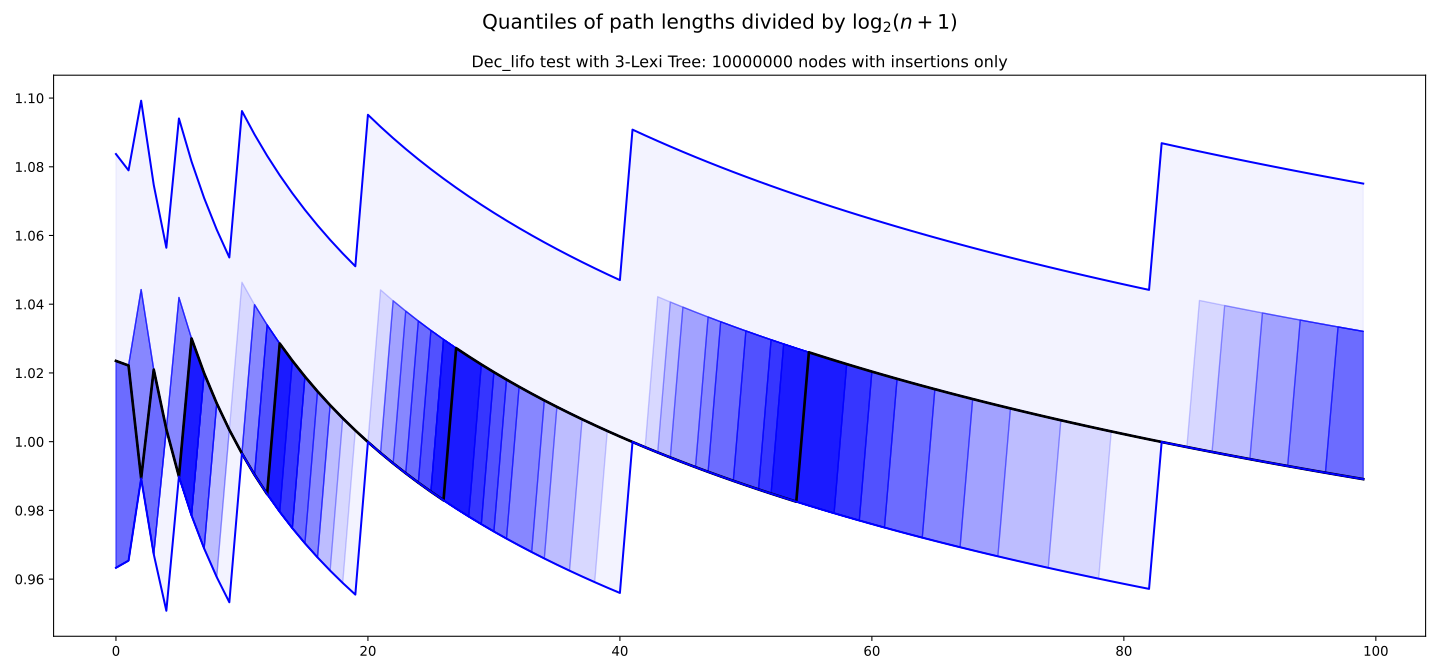
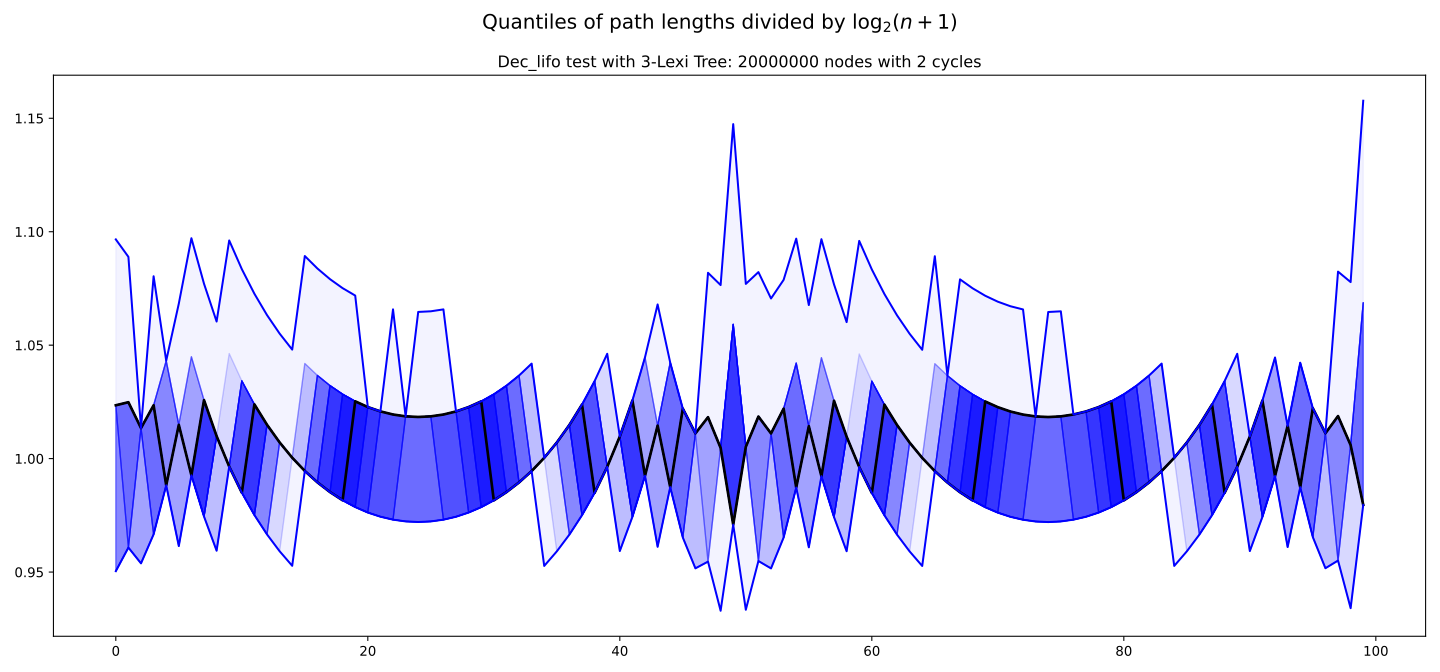
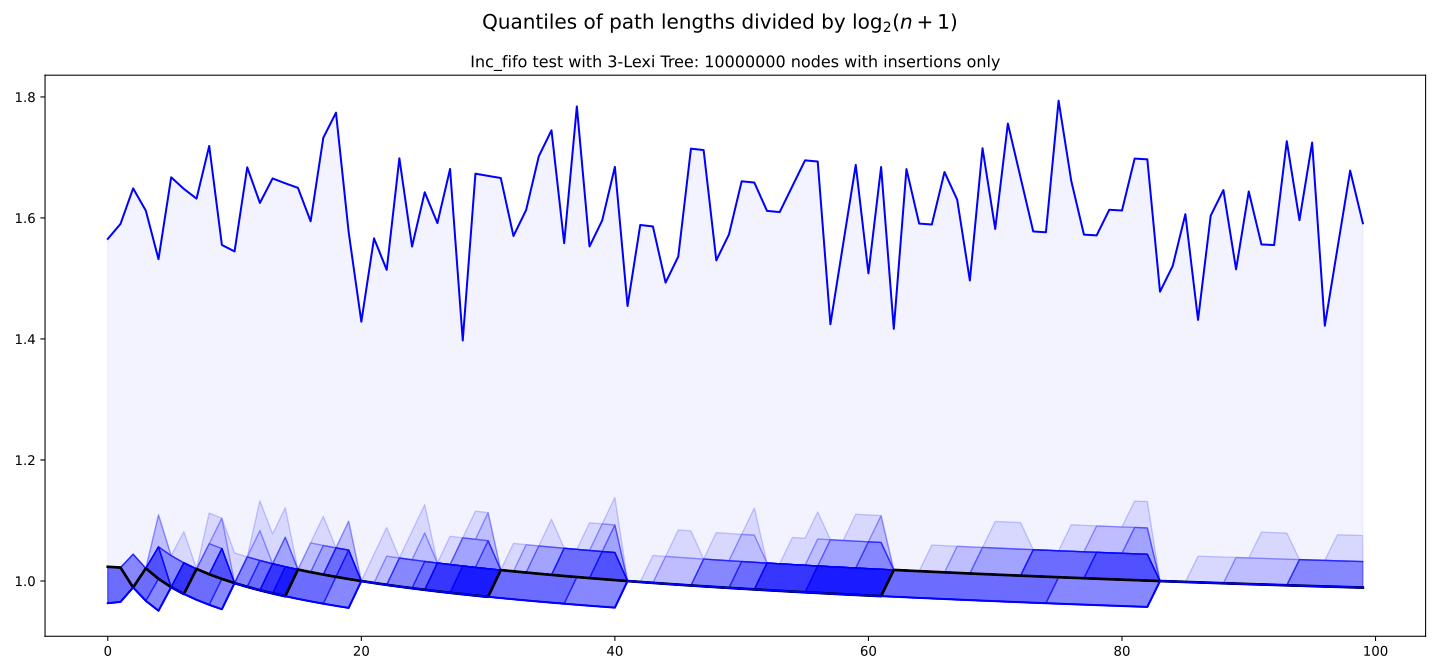
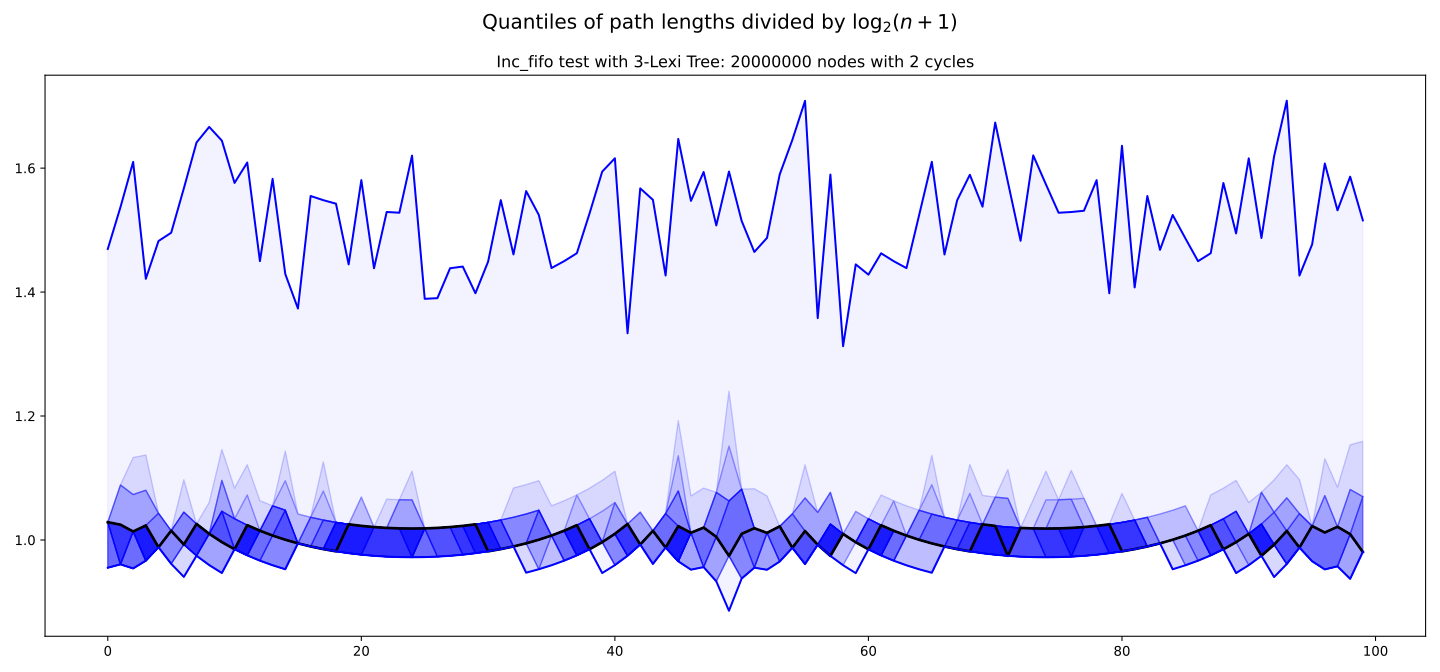
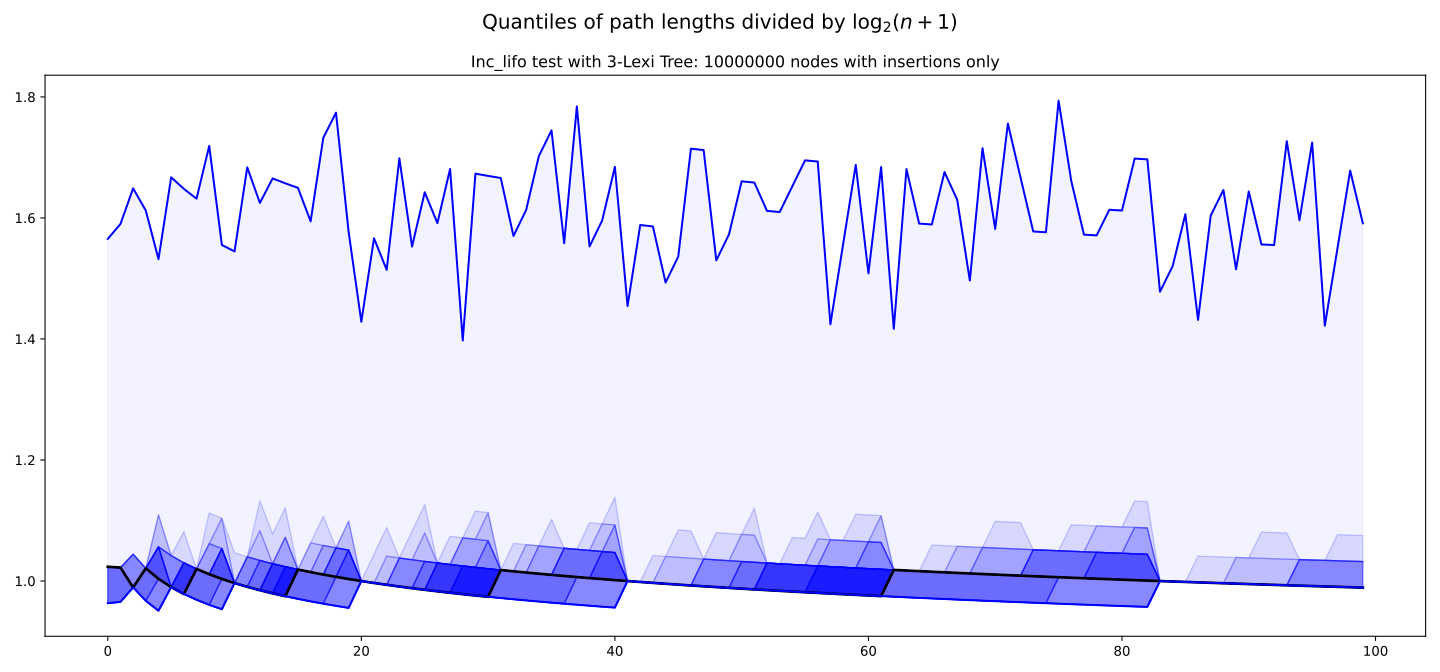
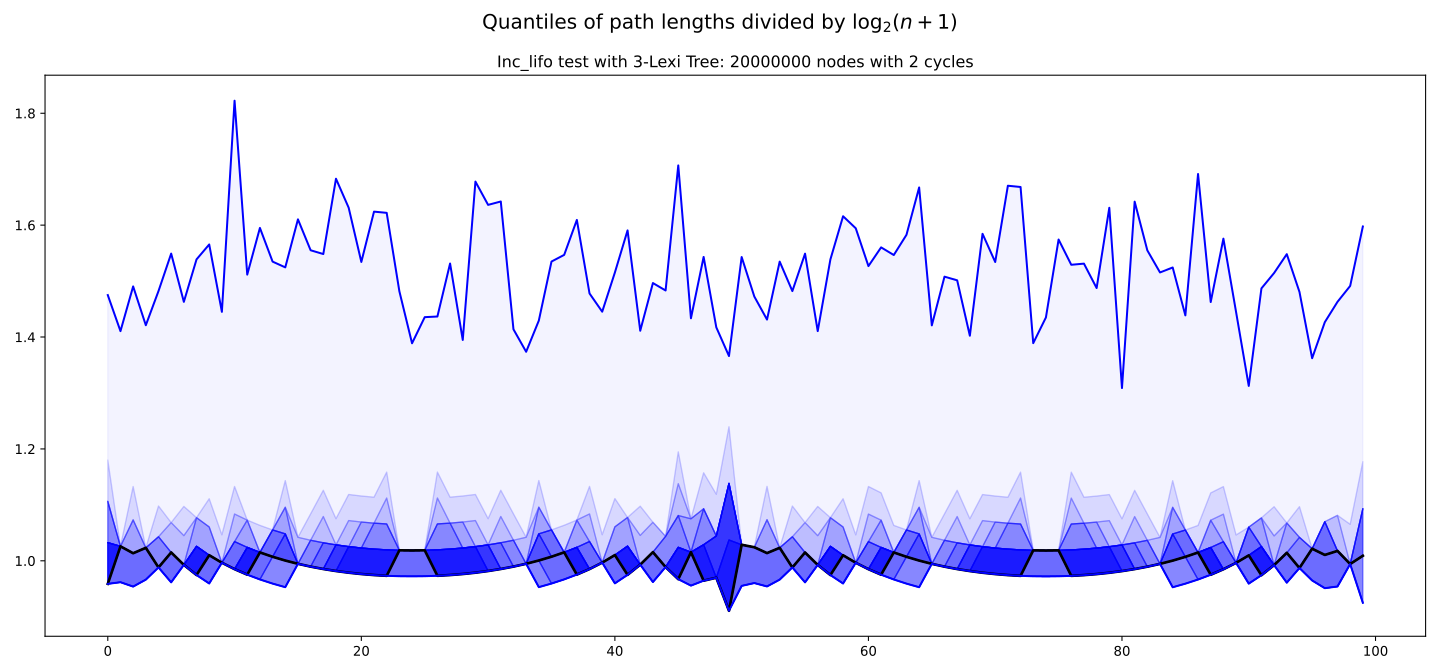
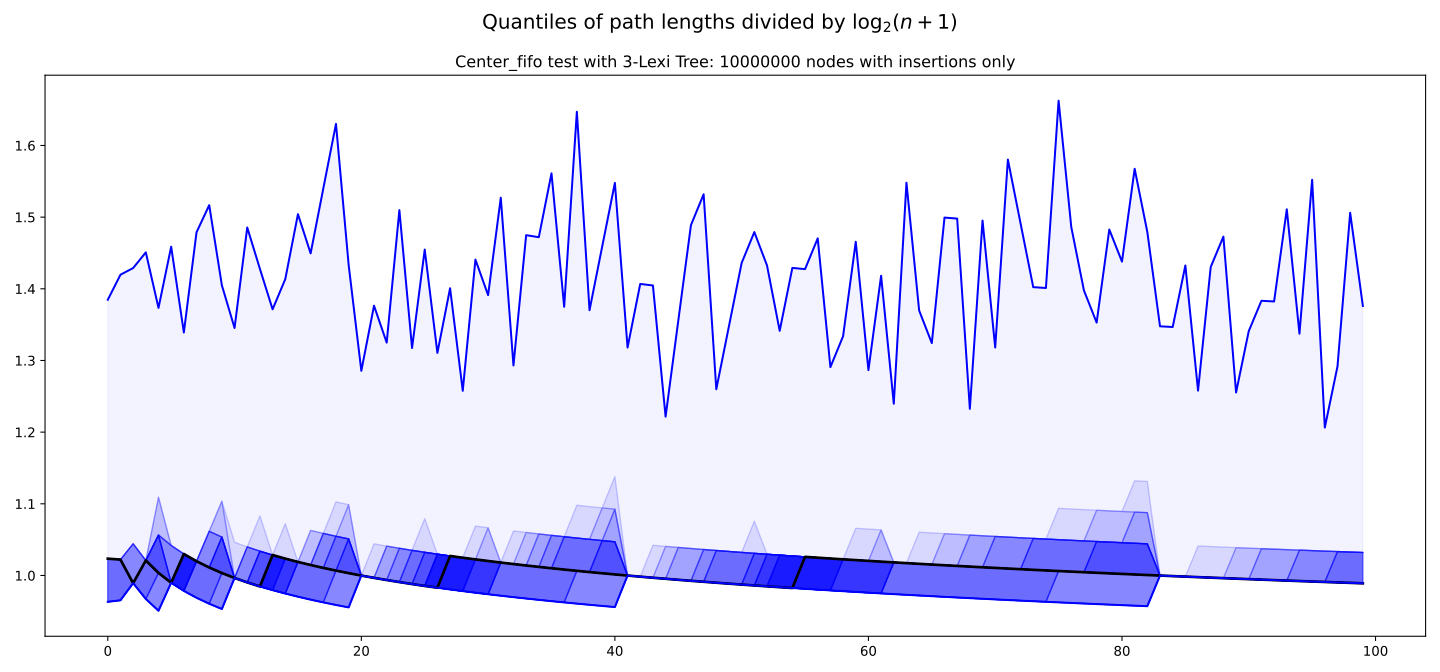
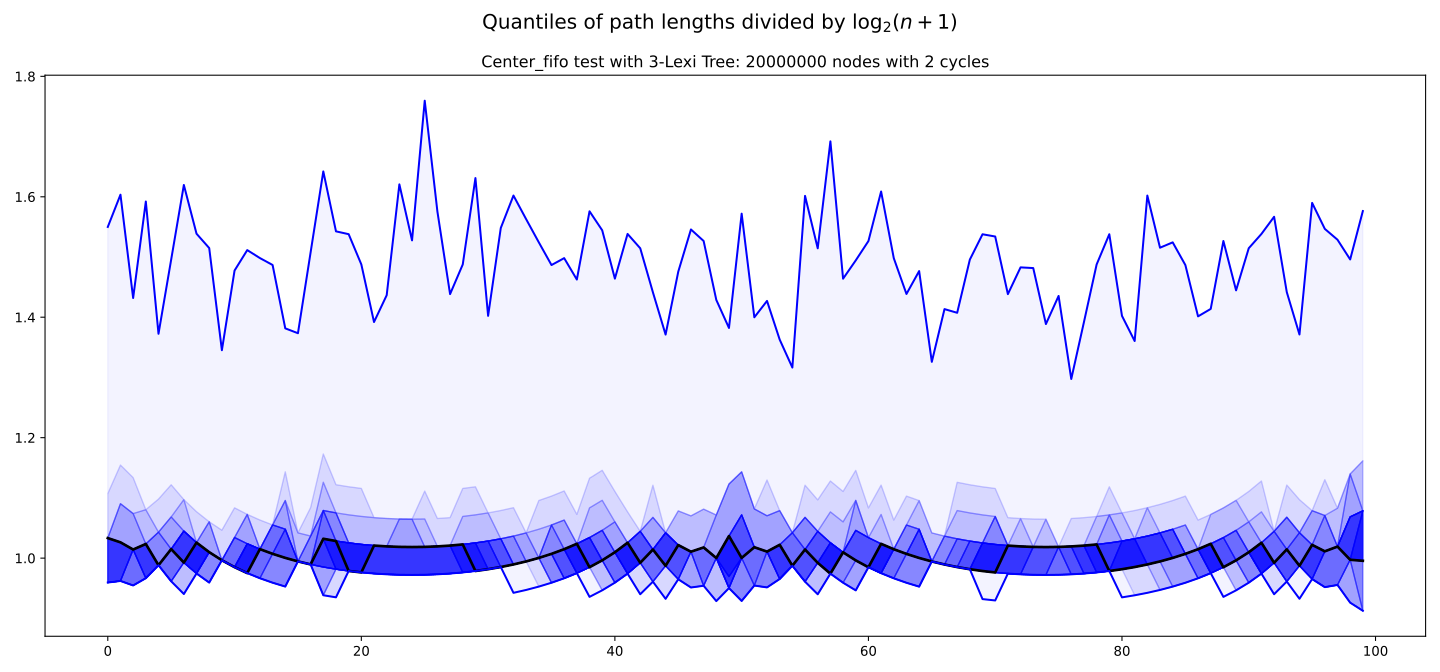
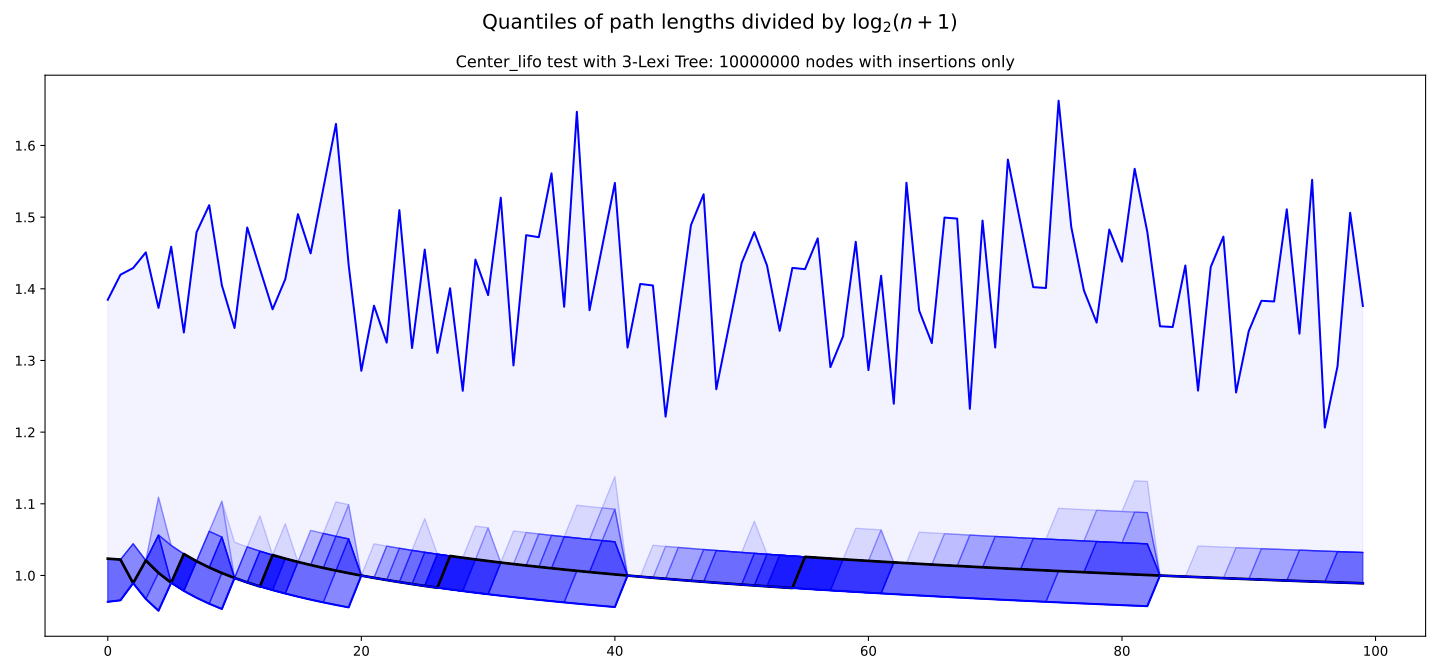
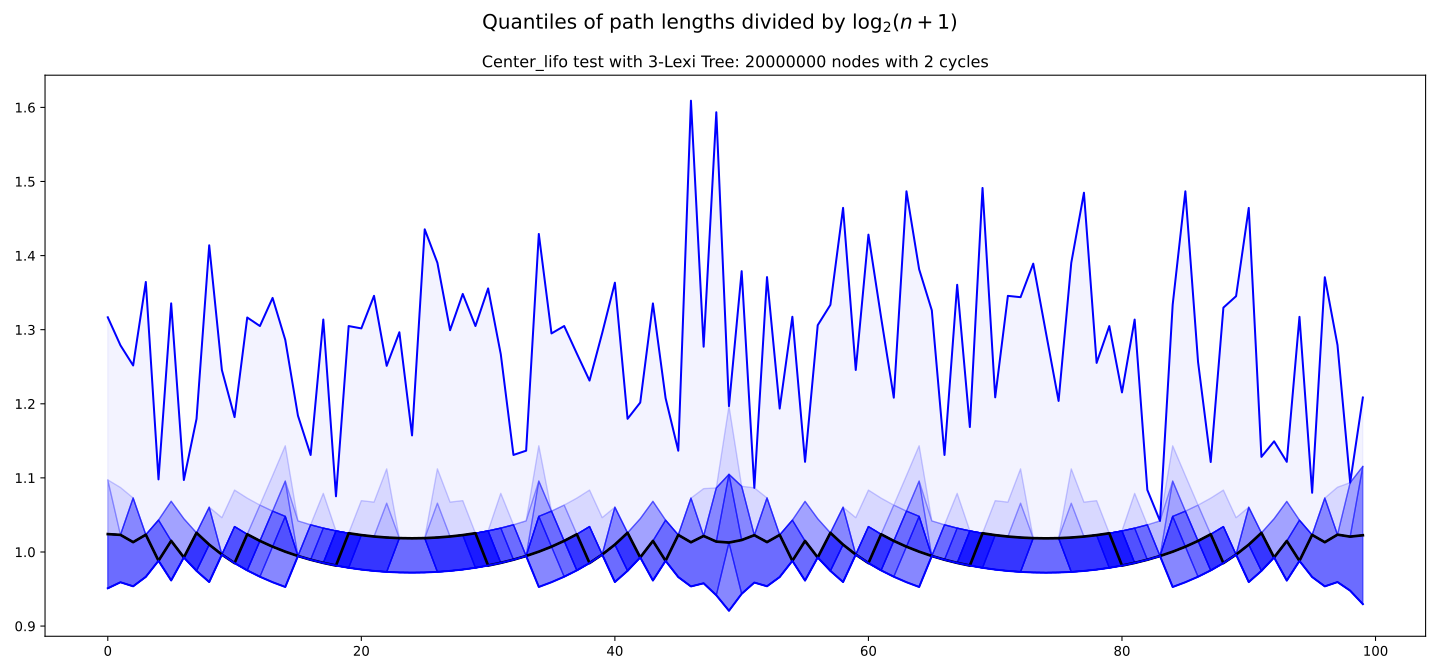
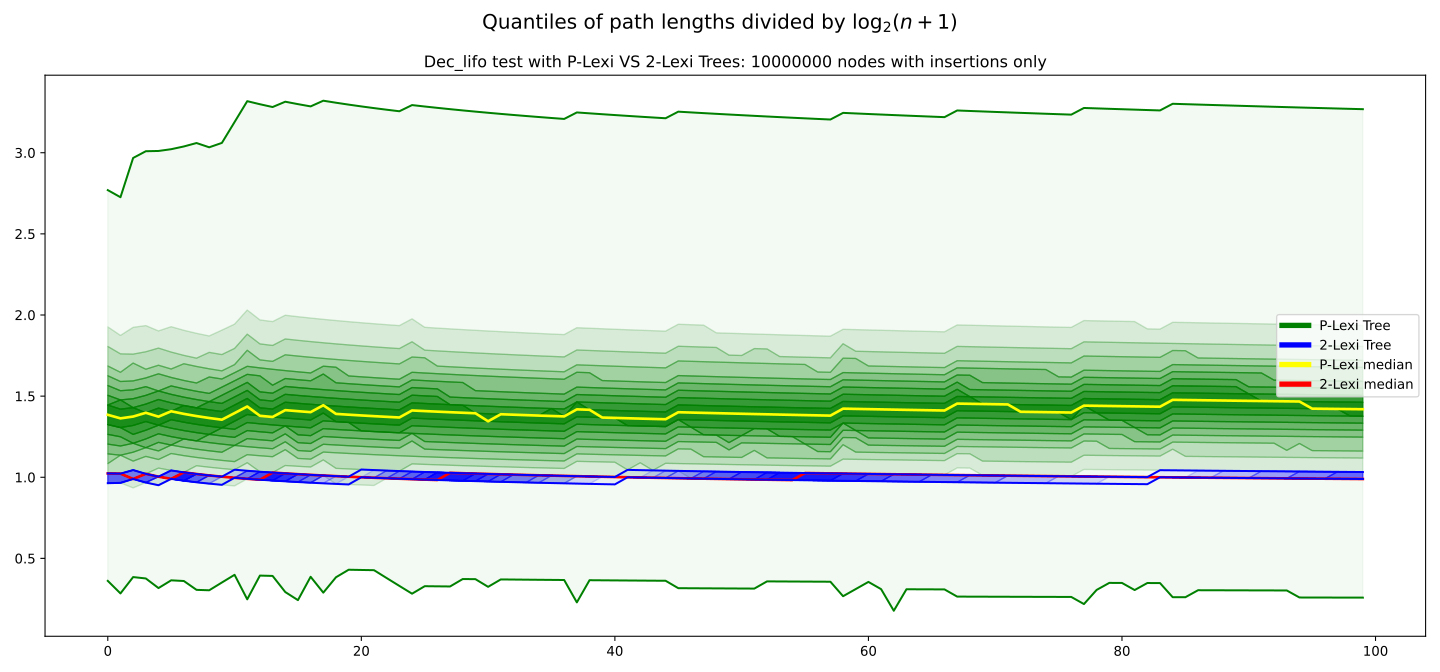
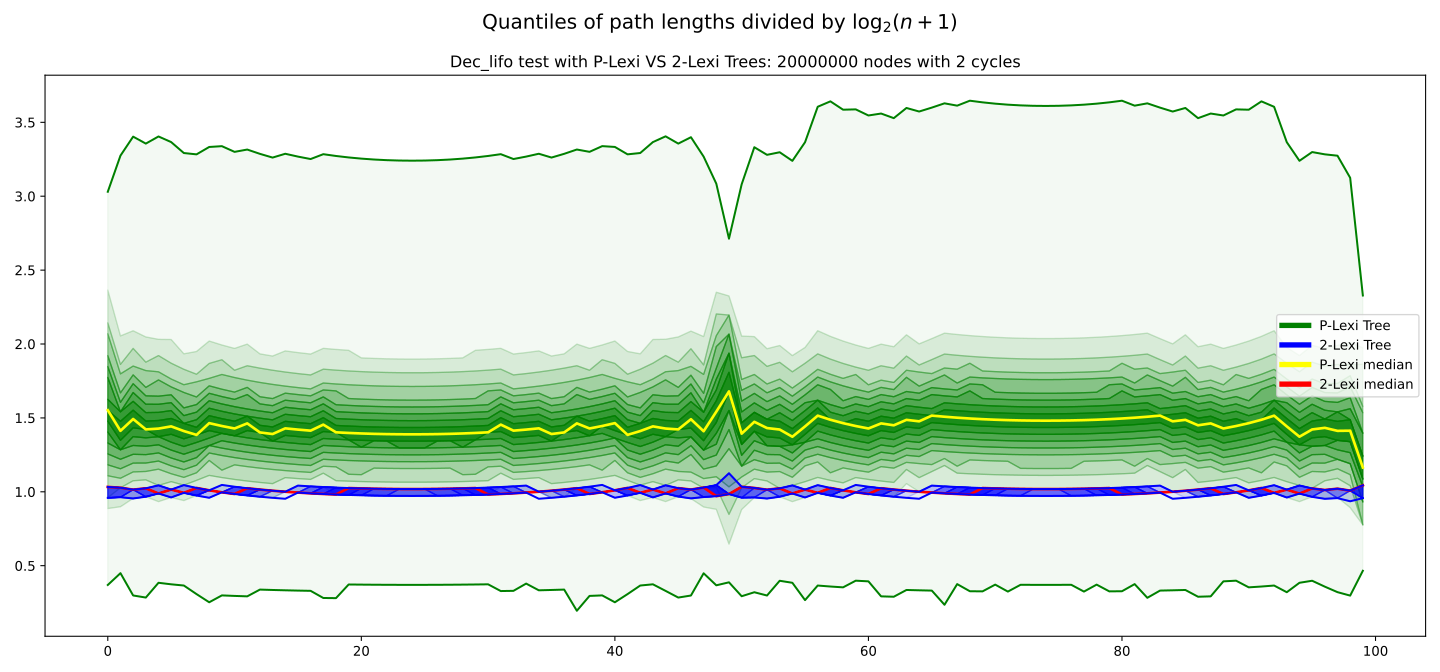
- Here are all the comparisons between P‑Lexi and 2‑Lexi Trees:
Show Images
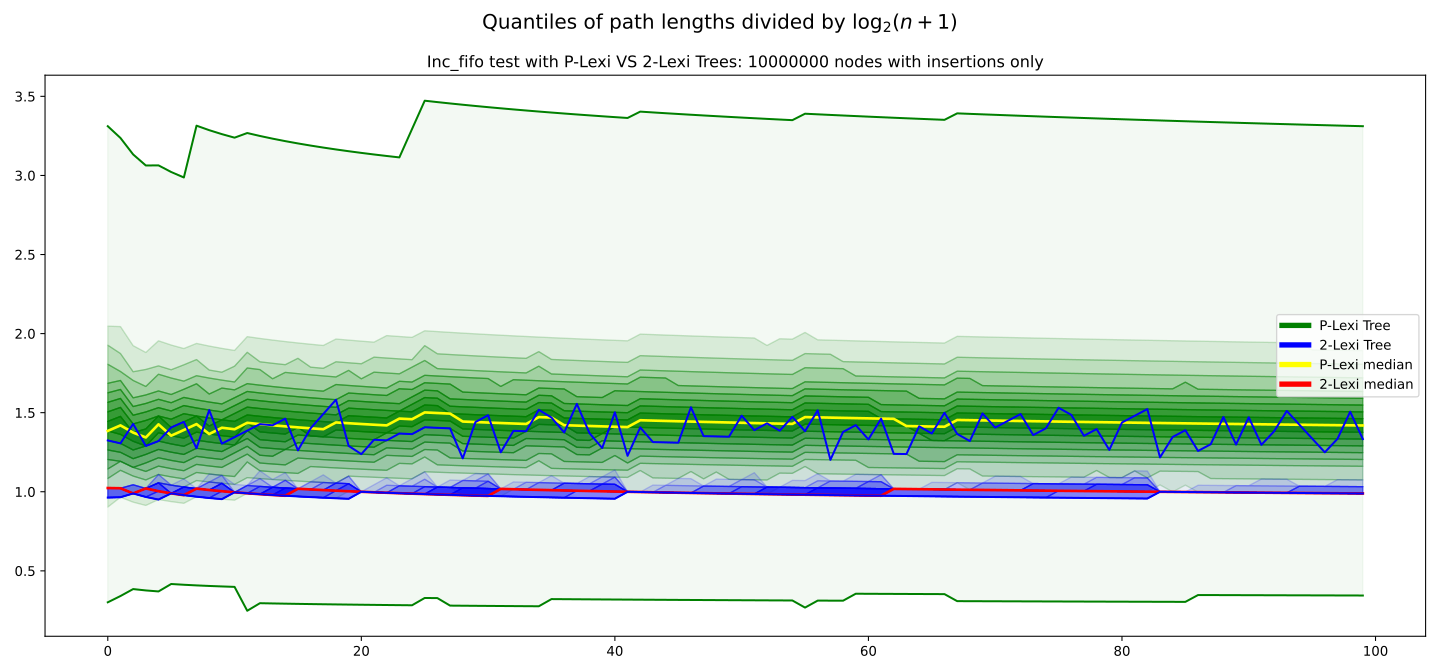
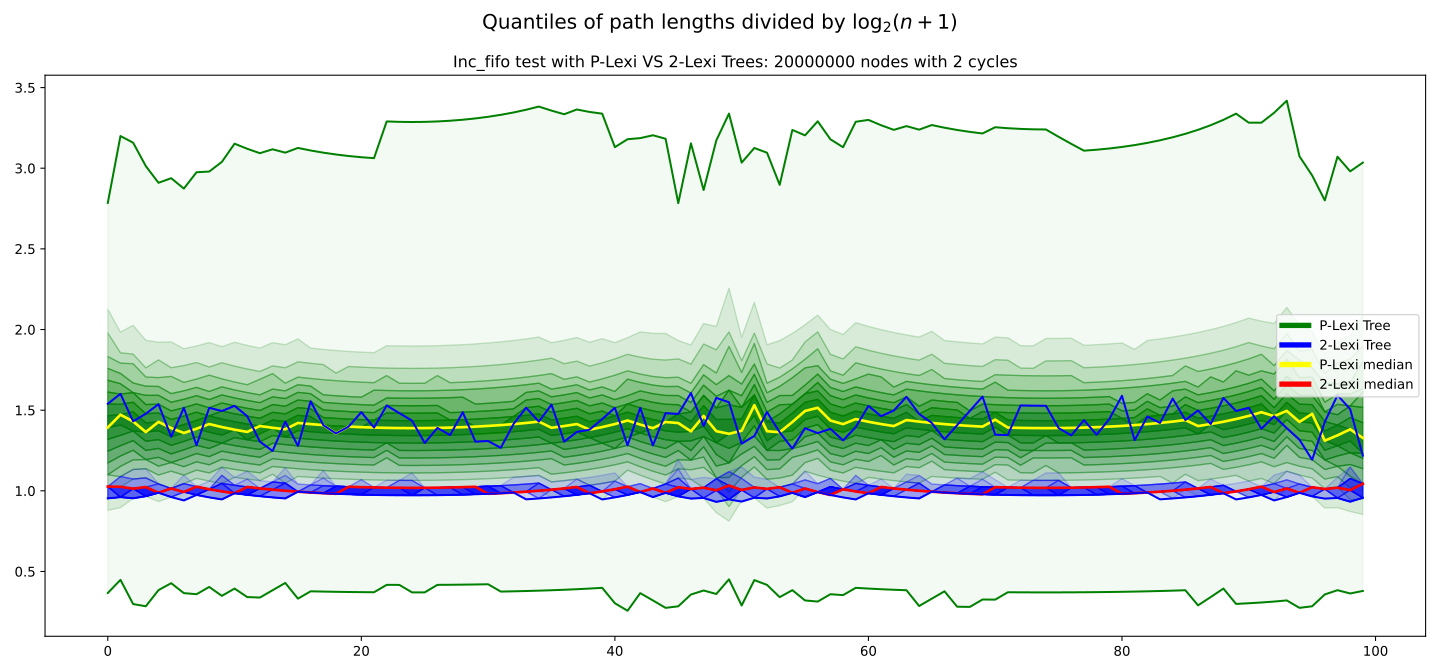
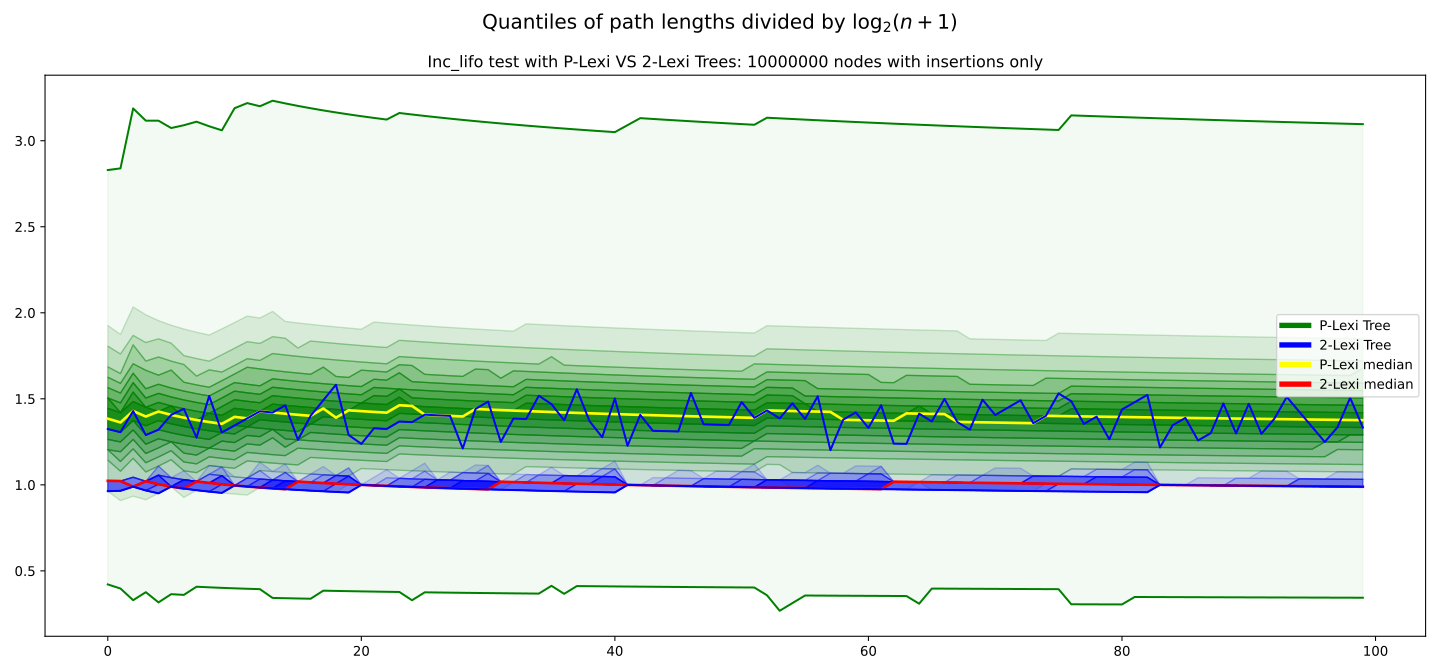
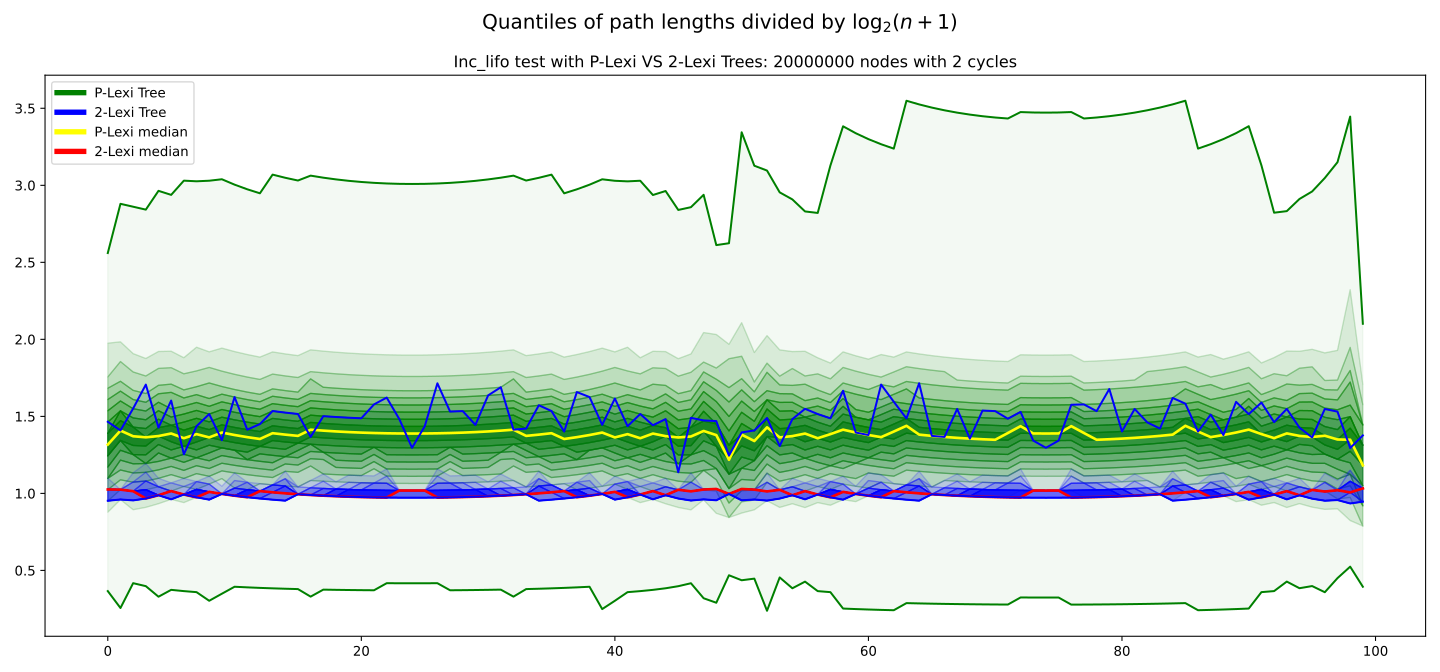
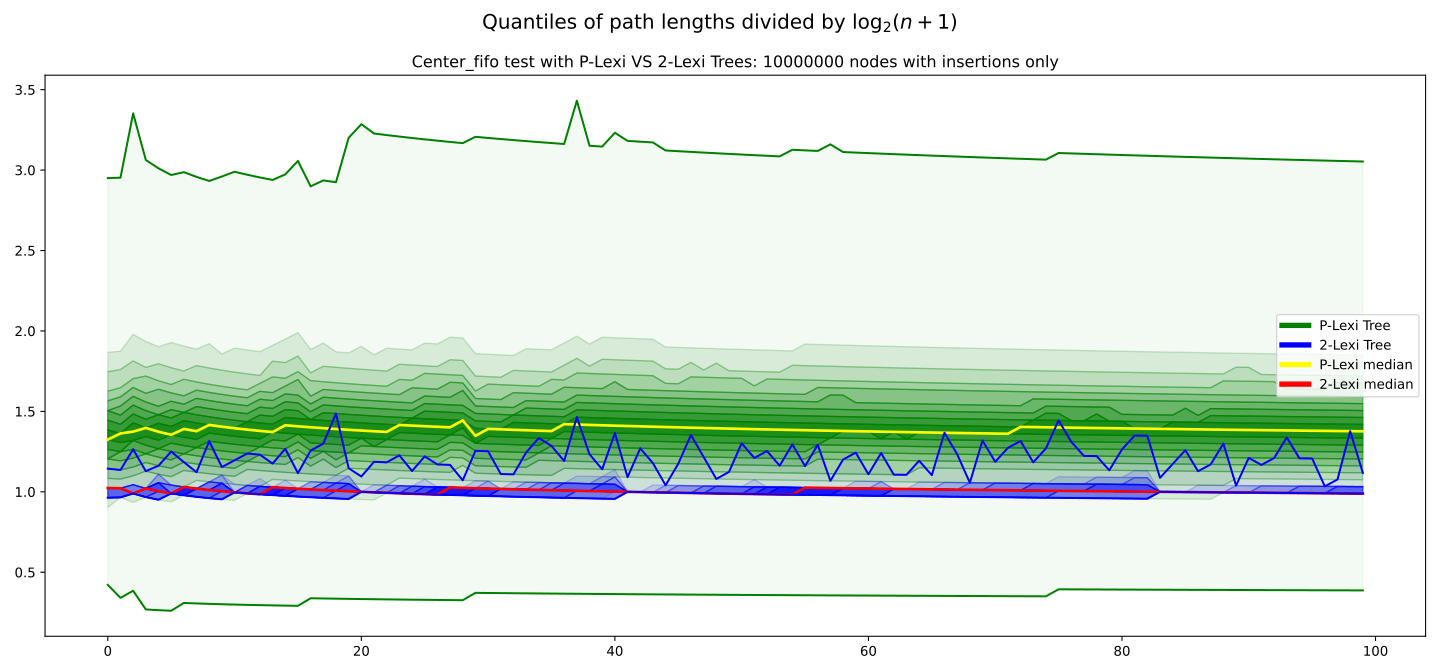
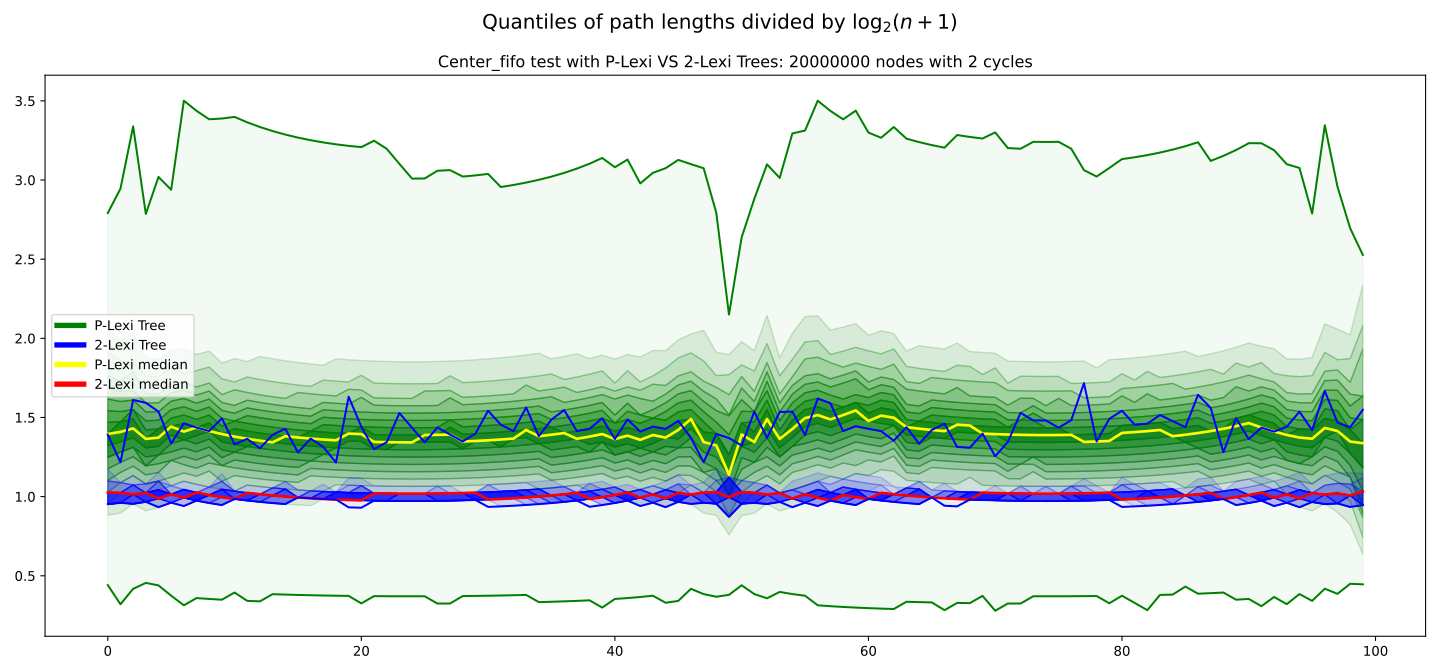
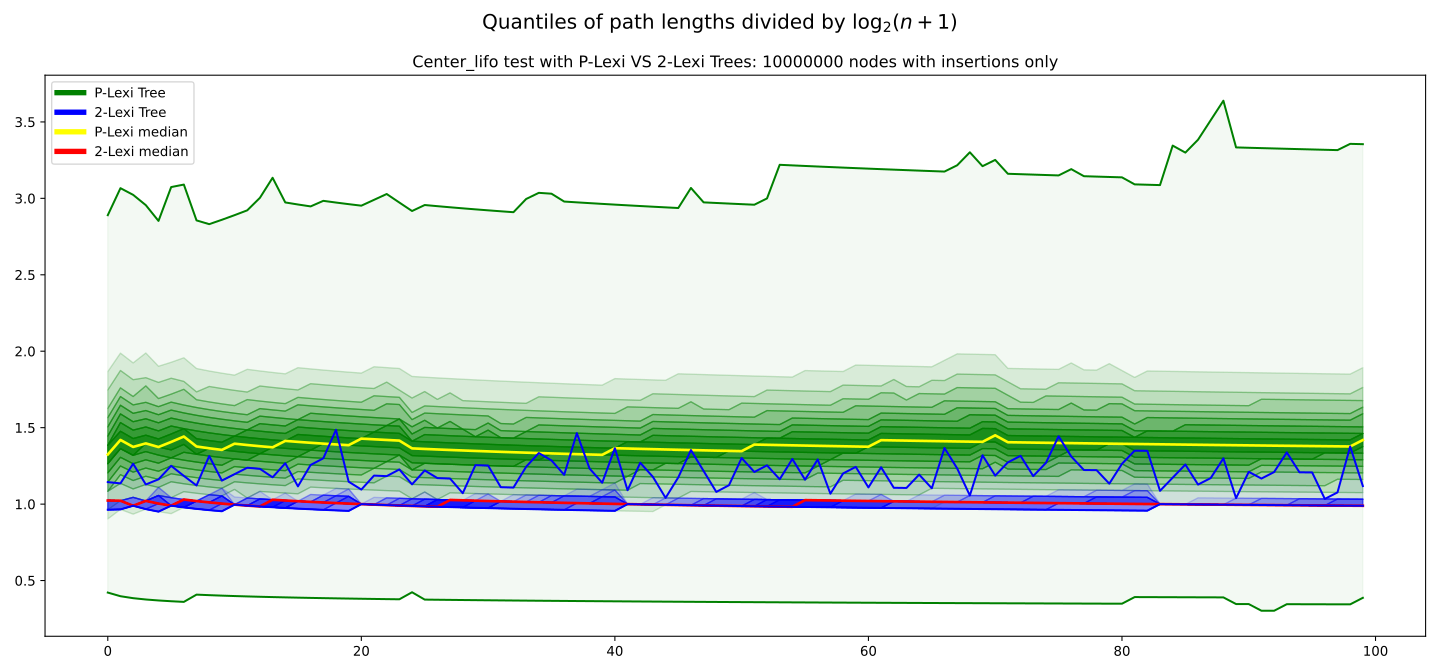
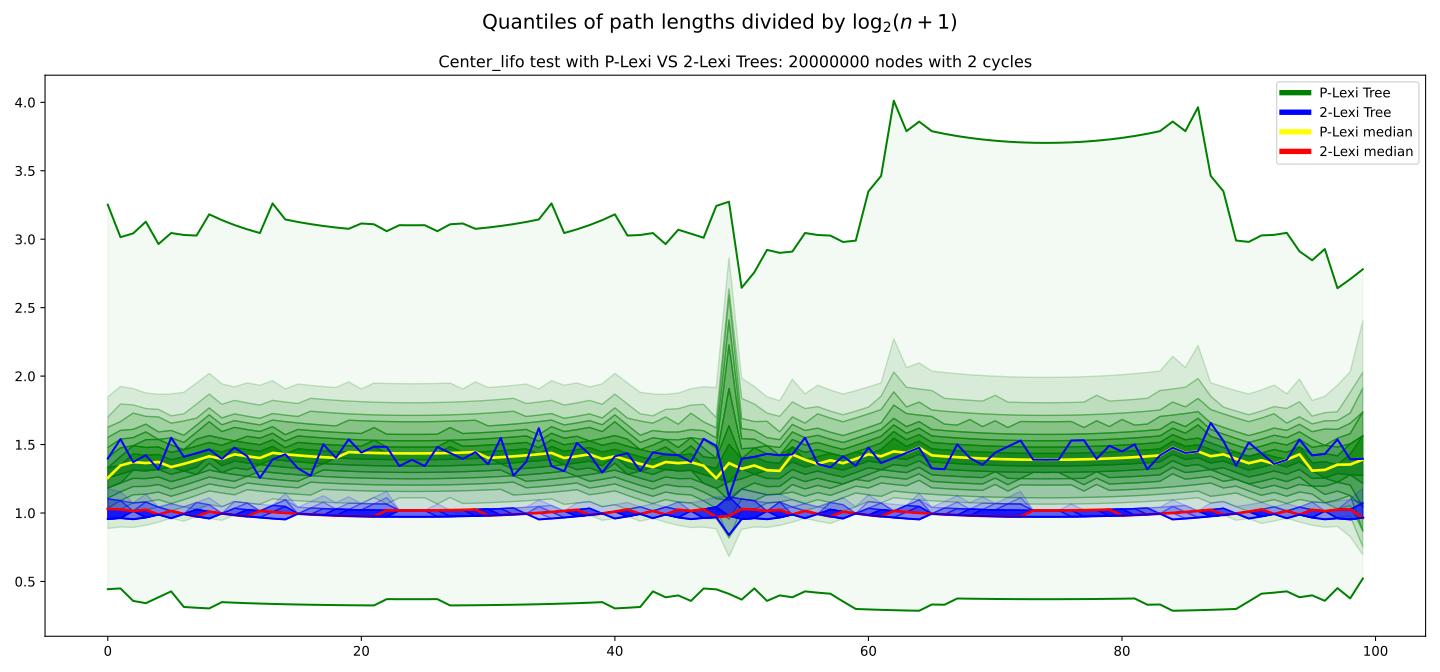
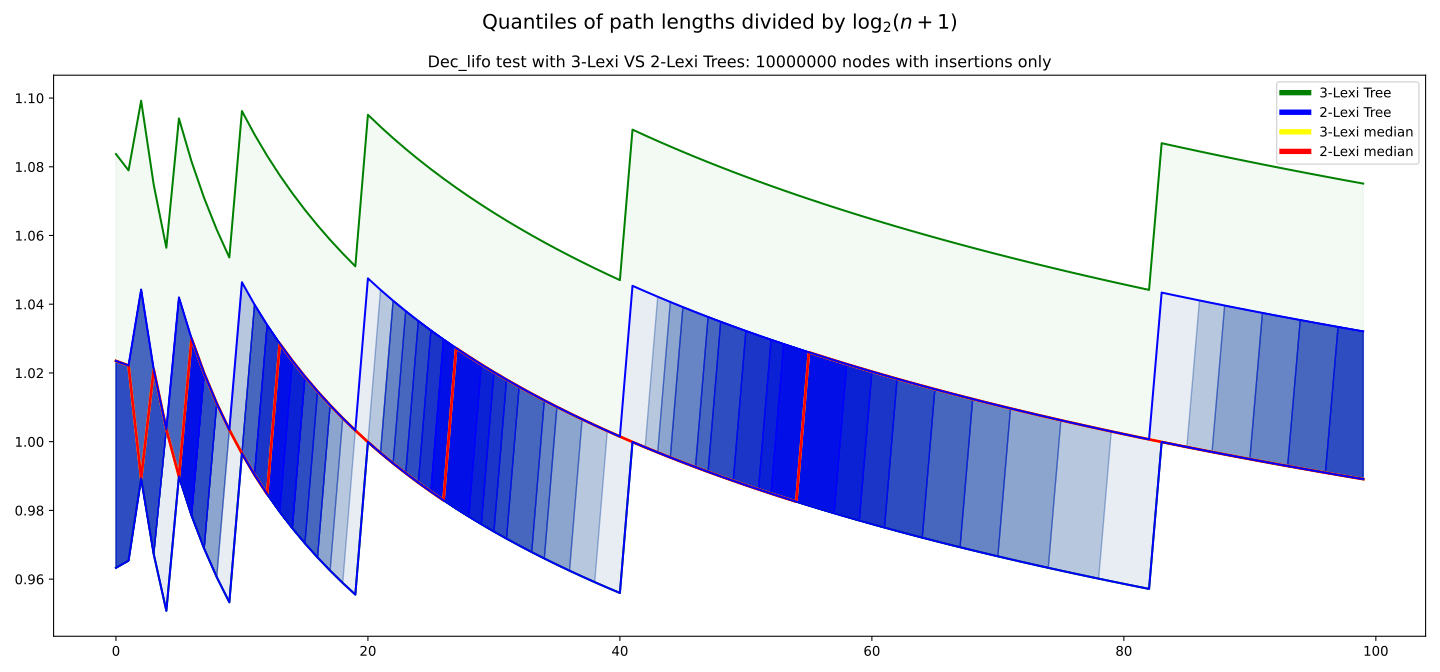
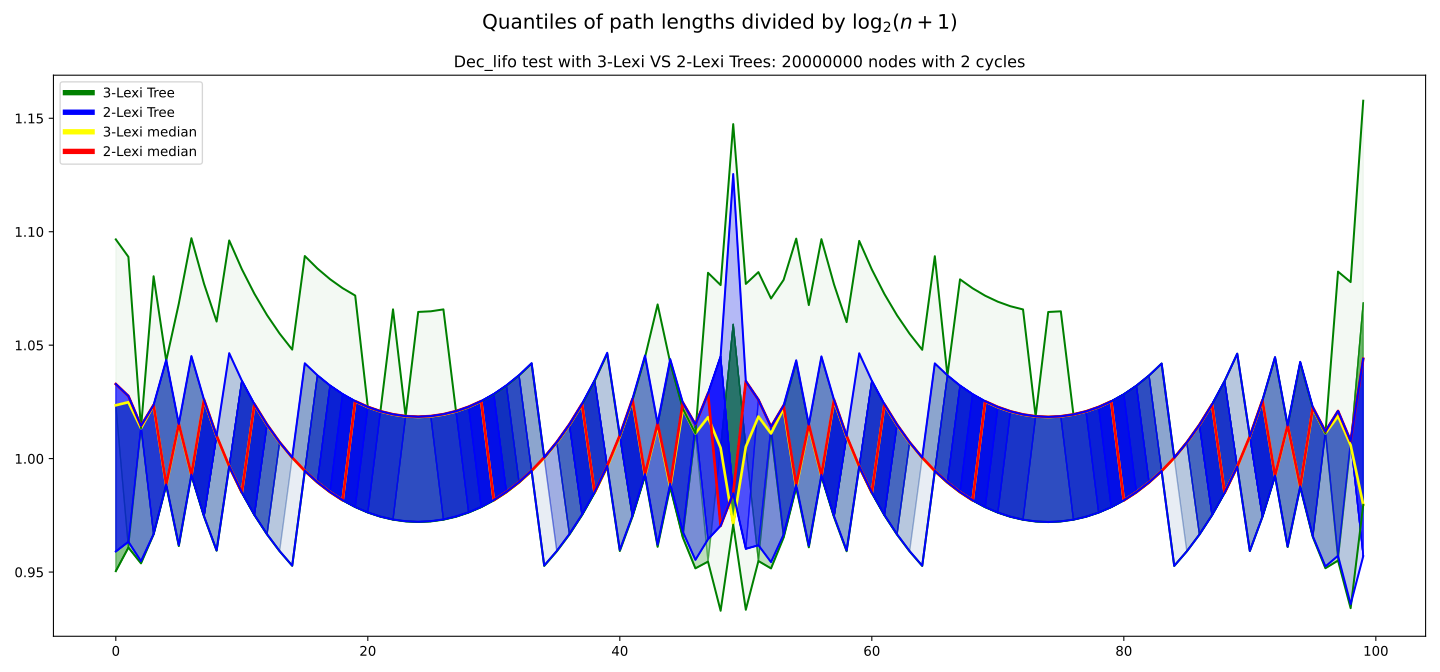
- And here are all the comparisons between 3‑Lexi and 2‑Lexi Trees:
Show Images
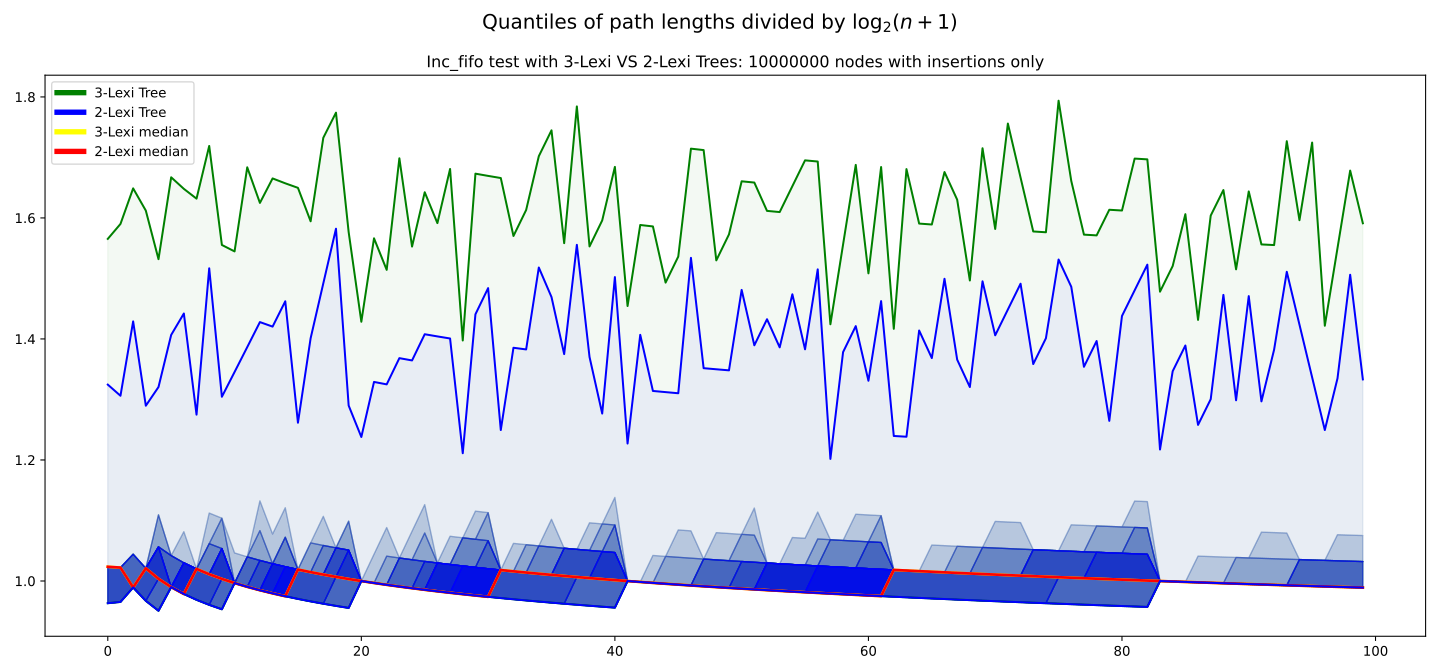
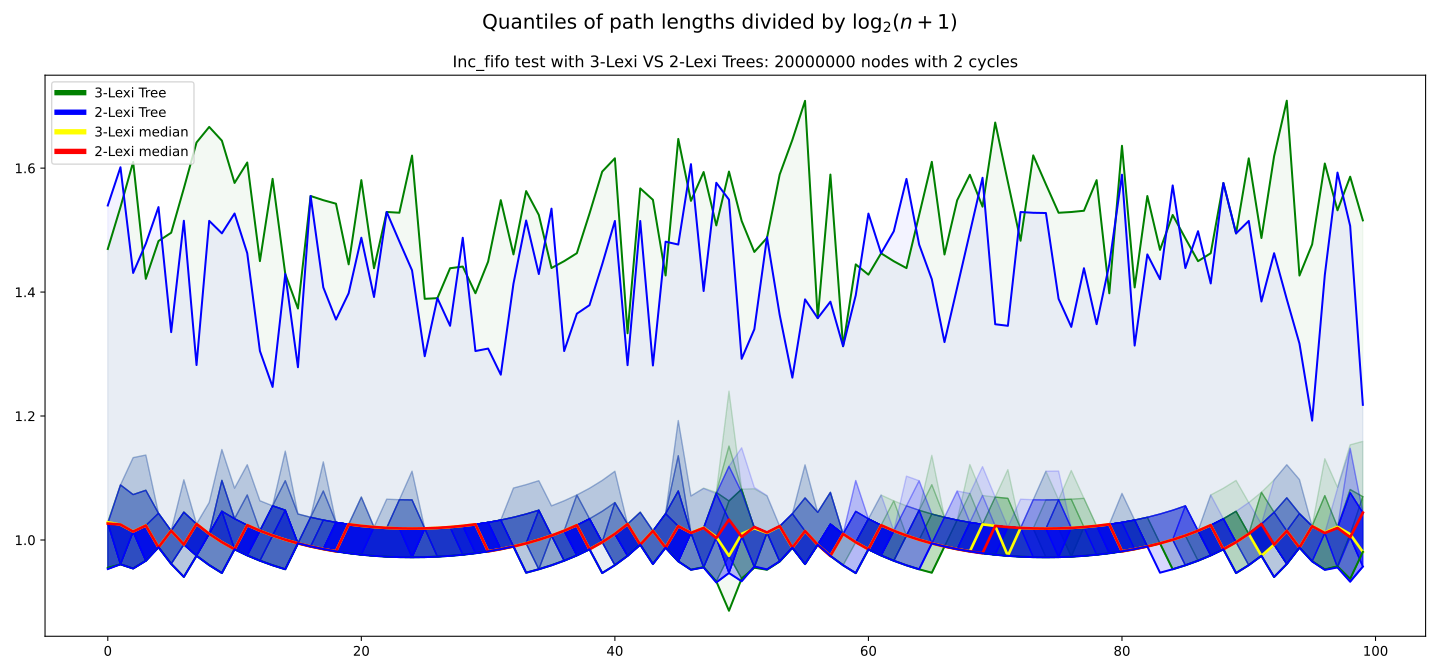
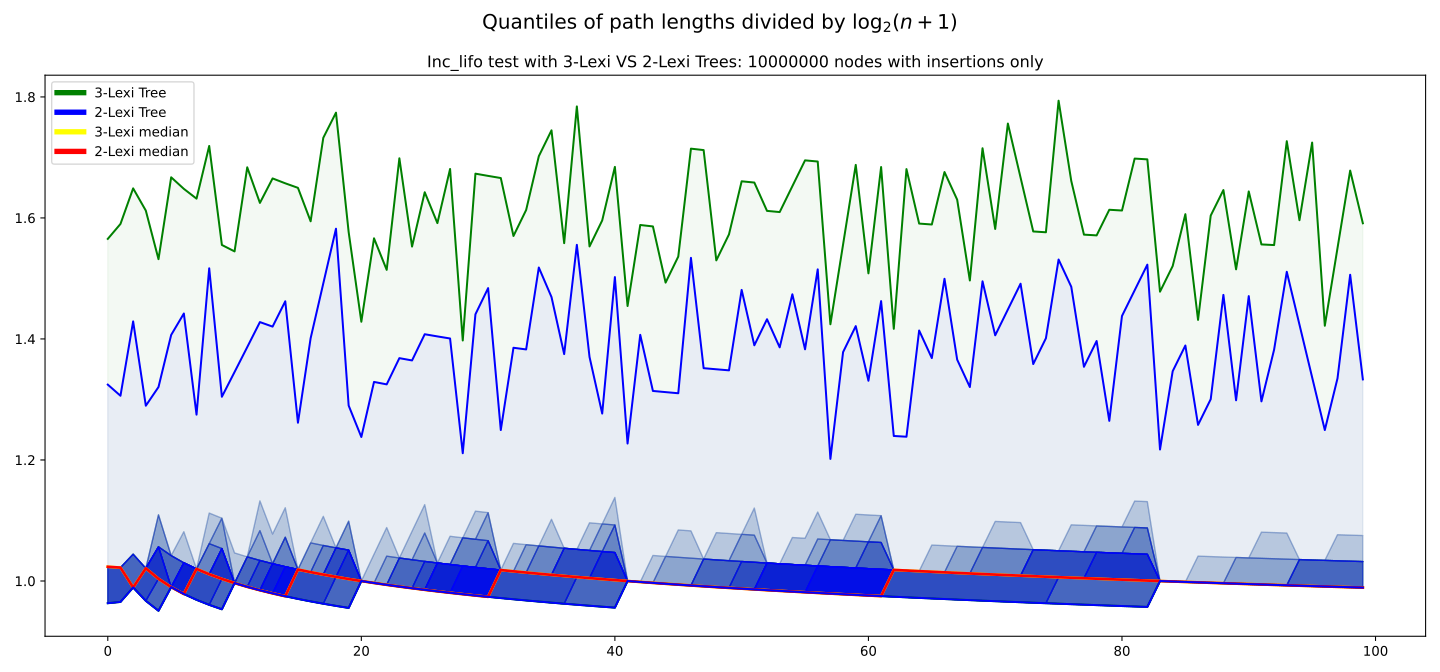
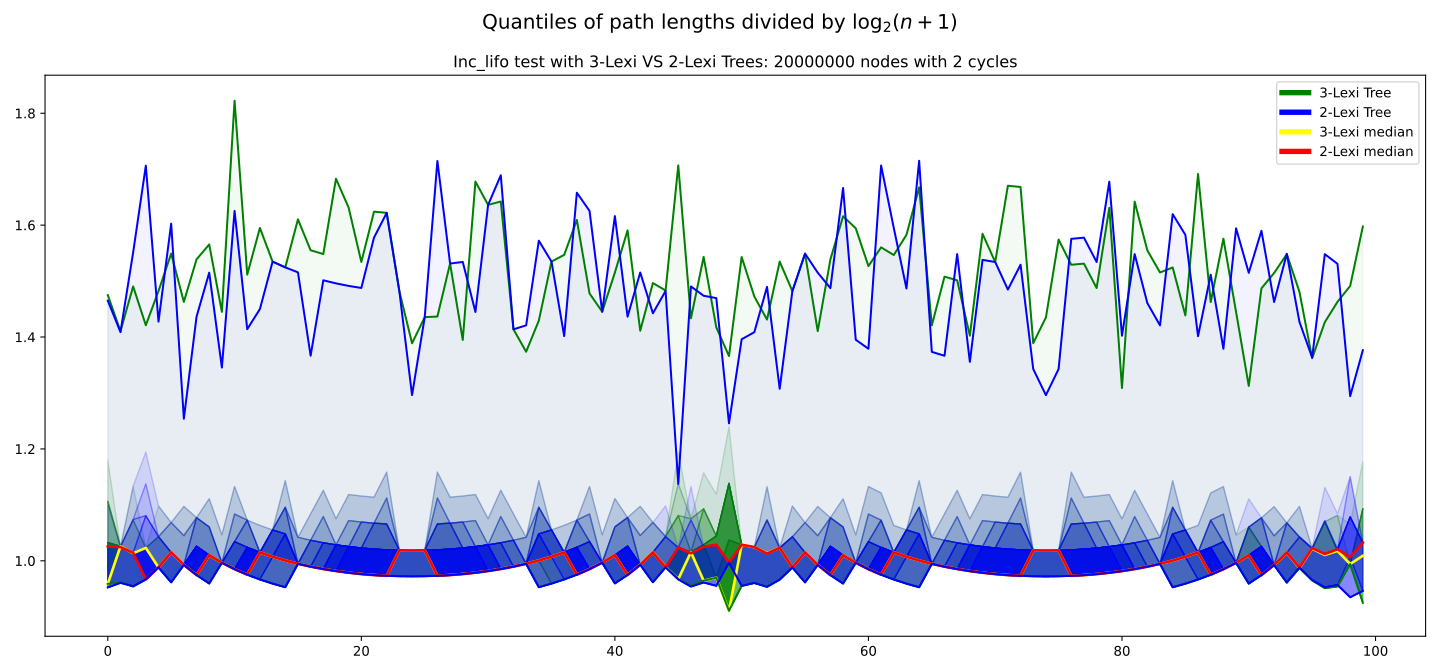
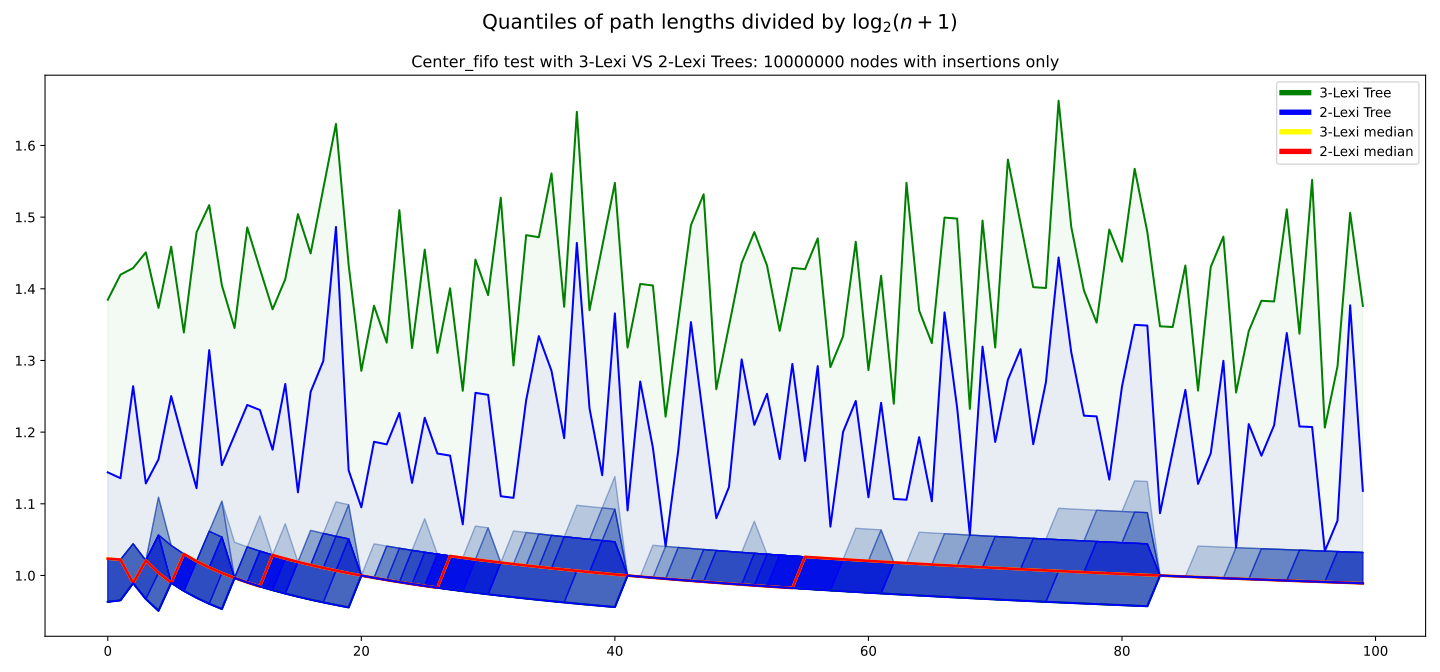
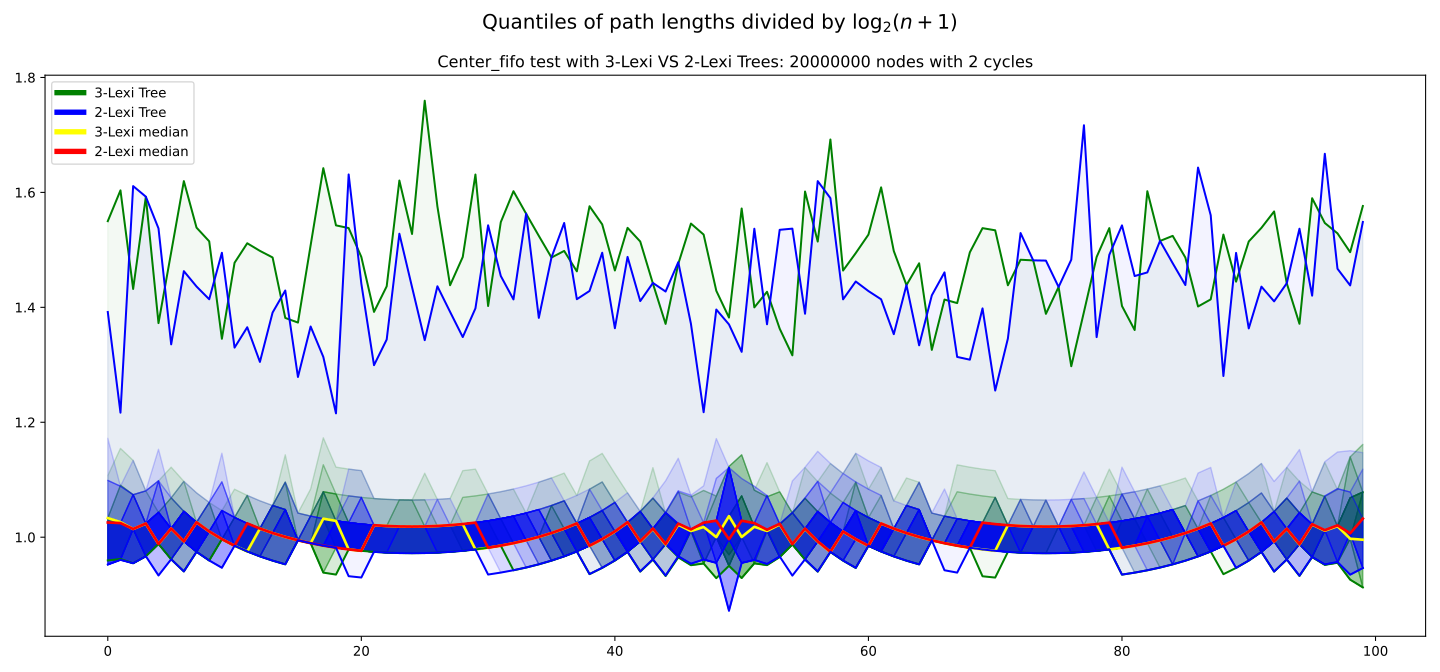
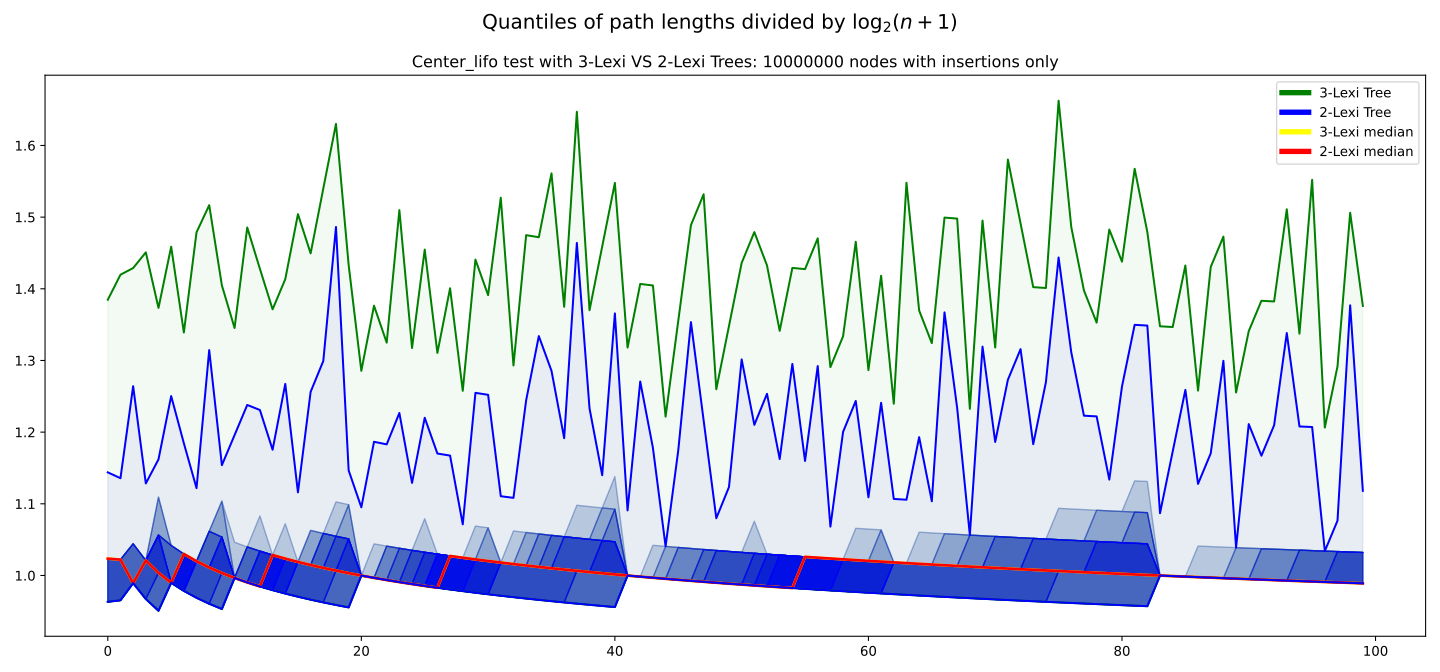
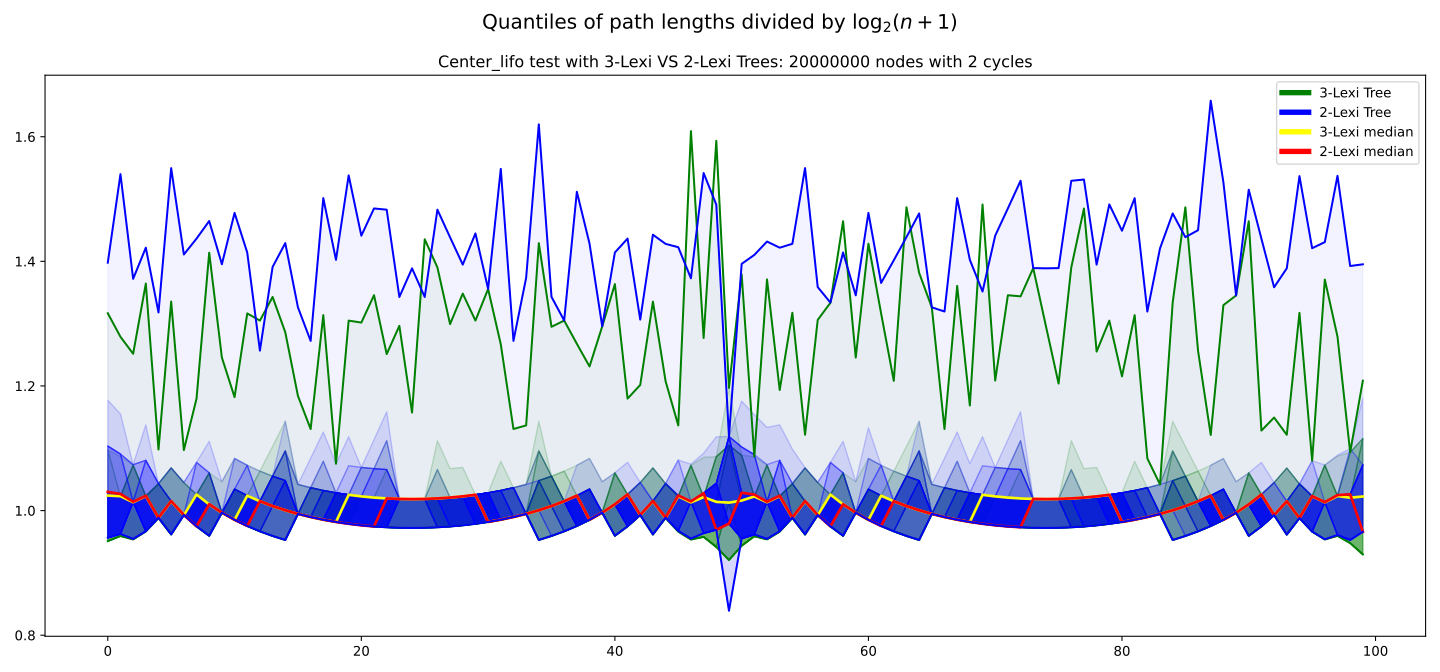
- As we noted before, P‑Lexi Trees shouldn't and, in fact, aren't influenced by the key pickers.
- The 2- and 3‑Lexi Trees exhibit strong asymmetry:
- That's to be expected since only right children can be high.
- The exceptionally good cases are:
                        LHS     RHS   (of the tree)
Dec FIFO, inserts only:  I--------
Dec LIFO, inserts only:  I--------
Dec LIFO, both ops:     DI--------
   where:  I = inserts; D = deletes
- As indicated in the scheme above, these are all cases where we operate on the LHS of the tree.
- This suggests that we might want to invert the order of the keys if we suspect that the order will be mostly ascending.
- The 2- and 3‑Lexi Trees are somewhat influenced by the key pickers, but:
- Most of the paths are very close to the optimum.
- The other paths are still way below 2 times the optimum.
- This is very good, considering that 3‑Lexi Trees give only a guarantee.
- To do a complete analysis of 3‑Lexi Trees, we should distinguish 2 kinds of paths:
- hot paths: the high traffic paths
- cold paths: the low traffic paths
- This is especially true if searches are also able to lift nodes when they find triples. That would guarantee that:
- hot paths are of length at most
- cold paths are of length at most
- Since cold paths are, by definition, low traffic, this would make 2- and 3‑Lexi Trees virtually indistinguishable regarding the path lengths.
- 3‑Lexi Trees are heavier than 2‑Lexi Trees algorithmically, though.
- 2‑Lexi Trees should always be preferred for the single-thread case.
- 3‑Lexi Trees should be more performant than 2‑Lexi Trees in the multi-threading settings, but this is still a conjecture.
Thanks
Thank you for reading this! I hope you had a good time 😃